Whenever I hear about rock rivalries, it always seems more than a little paradoxical. After all, these are artists, and artists are supposed to be, in theory, the most enlightened among us. Often times, they are the most vocal, and credible, critics of the overly competitive and petty natures within the vast majority of human beings. They rail against the excesses of society, and usually, these are related, in some way or other, to some of the big vices - pride and ego, unchecked desire, conniving schemes, and outright greed.
Yet, it is no secret that they don't always measure up. No less of a genius than Stephen Hawking in his younger years worked side by side with a student that was working on a rival theory, posing as a fellow believer and helping him along, only to public derail him when in a very public way when the time came.
Musicians can be like that as well, of course. Music is often supposed to be an escape from all that type of stuff. Yet, it often times not only is not, but it becomes the most public forum for such idiocy, filling up the tabloid headlines with ridiculous nonsense.
You could expect that perhaps in other fields. Sports, for example, where trash talking is not only often an extension of the competitive spirit that is required, but an outright covert strategy (it works at times, and fails to at others).
But artists are not athletes. Not only are they not athletes, quite often, they are the anti-athletes. They shun that "spirit", if you will, of competition. Perhaps they are shoved to the sidelines specifically because of this. Because they dare to dream of a world without the excesses of such competition. Competition, for example, that in it's most extreme form, leads up to war. Competition that seeks to completely eradicate a competitor. What is war, or racism, or other such things, if not some form of competition, after all? Competing perhaps for natural resources, or opportunities, and it becomes, or seems to become, necessary to eliminate that competition.
What I am saying is that art is creation, and I personally believe that there is nothing more divine that a human being can do than to create something. Given that many people believe that human nature (at least in our global culture) seems to be equal parts creating and destroying, art can reflect the best that we have to offer, and provide a refuge from the more destructive elements of our nature, if you will.
So, why is it that many artists not only fall to the vices of jealousy and bitterness towards others (competitors, if you will), but go ahead and act upon it? More often than not, much like athletes, this is not just some kind of momentary slip, but specifically calculated (probably by their agents or other interested parties, but perhaps by the artists themselves) in order to advance their career, to increase sales of their music or books or whatever.
Look at Keith Richards insulting Mick Jagger in his recent autobiography, and the public spat that flared up between the two afterwards.
Look at a megalomaniac like Axl Rose, who is actually a talented musician, but who's ego and false machismo gets in the way and defines him more than his actual work. It seems he's more interested in personal spats and proving how much of a bad ass he is, then making music. If he would quit being a walking, talking, breathing cliche, stop regularly showing up two hours late for shows (and then "apologizing" to his fans), he might actually just be considered a great musician, without controversy. Instead, he is more well known at this point for these absurd antics, than for any music that he has put out in the last twenty or more years. Am I wrong?
In any case, I thought this might be an interesting (as well as shockingly extensive!) series to work on over time. There certainly is not shortage of material to work on, either. It started with some ideas off the top of my head, famous bands that had spats with other bans, or internal spats that threatened to break up the band. The fist kind of tension is band vs. band, while the second is inside of the band itself.
These were some of the ideas that I was juggling with, but as you can probably tell, they are just too numerous. So numerous and extensive, in fact, that I got tired of looking this stuff up well before I was anywhere near done. That means that the list is not even close to being comprehensive, and I know that there are tons of bands that I did even touch.
That said, I go to something that I have mentioned of other posts: your own involvement. If you know of some that I have missed (and since I kind of resigned earlier than expected from fatigue and a sense of being overwhelmed by just how extensive these were), then please feel free to share some of your own. I will try and do the research, and try and get around to these eventually (probably one at a time, although in the interests of time and brevity, perhaps some could be combined when it features the same artist against multiple bands (Axl Rose, Courtney Love, and Eminem were among those where this seems not only possible, but almost necessary).
This should be an interesting topic, and one that I have been thinking about for some time. But I tend to be more or less a perfectionist, which is why I hesitate to actually submit a blog entry if there are things that are possibly missing. I was reluctant to submit this post, although, it has to start somewhere, right?
Take a look at the list below, and you might get an idea of just how extensive the list is. Again, I reiterate, if there are rock feuds that I am leaving out, and that you might be interested in my exploring, please, please, please post, and I promise to respond, and do my best to research and then write.
Band vs. Band Rivalries:
- Nirvana v. Pearl Jam
- Axl Rose/Guns 'N Roses v. Nirvana
- Axl Rose/Guns 'N Roses v. Motley Crue
-Axl Rose/Guns 'N Roses v. Josh Homme
- Axl Rose/Guns 'N Roses v. Velvet Revolver
- Axl Rose/Guns 'N Roses v. Bon Jovi (noticing a trend yet?)
- Axl Rose/Guns 'N Roses v. Metallica
- Trent Rezner v. Marilyn Manson
- Kid Rock v. Tommy Lee (of Motley Crue)
- Neil Young v. Lyrnyd Skynrys
- Kiss v. Santana
- Paul McCartney v. Michael Jackson
- Courtney Love v. Frances Bean
- Courtney Love v. Dave Grohl
- Courtney Love v. Lily Allen (noticing another trend?)
- Courtney Love v. Eddie Vedder
- Courtney Love v. Billy Corgan (of Smashing Pumpkins)
- Courtney Love v. Ryan Adams
- Courtney Love v. Madonna
- Megadeth v. Metallica
- Metallica v. Alice in Chains
- Metallica v. Bon Jovi
- Metallica v. Voivod./Jason Newsted
- Metallica v. Pantera
- Metallica v. Slayer
- Metallica v. Anthrax
- Creed v. Pearl Jam
- Creed v. Limp Bizkit
- Limp Bizkit v. Eminem
- Limp Bizkit v. Nine Inch Nails
- Limp Bizkit v. Slipknot
- Limp Bizkit v. Machinehead
- Limp Bizkit v. Everlast
- Eminem v. Everlast
- Eminem v. Lil Wayne
- Eminem v. Mariah Carey
- Eminem v. Insane Clown Posse
- Eminem v. Christina Aguilera
- Eminem v. 50 Cent
- Eminem v. Dr. Dre
- Eminem v. Elton John
- Eminem v. Lady Gaga
- Eminem v. Jay Z
- Eminem v. Kanye West
- Eminem v. Moby
- Eminem v.Pink
- Neil Young v. Lynryd Skynyrd
Internal Feuds:
- The Beatles
- The Rolling Stones: Mick Jagger v. Keith Richards
- Axl Rose v. Slash
- The Who: Townsend vs. Daltry
- Nirvana: Cobain v. Novoselic & Grohl
- Pearl Jam: Five Against One
- Eric Burdon v. Rest of the Animals
- The Kinks: Brotherly Feud
- Oasis: Brotherly Feud
- Simon v. Garfunkel
Tuesday, February 19, 2013

Monday, February 18, 2013
Album Review: 'Til Your River Runs Dry by Eric Burdon
Picture by" Amazon.com
Picture by: Facebook
Picture by: rollingstone.com
Eric Burdon has released an album of entirely new songs, and whoever is doing his promo seems to be doing a great job!
He just might start to get the recognition that he so richly deserves, for that matter!
When you listen to this album the one thing that strikes you immediately is just how distinct his voice sounds. It is his trademark, and it remains very recognizable and distinctive, even after all of these years (and presumably, after considerable substance abuse, which he himself admits to in his autobiography, "I Used To Be An Animal...But I'm All Right Now".
There are some real gems in the album. One such beautiful song is the eight track, a slow, brooding, reflective piece called "27 forever". It seems almost to flirt with the idea of joining the group of rock stars that have died at the age of 27. This is a rather surprisingly long list, which includes numerous musicians of Eric Burdon's generation, such as Brian Jones of the Rolling Stones, Jimi Hendrix, Janis Joplin, and Jim Morrison of the Doors. More recently, some big names that have joined Kurt Cobain of Nirvana, Kristen Pfaff of Hole, and most recently, Amy Winehouse.
I remember Kurt Cobain's suicide, and how shocking that was. He was the first real rock star that I closely followed who died at such a young age. I remember a quote by his mother that I must have read in some paper at the time, where she said in reference to her son's death by suicide, "Now he's gone and joined that stupid club. I told him not to join that stupid club."
Burdon takes a different approach in this song, almost seemingly longing for the opportunity (missed long ago, in his case) to, as he puts it:
"To stay at this level
And be 27 forever"
Nor is this the only reflective piece about musicians. He has a relative throw back song "Bo Diddley Special", that has a bluesy feel to it, and hearkens back to the days of the Animals and "The Story of Bo Diddley". There is even a tease in the song of that old Animals piece.
He delves into politics a bit (being an old hippie, is this really surprising?) in "Invitation to the White House", and it is hard to tell whether he is criticizing the President, or really referring to a dream about him asking Burdon's advice. He slips into politics several points in his lyrics throughout the album. The opening song, "Water", seems to hint at a political message, although it could be interpreted as putting out the fire (which could be interpreted as substance abuse) with water. Just a guess, and I'd have to watch or read one of his promotional interviews to say for sure, if he addresses that.
The album is good, solid rock, although he also at times shows the R & B roots of the early Animals, when he was just making a name for himself.
In any case, this was a very good and enjoyable album. It had been a very long time since I'd heard original music from Burdon, and not some rehashing of old stuff. So, kudos to him on a solid effort of original work! Hopefully, he'll be doing a follow up tour, and do some of these works live!
Sunday, February 17, 2013
Michael Jordan Turns 50!

Photo by: www.operationsports.com
Also, I thought it would be appropriate to recognize an important birthday for the greatest basketball player that I have ever seen, far and away!
Michael Jordan turns 50 years old today! He still looks great, and I wouldn't be surprised if he could still play in the NBA today. He might not light up the boards like he once did, but he could probably still more than hold his own against guys, even professionals, that are less than half his age.
I liked this picture, which showed him with all six of the rings that he earned with the Chicago Bulls!
Eric Burdon
Picture by: nearolderrocker.blogspot.com

Photo by: rgcred.wordpress.com
www.getreadytorock.com

Photo by: urbanaspirines.blogspot.com
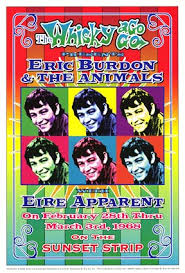
Photo by: freewayjam.blogspot.com
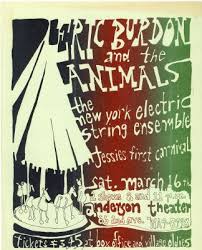
Photo by: www.chickenonaunicycle.com
Photo by: rgcred.wordpress.com
www.getreadytorock.com
Photo by: urbanaspirines.blogspot.com
Photo by: freewayjam.blogspot.com
Photo by: www.chickenonaunicycle.com
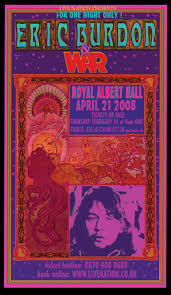
Eric Burdon has one of the most distinct voices that I know of. When you hear him sing, you cannot mistake him for any other. He has a voice and style that is immediately identifiable as his own, and it seems to bleed through no matter who he is playing with - the original Animals, the new Animals, War, or a solo album.
The Animals were one of the "British Invasion" groups of the sixties that hit it relatively big. The song that was their breakout, and for which the band is still best know for, was "House of the Rising Sun". It was a cover, and thus, not an original of their songs. But their interpretation of it resonated, and is probably the best known version of this great song.
It was their biggest hit, but by no means their only hit. They are also famous for other songs, including "Please Don't Let Me Be Misunderstood", "We Gotta Get Out Of This Place", and "It's My Life", among others. Bruce Springsteen cited "We Gotta Get Out Of This Place" as one of the most moving songs he had ever heard, and went on to say that in it was essentially the basis of what he was trying to get across with numerous of his own works, including some of his most well known songs.
They were not on the level of the Beatles or the Stones, perhaps. But they were big in their own right, and seemed to have a promising career ahead of them.
Only, they didn't. Not as "The Animals", anyway. The band split up within a couple of years of hitting it big, and there was some confusion afterwards.
Eric Burdon released an album, one that I grew very familiar with and which brings me back to my childhood every time that I listen to it, or even see an image of the cover. It was called "Eric is Here: Eric Burdon and the Animals", and is pictured above. It featured a song that Burdon had done on his own, separate from the Animals, that had already charted, and became a hit. It was a great album, although not regarded very highly by many fans of the Animals or Eric Burdon, although I have always loved it. Most of the album are not original pieces to Burdon or the Animals, but rather covers, and perhaps that accounts for it not being considered such a great album, although since that was the only actual album that we had of the Animals (the other record was a greatest hits compilation), it was always the one that I identified them by. There was only the record that my family had of it for a long time, but I was elated to find it in compact disk version back in 1997. As it turns out, that cd is now considered very rare, and seems to be selling on various internet sites for upwards of $100 or more!
After that, Burdon recreated the band once again, if that is the way to put it. He recreated the group, and renamed them "Eric Burdon and the New Animals", while he moved to San Francisco to become a voice for the "Love Generation". Their musical style changed as well, going with the psychedelic times. This version of Burdon and the "New Animals" enjoyed some success, as well, with noted and loved hits like "Monterey", a song about the famous music festival that he attended that was the big concert of huge assembled talent, just before Woodstock. They also enjoyed success with other notable songs, such as "San Franciscan Nights" and "Skypilot". The look and imagery involved with the band changed, too, reflecting the hippie times. But this incarnation of the Animals was not to have a long shelf life, either.
Burdon then joined "War". This was not the longest lasting band either, but they were edgy, taking risks and pushing the envelope. They were probably best known for "Spill the Wine", and at their peak, they enjoyed a bit of success, although nothing like what Burdon had enjoyed with the Animals.
Eric Burdon then embarked on a long solo career, although he did work with other notable musicians along the way, including Ringo Starr. He also was part of two reunions with the original Animals lineup, and they released two great albums: "Before We Were So Rudely Interrupted" in 1977, and "Ark" in 1983. There was a world-wide tour following "Ark" in 1983, and one of the concerts, at Wembley Stadium, became an official release for the band.
That was the last that anyone would hear from the "original" Animals, although a couple of former members of the group would become part of a band known as "Animals II", and I actually got to see them in August of 1997 in Brooklyn, a concert that I felt very blessed to have seen, and I cancelled plans to see Santana on that same night in order to see the Animals II, among other acts that evening, including the Grassroots, Gary Puckett, and the New Yardbirds. It originally was supposed to be a free concert, but due to rain, had to be moved indoors. There was a $5 cover charge for entrance, and it was a "first come, first served" basis. What a night that would be!
I felt bad, however, because I had not yet seen Eric Burdon in concert, although I would finally get my chance later that year, in December. What a night that was! This, too, was on a "first come, first served" basis, and we got there early, to get the best seats that we could - front and center! It also marked the first concert and dinner for me, which had been a relatively foreign concept to me prior to that. After the show, I snuck backstage, and actually got to meet Eric Burdon, as well as get several autographs, for myself and my father. One thing that he signed was a poster, and he commented that he had "never seen this one before". He was a lot shorter than I had expected him to be. A lot drunker, too. Hell, I even accidentally spilled beer on the man, when I backed into a waitress carrying beer! I'll never forget the expression on his face. I think it is safe to say that he was truly thrilled to meet me!
I saw him another time with those same guys. And although when i saw him both times, the act was billed as "Eric Burdon", but very shortly thereafter, he would rename that group (it was a trio, actually), "Eric Burdon and the New Animals". But after a protracted legal battle in 2008, he lost the rights to the "Animals" name. Shortly after that, the band dissolved.
Now, here is where I will make an admission: my father (who went with me for the first show) and I both were a bit stunned to see him live, because there was a certain sadness to it. Here was a very talented musician who, in his day, had ranked among the elite musicians of the age. Yet, here he was, sounding and acting drunk on stage, an old musician clearly past his prime. This was the same man who had produced such brilliant and enjoyable music, and who seemed to be a rising star back in the day, yet here he was, playing a small club, and playing for an old audience wanting to reminisce about old times. We still sometimes shake our head over that one.
Some years ago, I got my hands on a relatively obscure and hard to find autobiography by Eric Burdon, "I Used To Be An Animal, But I'm All Right Now" (see the picture below). It was a good, if somewhat disorganized, book. He even admits to it being a bit chaotic, and not really in chronological order. But for any Animals fan, it is a fascinating read. Admittedly, it has been many years since I read that (we're talking the nineties), so I do not remember it all that well anymore. To my understanding, he incorporated these writings in a subsequent autobiography, with help by Jeff Marshall Craig, although I have not (yet) gotten the opportunity to read that particular book. Maybe that's an idea for the future, which would also allow me to post a book review about it on this blog? Hmmmm....
Eric Burdon is back now, with an album of all new material, 'Til Your River Runs Dry. I will be reviewing it either tomorrow or the next day, so stay tuned!
Picture by: allmusic.com
Picture of Eric Burdon's autobiography, a relatively rare book, by: amazon.com
Saturday, February 16, 2013
"Exceptionalism": The Greatest in Everything, Always
One small fact that perhaps should steer us away from the apparent obsession with wanting to be considered the best in everything was that Hitler wanted this kind of recognition for Germany. Germany was to be the center of the world, in effect. After the Olympic Games in 1940, which were being held elsewhere, Hitler vowed that all the Olympic Games after that would be in Germany from that point onward. Germany would be the most powerful nation, the one that dictates to everyone else the way things would work.
Let me be clear about one thing here: I am NOT comparing the present day United States to Nazi Germany. I did not like George W. Bush, but I was also not a fan of comparing him to Hitler, much like I am not a fan of comparing Barack Obama to Hitler. Until they discriminate against a large segment of the population, and then proceed to exterminate them, as well as begin a global war, then such comparisons are unwarranted.
But what I am doing is warning Americans about one aspect of their collective thinking that they believe is unique to them, but is, in fact, a very typical reaction whenever any nation or empire reaches a certain level of power. This happened with numerous empires throughout history, including the French and British empires. It happened to Germany, as well as Japan, in the twentieth century, with fatal results for both, in many respects. Not only are those two countries not what they used to be back then, but they will never be that again.
For which we should be thankful, frankly.
It also happened to the Soviet Union. Remember that their coat of arms was a picture of the globe, with a very prominent hammer and sickle gloriously hovering (or stamped) above it? Well, the Soviet Union was another modern superpower, and they got so tied up with the race for influence with the other world's superpower at the time (that would be US), that they bankrupted themselves. They invaded Afghanistan, of course, and surely felt justified in so doing. They had their reasons, right? Much like we have our reasons for being there in the present day. But did either the Soviet Union or the United States truly accomplish what they set out to accomplish in Afghanistan, or did the invasions expose weaknesses in the seemingly impregnable empire? I leave the reader to come to their own conclusions on that question.
The weight of being "the greatest" is excessive and, if anything, has bogged down the United States in recent decades, if not outright served as an anchor to prevent it from getting anywhere. We have political gridlock perhaps the likes of which we have never seen before, as a bureaucratic monster in Washington just keeps growing and growing. Much of it has to do, directly or indirectly, with the question of America's "exceptionalism".
Think about it. It not only defines questions concerning our foreign policy approach. It also impacts numerous other realms of thinking as well. I might go so far as to say it defines the very political thinking that exists in present day America. Healthcare has been, and remains, a divisive issue, because many are against any change, since it brings us closer to "socialism" (some even outright hint at "communism") whenever there are any efforts at reforms to curb the excesses of the current healthcare system, and these same people will claim that America has it's own system that is different than the "European" model (mind you, each country in Europe takes a different approach to healthcare in it's own right). Thus, we are moving away from "American" values. For those who take such a stance, there is no question that the United States has the best, or greatest, healthcare system in the world. Even though it leaves tens of millions of people without health insurance. Even though it currently leaves tens of millions more with inadequate health insurance, even when they work full-time jobs, and in many cases, with multiple jobs.
This same argument of preserving America's uniqueness, or exceptionalism, is employed with another hot button issue in the present day: gun control. I already did a series on this (look back to my blog entries in December, in the immediate aftermath of the Sandy Hook school shootings). Even measures that seemed to work well in other countries following mass shootings there are not taken into consideration here in the United States, simply because they are not the United States. In other words, it's different. They don't understand us, don't understand our history. They don't understand why it could never work here.
The "exceptionalism" attitude also is employed for pretty much anything. We cannot reduce the exquisitely bloated military budget by a penny, because it would detract from American "exceptionalism". We cannot get rid of excessive tax breaks and incentives to the wealthiest individuals and corporations among us, because of the American "exceptionalism". Other countries tax their rich, but here in America, it is sustained by the need to feel that the "American Dream" is alive and well and still relevant, even though the facts do not seem to bear this out, as living standards for the rest of us who do not rank among the very wealthiest and most privileged has noticeably and undeniably dropped down a couple of notches, has it not? In other words, our high living standards, which used to be the envy of the world, are considerable less "exceptional" these days, although our collective boasting has increased, even greatly. Ironic, isn't it?
We cannot give more to our schools, or increase the minimum wage or benefits to common workers, because such actions are "socialist" practices, and thus, unAmerican. They are counter to what makes America "exceptional".
But in the meantime, citizens of those other free countries (that we once proudly hailed as allies and followers of our American "freedom", but now increasingly seem to be eying with suspicions) in western Europe, and Canada, and Australia and New Zealand, and Japan, and South Africa, all know what is going on here, and yet they choose not to follow the "exceptional" United States, preferring to keep intact the systems that they have put into place for their own countries. Translation: America is losing it's influence, and by extension, losing it's leadership position.
Seriously, how else would you interpret it?
Don't believe me?
Let's look at the example of another issue where the United States has dragged it's feet, choosing to go in a different direction than the rest of the world, and mostly fueled, once again, by the argument of "exceptionalism": the environment. Here, more and more, anything goes. President Carter made a point of creating the Environmental Protection Agency (EPA), as an effort by a government of the people, by the people, and for the people, to protect regular people (that's you and me) from the proven excesses and abuses by powerful corporations. But the regulations that are already in place, which are of questionable effectiveness to begin with, seem constantly to not even be enforced. Many suggest that these environmental regulations be weakened even further, since, as the argument goes, it would choke off economical health and profitability. It would swamp corporations with too many regulations, too many costly adjustments, and perhaps in many cases, too high a cost for environmental clean up efforts (for messes that these same corporations are far too often responsible for).
Examine these arguments more closely, and once again, you have the roots of the "exceptionalism" argument firmly planted. It is fine for other countries to do whatever they think is best in terms of the environment. But as for the United States, which until quite recently was the largest polluter in the world (and even, by far, for decades and decades), the need to curb excesses simply does not apply. The American economy is too important, they say. It sounds like a reasonable argument, too, at least at first. In fact, if you accept their premise, then it seems completely logical. Throw in some conspiracy theories about "environmental wackos" and nut jobs, as well as stories about how much environmental advocates are supposedly raking in the dough, and then it becomes a no-brainer. We cannot follow these "crazies". American businesses deserve to thrive, so they can create "more jobs" for American workers. I cannot help but ask myself right now where all these new jobs are, even though lax enforcement of environmental regulations continues.
Americans cannot be bothered with trying to be more environmentally responsible. We need gas guzzling Hummers and other SUV's, and we apparently need, and apparently can afford the considerable expenses involved with, the wars in oil rich nations in order to keep the supply of oil running. I guess the convenient argument of keeping the price of gas in check went out the window as prices continued to skyrocket during the war in Iraq, even though the prices remained very low in Iraq itself, and even as the price around the world seemed to be lowering at the very same time as prices here at American pumps kept rising. Driving more fuel efficient cars always seems to be a backburner idea. It sounds like something we should be doing, but we keep puching it off to sometime "in the future". In the meantime, not surprisingly, we keep on going exactly as we were going before, as if all that we have learned should be scrapped and quickly forgotten, since they serve as an inconvenience.
But our practices were, and are, unsustainable. When you "deregulate", that is what happens. Deregulation is the wonderful sounding phrase that means, essentially, disarming government (which is represented by the people who vote the government in) in order to give more power to corporations (which are not elected by "We the people"), giving them more free reign to do pretty much as they want. How well did it work for the American people when banksters were given free reign to do as they please, without "government intrusion"? We had the housing crisis in 2008, and some are suggesting that the very same abuses and practices are continuing right to the present day. In other words, we have not learned any lessons, and we already know that those who do not learn from history are condemned to repeat it, right? But who knows. Perhaps the corporations will put people before profits, and check themselves before they wreck themselves (and the country along with it). I mean, there are countless examples of this in history, right? RIGHT?!
The sole motivation of a corporation is to net profits. If that means producing more jobs, than fine. If that means laying thousands of workers off, then so be it. If that means dumping illegally, and paying for government representatives to lower environmental regulations, so that there is less "government intrusion" to such activities, then so be it. If that means putting people before profits, including allowing the health insurance corporations and the drug industry to keep raking in the billions and billions in profits, even at the expense of people who really need medical care or medication, but cannot afford it, then so be it. If that means pushing aggressively for overseas wars in order to net more profits for private corporations in "no bid contracts", then so be it. Right now, this approach has been the "shining city on the hill" example of "American exceptionalism" to the rest of the world. Can that even really be argued with any measure of legitimacy?
The results speak for themselves. The environmental policies for so much of the rest of the world has taken a different direction. Other countries are teaming up and moving ahead, with or without the United States. Some other countries, such as Iceland, are also trying to hold those banksters responsible who wrecked their economy, and this approach has been working favorable for them since. The rest of the world, in other words, is choosing to go in a different direction than the one that the United States continually advocates.
The results, in other words, is that the United States is losing it's trusted leadership position that it traditionally held in the post-war era. More and more, the motives for America's "exceptionalism" policies are being questioned and scrutinized, and yes, dismissed, throughout much of the rest of the world. We have dragged our feet for too long. Now, the rest of the world is going ahead without us, more and more.
We still hold a relatively prominent place of leadership in the world, for the moment. Yet, this is continually being compromised, and we cannot simply conveniently blame China for this. After all, they are doing what we are doing, and have long done: looking out and acting exclusively for their own benefit.
No, in truth, we have no one to blame but ourselves. We are making the same mistake that other "exceptional" powers, or empires, have made in the past. we have become too insular, too inward looking. We have now collectively reached a point (of arrogance, I would label it) where we are too arrogant to learn from the examples of anyone else in the world.
As that noted thinker and philosopher and tv personality, Dr. Phil might ask, "How's that working for you?"
It should be obvious by now, but I am personally not a believer in professed "exceptionalism". It may exist in the world, for individuals, and even for institutions, including countries. But these often are isolated to specific instances or realms. When people, institutions, or countries systematically proclaim themselves are "exceptional", our natural instinct should be to grow wary and skeptical. Truth be told, such "exceptionalist" proclamations are not unique at all in history. We see it in individuals, such as Louis XIV as "The Sun King", or Napoleon crowning himself emperor. We see it in other institutions, such as religions, where many different religions proclaim to be the "exception", and claim to have a monopoly on the truth. Usually, this means that you had better follow their example, or be forever condemned to the fires of hell, the old fire and brimstone approach of old, that people are increasingly turning away from. I would even suggest that corporations, in their own way, subscribe to their own notions of "exceptionalism". We all want to be viewed as exceptional, in some measure. But that does not justify going to all ends and losing touch with reality in order to pursue such grandiose notions. Wouldn't it be better and more responsible, to maintain some measure of humility and keep our feet planted solidly on this earth, which after all, is the only one that we've got?
Indeed, it is tempting to think so highly of ourselves, and many are those who yielded to such temptations. But the truth is, more often than not, it has resulted in unfavorable outcomes.
Also, we have to examine where these claims are coming from. When the leading voice of "exceptionalist" arguments are corporate sponsors with clear, vested interests in the political game, so that they can maximize profits, than again, I suggest that we should approach with caution. But it has never been difficult to get Americans to have their chests swell up with pride whenever there is any questions regarding patriotism, or what passes for it in America presently. What we take for patriotism, is actually nationalism, and that has more than a small, destructive element to it. It is not because our neighbors yield to this vanity, that it is right, or that we ourselves should yield to it. The more mindlessly some trends begin to form, and the more skepticism, and yes, even resistance, should grow. Unfortunately, here in America, that is deemed an unpatriotic approach to take.
The United States cannot be all things, at all times. Yet, too many Americans seem to think, and increasingly outright suggest, that we can be. Others have made this mistake before, and paid a steep price. Empires have been lost for such sentiments. It may have been the British Empire yesterday where the sun never set, but it is on American interests today that many Americans feel the sun is always shining. But it seems to me that the very divisiveness and incompatibility in the current American political climate might just suggest the first real hints of a fast approaching dusk on the horizon.
There has been a growing trend in the work towards the latter decades of the twentieth century, which was the most destructive century to date in world history. That trend has tended towards a growing global awareness, and increasingly, an emphasis on working together, on partnership. Admittedly, it has not always worked ideally, admittedly. Far from it, in fact. Yet, it is a trend that seems to be working itself out. Given enough time, it will work out many of the kinks and iron out the wrinkles, and begin to resemble a more purposeful and meaningful whole, if it is allowed to. But the emphasis on "exceptionalism" is in direct contradiction to this tendency. It is important to maintain cultural identity to some degree. But when it turns to supremacy, which is what the current "American exceptionalism" de facto means, then it becomes actively harmful and counterproductive.
In these last few decades, the United States has taken a turn towards a "purer" (that is to say, more extreme) version of capitalism, which is now more often termed "free market" or "free enterprise"(this might be an effort to steer away from the idealogue kinds of -ism's that have proven so detrimental in much of world history, a degree by separation, if you will). In so doing, we have followed the capitalist practices, and auctioned off more of our precious resources, as well as our freedoms and standard of living, to the highest bidder of the moment, favoring temporary profits over most lasting values.
The results? I think that they speak for themselves, and are increasingly obvious and undeniable (except possibly to "American exceptionalists").
Our leadership and good standing around the world is going, going....
http://www.forbes.com/sites/garyshapiro/2012/07/25/is-america-the-greatest-country-in-the-world/
Let me be clear about one thing here: I am NOT comparing the present day United States to Nazi Germany. I did not like George W. Bush, but I was also not a fan of comparing him to Hitler, much like I am not a fan of comparing Barack Obama to Hitler. Until they discriminate against a large segment of the population, and then proceed to exterminate them, as well as begin a global war, then such comparisons are unwarranted.
But what I am doing is warning Americans about one aspect of their collective thinking that they believe is unique to them, but is, in fact, a very typical reaction whenever any nation or empire reaches a certain level of power. This happened with numerous empires throughout history, including the French and British empires. It happened to Germany, as well as Japan, in the twentieth century, with fatal results for both, in many respects. Not only are those two countries not what they used to be back then, but they will never be that again.
For which we should be thankful, frankly.
It also happened to the Soviet Union. Remember that their coat of arms was a picture of the globe, with a very prominent hammer and sickle gloriously hovering (or stamped) above it? Well, the Soviet Union was another modern superpower, and they got so tied up with the race for influence with the other world's superpower at the time (that would be US), that they bankrupted themselves. They invaded Afghanistan, of course, and surely felt justified in so doing. They had their reasons, right? Much like we have our reasons for being there in the present day. But did either the Soviet Union or the United States truly accomplish what they set out to accomplish in Afghanistan, or did the invasions expose weaknesses in the seemingly impregnable empire? I leave the reader to come to their own conclusions on that question.
The weight of being "the greatest" is excessive and, if anything, has bogged down the United States in recent decades, if not outright served as an anchor to prevent it from getting anywhere. We have political gridlock perhaps the likes of which we have never seen before, as a bureaucratic monster in Washington just keeps growing and growing. Much of it has to do, directly or indirectly, with the question of America's "exceptionalism".
Think about it. It not only defines questions concerning our foreign policy approach. It also impacts numerous other realms of thinking as well. I might go so far as to say it defines the very political thinking that exists in present day America. Healthcare has been, and remains, a divisive issue, because many are against any change, since it brings us closer to "socialism" (some even outright hint at "communism") whenever there are any efforts at reforms to curb the excesses of the current healthcare system, and these same people will claim that America has it's own system that is different than the "European" model (mind you, each country in Europe takes a different approach to healthcare in it's own right). Thus, we are moving away from "American" values. For those who take such a stance, there is no question that the United States has the best, or greatest, healthcare system in the world. Even though it leaves tens of millions of people without health insurance. Even though it currently leaves tens of millions more with inadequate health insurance, even when they work full-time jobs, and in many cases, with multiple jobs.
This same argument of preserving America's uniqueness, or exceptionalism, is employed with another hot button issue in the present day: gun control. I already did a series on this (look back to my blog entries in December, in the immediate aftermath of the Sandy Hook school shootings). Even measures that seemed to work well in other countries following mass shootings there are not taken into consideration here in the United States, simply because they are not the United States. In other words, it's different. They don't understand us, don't understand our history. They don't understand why it could never work here.
The "exceptionalism" attitude also is employed for pretty much anything. We cannot reduce the exquisitely bloated military budget by a penny, because it would detract from American "exceptionalism". We cannot get rid of excessive tax breaks and incentives to the wealthiest individuals and corporations among us, because of the American "exceptionalism". Other countries tax their rich, but here in America, it is sustained by the need to feel that the "American Dream" is alive and well and still relevant, even though the facts do not seem to bear this out, as living standards for the rest of us who do not rank among the very wealthiest and most privileged has noticeably and undeniably dropped down a couple of notches, has it not? In other words, our high living standards, which used to be the envy of the world, are considerable less "exceptional" these days, although our collective boasting has increased, even greatly. Ironic, isn't it?
We cannot give more to our schools, or increase the minimum wage or benefits to common workers, because such actions are "socialist" practices, and thus, unAmerican. They are counter to what makes America "exceptional".
But in the meantime, citizens of those other free countries (that we once proudly hailed as allies and followers of our American "freedom", but now increasingly seem to be eying with suspicions) in western Europe, and Canada, and Australia and New Zealand, and Japan, and South Africa, all know what is going on here, and yet they choose not to follow the "exceptional" United States, preferring to keep intact the systems that they have put into place for their own countries. Translation: America is losing it's influence, and by extension, losing it's leadership position.
Seriously, how else would you interpret it?
Don't believe me?
Let's look at the example of another issue where the United States has dragged it's feet, choosing to go in a different direction than the rest of the world, and mostly fueled, once again, by the argument of "exceptionalism": the environment. Here, more and more, anything goes. President Carter made a point of creating the Environmental Protection Agency (EPA), as an effort by a government of the people, by the people, and for the people, to protect regular people (that's you and me) from the proven excesses and abuses by powerful corporations. But the regulations that are already in place, which are of questionable effectiveness to begin with, seem constantly to not even be enforced. Many suggest that these environmental regulations be weakened even further, since, as the argument goes, it would choke off economical health and profitability. It would swamp corporations with too many regulations, too many costly adjustments, and perhaps in many cases, too high a cost for environmental clean up efforts (for messes that these same corporations are far too often responsible for).
Examine these arguments more closely, and once again, you have the roots of the "exceptionalism" argument firmly planted. It is fine for other countries to do whatever they think is best in terms of the environment. But as for the United States, which until quite recently was the largest polluter in the world (and even, by far, for decades and decades), the need to curb excesses simply does not apply. The American economy is too important, they say. It sounds like a reasonable argument, too, at least at first. In fact, if you accept their premise, then it seems completely logical. Throw in some conspiracy theories about "environmental wackos" and nut jobs, as well as stories about how much environmental advocates are supposedly raking in the dough, and then it becomes a no-brainer. We cannot follow these "crazies". American businesses deserve to thrive, so they can create "more jobs" for American workers. I cannot help but ask myself right now where all these new jobs are, even though lax enforcement of environmental regulations continues.
Americans cannot be bothered with trying to be more environmentally responsible. We need gas guzzling Hummers and other SUV's, and we apparently need, and apparently can afford the considerable expenses involved with, the wars in oil rich nations in order to keep the supply of oil running. I guess the convenient argument of keeping the price of gas in check went out the window as prices continued to skyrocket during the war in Iraq, even though the prices remained very low in Iraq itself, and even as the price around the world seemed to be lowering at the very same time as prices here at American pumps kept rising. Driving more fuel efficient cars always seems to be a backburner idea. It sounds like something we should be doing, but we keep puching it off to sometime "in the future". In the meantime, not surprisingly, we keep on going exactly as we were going before, as if all that we have learned should be scrapped and quickly forgotten, since they serve as an inconvenience.
But our practices were, and are, unsustainable. When you "deregulate", that is what happens. Deregulation is the wonderful sounding phrase that means, essentially, disarming government (which is represented by the people who vote the government in) in order to give more power to corporations (which are not elected by "We the people"), giving them more free reign to do pretty much as they want. How well did it work for the American people when banksters were given free reign to do as they please, without "government intrusion"? We had the housing crisis in 2008, and some are suggesting that the very same abuses and practices are continuing right to the present day. In other words, we have not learned any lessons, and we already know that those who do not learn from history are condemned to repeat it, right? But who knows. Perhaps the corporations will put people before profits, and check themselves before they wreck themselves (and the country along with it). I mean, there are countless examples of this in history, right? RIGHT?!
The sole motivation of a corporation is to net profits. If that means producing more jobs, than fine. If that means laying thousands of workers off, then so be it. If that means dumping illegally, and paying for government representatives to lower environmental regulations, so that there is less "government intrusion" to such activities, then so be it. If that means putting people before profits, including allowing the health insurance corporations and the drug industry to keep raking in the billions and billions in profits, even at the expense of people who really need medical care or medication, but cannot afford it, then so be it. If that means pushing aggressively for overseas wars in order to net more profits for private corporations in "no bid contracts", then so be it. Right now, this approach has been the "shining city on the hill" example of "American exceptionalism" to the rest of the world. Can that even really be argued with any measure of legitimacy?
The results speak for themselves. The environmental policies for so much of the rest of the world has taken a different direction. Other countries are teaming up and moving ahead, with or without the United States. Some other countries, such as Iceland, are also trying to hold those banksters responsible who wrecked their economy, and this approach has been working favorable for them since. The rest of the world, in other words, is choosing to go in a different direction than the one that the United States continually advocates.
The results, in other words, is that the United States is losing it's trusted leadership position that it traditionally held in the post-war era. More and more, the motives for America's "exceptionalism" policies are being questioned and scrutinized, and yes, dismissed, throughout much of the rest of the world. We have dragged our feet for too long. Now, the rest of the world is going ahead without us, more and more.
We still hold a relatively prominent place of leadership in the world, for the moment. Yet, this is continually being compromised, and we cannot simply conveniently blame China for this. After all, they are doing what we are doing, and have long done: looking out and acting exclusively for their own benefit.
No, in truth, we have no one to blame but ourselves. We are making the same mistake that other "exceptional" powers, or empires, have made in the past. we have become too insular, too inward looking. We have now collectively reached a point (of arrogance, I would label it) where we are too arrogant to learn from the examples of anyone else in the world.
As that noted thinker and philosopher and tv personality, Dr. Phil might ask, "How's that working for you?"
It should be obvious by now, but I am personally not a believer in professed "exceptionalism". It may exist in the world, for individuals, and even for institutions, including countries. But these often are isolated to specific instances or realms. When people, institutions, or countries systematically proclaim themselves are "exceptional", our natural instinct should be to grow wary and skeptical. Truth be told, such "exceptionalist" proclamations are not unique at all in history. We see it in individuals, such as Louis XIV as "The Sun King", or Napoleon crowning himself emperor. We see it in other institutions, such as religions, where many different religions proclaim to be the "exception", and claim to have a monopoly on the truth. Usually, this means that you had better follow their example, or be forever condemned to the fires of hell, the old fire and brimstone approach of old, that people are increasingly turning away from. I would even suggest that corporations, in their own way, subscribe to their own notions of "exceptionalism". We all want to be viewed as exceptional, in some measure. But that does not justify going to all ends and losing touch with reality in order to pursue such grandiose notions. Wouldn't it be better and more responsible, to maintain some measure of humility and keep our feet planted solidly on this earth, which after all, is the only one that we've got?
Indeed, it is tempting to think so highly of ourselves, and many are those who yielded to such temptations. But the truth is, more often than not, it has resulted in unfavorable outcomes.
Also, we have to examine where these claims are coming from. When the leading voice of "exceptionalist" arguments are corporate sponsors with clear, vested interests in the political game, so that they can maximize profits, than again, I suggest that we should approach with caution. But it has never been difficult to get Americans to have their chests swell up with pride whenever there is any questions regarding patriotism, or what passes for it in America presently. What we take for patriotism, is actually nationalism, and that has more than a small, destructive element to it. It is not because our neighbors yield to this vanity, that it is right, or that we ourselves should yield to it. The more mindlessly some trends begin to form, and the more skepticism, and yes, even resistance, should grow. Unfortunately, here in America, that is deemed an unpatriotic approach to take.
The United States cannot be all things, at all times. Yet, too many Americans seem to think, and increasingly outright suggest, that we can be. Others have made this mistake before, and paid a steep price. Empires have been lost for such sentiments. It may have been the British Empire yesterday where the sun never set, but it is on American interests today that many Americans feel the sun is always shining. But it seems to me that the very divisiveness and incompatibility in the current American political climate might just suggest the first real hints of a fast approaching dusk on the horizon.
There has been a growing trend in the work towards the latter decades of the twentieth century, which was the most destructive century to date in world history. That trend has tended towards a growing global awareness, and increasingly, an emphasis on working together, on partnership. Admittedly, it has not always worked ideally, admittedly. Far from it, in fact. Yet, it is a trend that seems to be working itself out. Given enough time, it will work out many of the kinks and iron out the wrinkles, and begin to resemble a more purposeful and meaningful whole, if it is allowed to. But the emphasis on "exceptionalism" is in direct contradiction to this tendency. It is important to maintain cultural identity to some degree. But when it turns to supremacy, which is what the current "American exceptionalism" de facto means, then it becomes actively harmful and counterproductive.
In these last few decades, the United States has taken a turn towards a "purer" (that is to say, more extreme) version of capitalism, which is now more often termed "free market" or "free enterprise"(this might be an effort to steer away from the idealogue kinds of -ism's that have proven so detrimental in much of world history, a degree by separation, if you will). In so doing, we have followed the capitalist practices, and auctioned off more of our precious resources, as well as our freedoms and standard of living, to the highest bidder of the moment, favoring temporary profits over most lasting values.
The results? I think that they speak for themselves, and are increasingly obvious and undeniable (except possibly to "American exceptionalists").
Our leadership and good standing around the world is going, going....
http://www.forbes.com/sites/garyshapiro/2012/07/25/is-america-the-greatest-country-in-the-world/
Friday, February 15, 2013
Album Review: Voivod's "Target Earth"


VOIVOD: PROJECT EARTH (2013)
Voivod is back with a new album!
Their latest effort is called "Target Earth", and it manages to follow nicely in the footprints of earlier Voivod works. There are echoes of some of their earlier works here, when they really were pioneering new sounds. Back then, I think an argument could be made that they were easily the most innovative group in metal, and one of the most unique bands overall, period. They had some incredible sounding stuff, and their sound was original, unlike anything you had heard before.
They return to that quite a bit in this latest album. Even the artwork on the album cover is reminiscent of earlier Voivod. Nothing against some of their "heavier and faster than thou" approach through numerous more recent albums, but as a fan, I always thought that they were best when they innovated, when they weren't sounding like anyone, or anything, else that was out there.
This time, the lineup consists of three original members - Snake (Denis Bélanger) on vocals, Blacky (Jean-Yves Thériault) on bass, and Away (Michel Langevain) on drums. Chewy (Dan Mongrain) plays on the guitar.
While reminiscent of some of their earlier work, "Target Earth" stands on it's own. At times, it seems reminiscent of earlier albums, such as "Dimension Hatross", "Nothingface", and perhaps even "The Outer Limits", on some levels. Yet, it remains uniquely it's own product, and has it's own sound. Voivod prove that they can still rock hard, yet also show the imagination and ingenuity with their craft that placed them as perhaps the most unique sounding band in their genre, and among the most in music, period.
Personally, my favorite track is "Warchaic", which starts off slow, but picks up speed. Typically, as can be expected by Voivod when they are at their best, the song changes directions musically at different points, giving it a unique feel. All of the songs on this album change directions radically at some point, and become almost a different song - a Voivod trademark!
One surprise comes with "Corps étranger", where the lead singer of the group from francophone Québec province actually sings in the native French tongue.
A solid effort overall, and a credit to the Voivod legacy, which I believe this album helps to grow. This album deserves a listen!
How I got into Voivod
I first got into them because of my brother, who got me into many other bands back in the latter half of the eighties. He introduced me to at least the following that I will list (and probably some others that are not listed here, but which are not coming to me as I write this): Metallica, Megadeth, Anthrax, the Dead Kennedys (as well as some side projects that Jello Biafra was involved in), DOA, Faith No More, and, of course, Voivod.
This was at the time of their peak popularity in the late 80's, following the release of Nothingface (probably my favorite Voivod album.
As I have mentioned numerous times now in these last couple of reviews about Voivod, the sound just blew me away. There was nothing that I could even compare it to. Pink Floyd, maybe? At least in terms of how unique they sounded, although they certainly do not sound like one another. Truth is, this music sounded different than any other that I had heard, and that album must have worn out before long, with how often I listened to it.
I continued to be a fan, although more from a distance for a few years. They were going through some things, some changes, and admittedly, perhaps I did not give the new lineup a change when it came. But I picked up the other albums and, slowly but surely, began to have a pretty decent collection of works from this band, including some bootlegs of shows.
But I never seemed to get a chance to see them, which I very much looked forward to. As the years passed, my hopes to see them began to wane.
I was blessed to have seen Voivod live in 2003, in Old Bridge, New Jersey (if memory serves me correctly). I had been dying to see them for some time, and when Jason Newsted seemed to inject the band with some new life by leaving Metallica (an obviously much bigger and more well known group) for Voivod. That was back in 2002, and when they released a new album, I kept my eyes open for a tour. There were a few chances to go see them, and I even tinkered with the idea of going all the way up to Montréal (where I believe they opened for Ozzy Osboure, although my memory is, again, admittedly fuzzy on this score) to go see them. It seemed like it would be such a cool idea, seeing this band in their native province. I was curious how the "home" crowd (actually, Jonquière is where they are originally from, but Montréal was as close as I was likely to get to see them there) would react to them.
Now, memory perhaps is failing me, since that was ten years ago. Not sure why I only saw them once that year. Perhaps it was money, and perhaps I did not have enough vacation time to take such a trip up to Canada (which I had been to three times already that year, once to see Pearl Jam in Toronto and Montréal- going long distances to see concerts is not unheard of with me, admittedly). But at least I got the chance to see them that one time (and would jump on the chance to catch them again, if the opportunity presents itself). That meant that I saw Piggy (Denis D'Amour) on stage, before he died of cancer in 2005.
They have a new album out now, and although as of the time of my writing this, they only have two scheduled shows (one in Ottawa in early March, and the other in South America), I am hopeful that they perhaps will come around with more shows in the near future. This is one of the truly few bands that I would almost drop everything to see!
For now, I am just glad that they put out a new album, that I have been listening to quite a lot since picking it up a couple of weeks or so ago!
If you are interested in learning more about this band, or perhaps checking to see if they are coming to play in a location near you (and I would recommend checking out a live show if possible), then you can visit their official website at: http://www.voivod.com/.
Thursday, February 14, 2013
Valentine's Day 2013

Photo by: www.webdesignhot.com
Happy Valentine's Day to all!
This, like Christmas, and like other holidays, is something that can be very cheerful and uplifting, or can be very demoralizing and depressing.
On a personal note, that was the way that I felt last Valentine's Day, as well as the Christmas just before that. But I am in a great relationship right now. Stable and comfortable, which is all that I could have asked for, and am very appreciative of. I thank Basia for that, and count my blessings on this day this year!
There is little that I can say to anyone who is going through a depressing time right now, and for whom this holiday perhaps means little to nothing at all. Or worse, is a reminder of someone you really wanted to be with, but which cannot be. Perhaps it is even a source of relative agony, a reminder of what you don't have. Nothing is more depressing when you are single and looking than the sight of happy couples. Seeing them holding hands, smiling at one another, enjoying themselves, and the sounds of their pleasant conversations can be more than a little irritating. It can be downright painful, as if you are receiving a personal slight.
I know, because I have been there. Numerous times, actually. I also know what it is like to "be" with someone on that day, and want to be with someone else, which is a unique kind of torture in and of itself. Nothing is actually lonelier than not being alone, yet not being with the right party, and feeling more alone because of it. That will probably only make sense to someone who has been through it themselves.
There have been numerous Valentine's Days when I felt alone, and longed to be with somebody special. Just wanting someone to share it with, to take out to dinner, to hug and hold. To know you are enjoying one another's company, and to feel like you are in this together. If I sound appreciative for being with someone this year, it is mostly as a result of knowing all too well that painful longing of wanting that, while it seems that almost everyone else has that. That is what makes this holiday (and Christmas as well) particularly depressing when you are in an unhappy state - that illusion (and an illusion is what it is) that happiness is everywhere, for everyone else. Everyone but you.
We probably all know, deep down, that this is not the reality, only perception caused by circumstance. But this is not the time to write a dissertation on that subject, although it probably could be done.
So, on this day, it seems that there really is one topic that I should be discussing, and it's not a music review, book review, some piece on recent news, or sports article. No, today, it is about Valentine's Day, and relationships. Romance.
As you read this now, I do wish you a Happy Valentine's Day, whatever your plans may be. This is a time to appreciate that special somebody in your life. Relationships are about validation, friendship, love, attraction, doing those little things to remind someone else that they are on your mind. Love brings out the best in people. It allows you to separate yourself from yourself a bit, and recognize, truly in a very real way, the importance of putting someone else in front of yourself. Basia has helped me to do that already, and I have been in some other relationships where the woman helped me to do this, as well. For each of them, I am appreciative, even in recognizing that there was hurt. In some cases, I was hurt. in some cases, I did the hurting. But we all strive to improve in life, with time and advancing age, and we learn as we go along. Relationships help accelerate the learning process. I truly believe that! To repeat, it helps to keep us in check, to recognize the validity of another, and to place their interests in front of our own. That is what past relationships (and, in the case of Basia, my current relationship) can teach us. There have been improvements in my case, but I still always could learn that lesson better. Can't we all?
That's what love is for, I think.
And that's a cause for celebration, if ever there was one!
Anyway, being a history major, it seemed very important to try and write a story, or rather the story, about Valentine's Day last year (when I did not have someone to share it with). There was some research done, and I remember writing this piece (can it really have been a year already?). It seemed like something that would be difficult to top this year, so why even try? It was an interesting piece of history last year (I thought so, at least), and so it seems a good idea to share it once again.
Enjoy!
The following was first published a year ago, on Valentine's Day, 2012:

An antique Valentine (1909)
Photo by: Wikepedia (http://en.wikipedia.org/wiki/File:Antique_Valentine_1909_01.jpg)

Shrine for St. Valentine at Whitefriar Street Carmelite Church in Dublin, Ireland
Photo by: Wikepedia (http://en.wikipedia.org/wiki/File:St-valentine_110921-01.jpg)
"A History of Love? Some Stories About Valentine's Day"
Happy Valentine's Day! Hopefully, you will be able to enjoy this day with someone special, someone who can help keep you warm on a chilly February night midway through the winter season.
Valentine's Day has come to be a special day for many reasons and by many people. Many people, including those in the business of flowers, chocolates, fancy restaurants, and cards, await this year for a very long time, to say nothing of eager young couples. But did you ever wonder why it was that we hold this day as so special, and signifying the romance that it is supposed to represent?
The origins of what we now call Valentine's Day has it's roots all the way back during the days of the Roman Empire, although there is still some debate as to the accuracy of this tale. There is a popularly held myth regarding it, however, and we can see the modern day origins of what we presently know now as "Valentine's Day".
There was a festival held every February called the Lupercian Festival, which would later be outlawed as a pagan ritual. It was in honor of the God of Fertility and, fittingly enough, the idea behind this festival was for young men to pick women to have as wives, with the idea towards building a family somewhere down the line. Pope Gelasius eventually outlawed this festival, dismissing it as a pagan ritual.
Before that happened, however, a war-minded Roman Emperor, Claudius, decided to change all of that, because he feared that young men would not be so willing to go off to war if they had wives that could provide warmth and comfort. So, he put a stop to that by abolishing marriages. So, where's the romance in all of that?
Well, it is called Saint Valentine's day for a reason. After all, Claudius might officially be able to abolish marriage, but he could not abolish love. Young men and women still feel for each other, and they would try and find ways to tie the knot. One man was willing to help: Bishop Valentine. He disliked this law, and secretly married couples of his own accord, at great risk to himself.
Of course, the story does not end there. Claudius found out, and then Valentine was, predictably, thrown in jail. Yet, even this was not enough to end this story of love. We celebrate Valentine to this day, because his spirit was stronger than that force which tried to break him. His spirit was that of love, of course.
While waiting in jail, he fell in love himself, with the blind daughter of his jailer, Austerius, no less. Allegedly, Valentine healed this young woman of her blindness. This itself would sound incredible enough, yet this legend was further embellished by an American card company, that claimed that he wrote her a letter, and his own trademark was his distinctive sign off, "From your Valentine".
Again, though, the accuracy of this legend is questionable. It sounds great, but how accurate can it be, right? It just sounds like a movie, but not something that really happened. Still, the legend has stuck, although, in fact, there is debate as to who this Valentine was, and if he, indeed, was really only one person. Almost assuredly, the popular legend that has been passed through the ages is riddled with inaccuracies, but it does make for a nice story to tell your significant other on this of all days.
There is more, however. The first known association with Valentine's Day to love came centuries ago in England
"For this was on seynt Volantynys day
Whan euery bryd comyth there to chese his make"
This was evidently the root of the label "love birds". There is controversy, however, as to what date Chaucer was actually referring to, since there are not many birds in England
Consequently, the oldest known Valentine was written by Charles (my namesake!), the Duke of Orleans, who wrote one to his wife while he was imprisoned in the Tower of London, after he was captured following the Battle of Agincourt in 1415. He wrote:
"Je suis desja d'amour tanné
Ma tres doulce Valentinée..."
Anyone who knows me knows I just wanted to whip out my French for this day, right?
Valentine's Day is known for poetry, and it was not just Chaucer and Shakespeare that got wrapped up in that. Many people have tried to write their sweethearts some love letter or poem and, famously, one of the most commonly used opening lines in the English language begins with "Roses are red, violets are blue". Now, this has a clear origin, as well, and it too is associated with Valentine's Day. It was written by Edmund Spencer, who wrote in his poem, "The Faerie Queene" some lines that would have more spin offs than almost any other lines in the language:
"She bath'd with roses red, and violets blew
And all the sweetest flowres, that in the forrest grew"
So, what about another iconic figure of love, and particularly prominent on Valentine's Day, Cupid? In ancient Rome
Of course, I am a big advocate of people doing their own research, exploring things of their own accord, if they have a strong enough interest. So, if you have such an interest in this "history of love", here are few websites, not including the obvious Wikepedia page, that I found helpful in writing this miniature history of the legend behind Valentine's Day:
http://www.essortment.com/history-origin-valentines-day-65174.html
http://www.history.com/topics/valentines-day
Bonus! How to wish your sweetheart a "Happy Valentine's Day" in different languages:
Arabic - عيد حب سعيد Eid Hob Sa’eed, habib عيد حب سعيد, حبيبي (Male) عيد حب سعيد, حبيبتي Eid Hob Sa’eed, habibti (Female)
Bulgarian - Честит Свети Валентин Chestit Sveti Valentin
Chinese (simplified Mandarin, used in
Chinese (traditional Mandarin, used in Taiwan and Hong Kong, also pronounced Qing Ren Jie Kuai Le) - 情人節快樂
English -Happy Valentine's Day
Finnish - Hyvää Ystävänpäivää (Apparently, it’s not “Valentine’s Day” in Finland
French – Heureuse Saint-Valentin! Or Bonne Saint-Valentin!
German – Alles Liebe zum Valentinstag!
Greek - Ευτυχισμενη μερα του Αγιου Βαλεντινου
Greek - Ευτυχισμενη μερα του Αγιου Βαλεντινου
Hebrew - חג אהבה שמח (chag ahava sameach) or וולנטיין שמח (valentine sameach)
Japanese- Shiawasena Barentainde
Korean - 행복한 발렌타인 데이
Spanish – Feliz dia de San Valentin!
Turkish - Mutlu Sevgililer Günü
Thai - Sook-san-wan-valentine!
Zulu - Ngiyakuthanda!
Subscribe to:
Posts (Atom)