Tuesday, June 30, 2026

The Disaster That the Trump Presidency Has Brought to the United States Was Very Predictable

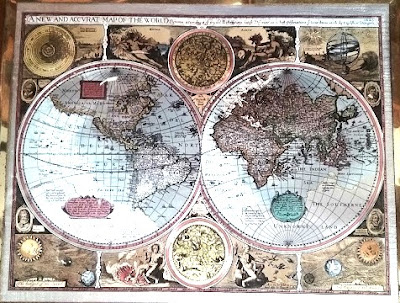
This is a picture of a magnet that was being sold at Strand's Book Store in New York City a few years ago. No, I did not buy it, but I liked it and took a picture, which I am sharing here now. 


Sometimes, I think that millions of Americans - tens of millions, even - who can be counted as Trump supporters know damn well that he is an incompetent moron. That he had zero qualifications for the office before he was elected, and that he has more than proven his lack of qualifications during both terms of his presidency. Especially during this second term, where he got rid of the members of his administration who had some qualifications and also put the Constitution ahead of one man's naked and raw ambitions for more power. Having surrounded himself with Yes men and women, Trump is strictly getting his way, running things as he sees fit.

Not surprisingly, it has been a complete and utter disaster.

Yet even while headlines dominate with his allegedly taking approval ratings - they currently are in the upper thirties to lower forties, depending on which poll you look at - he retains the support from that stubborn group of loyal Trump followers, his Mindless MAGA Moron cult following. 

Again, I personally suspect that a decent number of them actually know that he has been a disaster, that he has not been keeping his over-the-top campaign promises, and that the country is now far worse off under President Trump than it ever was without President Trump. However, there is something missing with them. Perhaps it is objectivity, or perhaps their anger is driving them. Perhaps it is as simple as immaturity, an inability to admit that they were wrong about this guy. That he is not the almost God-like figure whom their cult beliefs turned him into. 

Why has this second term been such a horror show for the country?

Simply put, having surrounded himself with ambitious losers much like himself, Trump gets whatever he wants. And it has been to the detriment of the country. Nobody is there now to rein him in, to tell him no, you can't do that even once in a while. 

So he keeps grabbing more and more power, weakening the Constitution and the traditional balance of powers that kept Washington going. And he keeps making a point of antagonizing people, both domestically and around the world. 

The results have been predictable. The country is more divided than ever before. Now, millions of Americans are waking up to the fact that yes, Trump does seem to have dictatorial ambitions. That is his governing style, and it flies in the face of Constitutional restraint that all previous presidents, to varying degrees, have governed with. Even if you did not like other recent presidents, regardless of the party, there always was at least some measure of restraint, some nod to traditions of the past regarding the presidency and governance in general. But that has been completely absent with Trump.

More Americans have lost faith in the direction that the country is going in than we have seen in recent years. And the rest of the world also has less faith and trust in the United States than it ever has before, as well, which has added to that sinking feeling that more and more Americans are getting. That sense that something had gone deeply, terribly wrong. 

To be clear, Trump has never been a pillar of stability or a model of reliability and truth. In fact, he is a con artist, and literally probably the most documented liar in recorded human history. This is a man who was born into enormous privilege and never had to struggle a single day in his life. How people believed the mythology of Trump as somehow this genius, this self-made man who built an empire and then believed his promises to do the same for the country that he did for his business empire is beyond me. Remember, thus guy declared bankruptcy six times. He even somehow ran a casino into the ground, despite that being as sure a thing in the business world as you are pretty much apt to get. Sure enough, it seems that he is trying to do for the country what he did for his own empire. Earlier this year, Trump's own Treasury Department declared the United States insolvent, which should have dominated headlines and discredit his entire presidency. But since he clearly believes in censorship - another warning sign that he is every bit the dictator that his detractors warned all of us about, it registered as barely a blip on the news radar screen for Americans. 

How else has Trump's presidency been disastrous?

For starters, he has turned much of the world against us. Our allies look at us with suspicion now, and for good reason. After all, Trump imposed tariffs across the board, with very few exceptions, to every country in the world. Even an island populated with penguins was not exempt, and so neither was a single country who were traditional allies. That did not produce good feelings or trust. Neither did his criticisms of fellow NATO members or his seeming reluctance to continue to support Ukraine in their war against Russia. Add to that Trump's carte blanche support of Israel's war on Gaza, and then Trump's own undeclared war with Iran, which he neither sough Congressional approval or even bothered to notify allies of, and you start to really get the sense that their distrust in the United States currently is not misplaced. Add to that his seeming musings about possibly taking over Greenland militarily, or his other military threats (Colombia, Panama, Cuba, Gaza, and continually and relentlessly referring to Canada as the 51st state), and yeah, it becomes easy to understand why much of the world has come to distrust and possible even despise what the United States has allowed itself to become under Trump. 

Then there are the other unsavory aspects of his presidency. Let's start with the broken promises. No, he did not take care of inflation, as promised. Now he claims to love inflation, but he campaigned on the idea that the price of gas and groceries would go down under him, and quickly, for that matter. Inflation still is out of control. And as far as gas goes, his war with Iran made the global price of gas go up rather dramatically. We are all still waiting for the economy to improve as this second Trump presidency approaches two years in.

He never ended the war in Ukraine, which he promised as a candidate in 2024. Nor did he keep us out of foreign wars. He invaded Venezuela and started this stupid war with Iran that, if anything, has undermined American authority in every possible way. Plus, he keeps threatening other country, as well, as mentioned earlier. 

Let's not forget that he never released the Epstein Files, which he promised to do. In fact, he has gone to such extraordinary lengths not to release the Epstein Files that you cannot help but wonder if he has something that he very much wants to remain hidden away from public view. In short, he looks like one of those sick elites who has always abuses his privileges over others. The entire Trump White House seems complicit in this cover-up, which makes Watergate look like innocent child's play by way of comparison, frankly. 

Of course, that also is part of the problem. Trump hardly seems to care if he is hiding his criminality or not. This administration is engaging in blatantly corrupt ways, and it hardly seems to matter. Having basically destroyed the balance of power, So nobody is keeping a check on his power. In fact, the Republican-led Congress, as well as the ultraconservative Supreme Court, seems to be bending over backwards to protect the criminal nature of this Trump presidency. 

Finally, on top of all of that, Trump sure appears to be far more focused on his insanely expensive vanity projects than on the well-being of Americans. He even suggested as much himself by admitting that the economic difficulties - or affordability - does not cross his mind. In fact, he claims that it is all a "Democratic hoax." That, despite life really feeling a whole lot less affordable for the vast majority of Americans than it ever has been before. But Trump has demolished the East Wing of the White House - again, without Congressional approval - and also destroyed the Rose Garden. He had that stupid, decadent MMA fighting event on the White House lawn, or at least what used to be the White House lawn, as it too has largely been destroyed. He destroyed the reflecting pool, and now has used that as a means of grabbing still more dictatorial powers. Ever the tyrant.

So yeah, this presidency has been an absolute disaster.

But it has not exactly come as a surprise.

In fact, this is what many people warned about. But tens of millions of Americans laughed off all of those warnings and voted for this corrupt fucking moron anyway.

Now, we are all paying the price. And it is unbearably high. 


Chronicle of a Disaster Foretold Maggie Haberman and Jonathan Swan’s “Regime Change” is packed with news about the Trump White House that will stay news. By David Remnick, June 23, 2026:

https://www.newyorker.com/magazine/2026/07/06/chronicle-of-a-disaster-foretold?utm_source=facebook&utm_medium=social&utm_campaign=dhfacebook&utm_content=app.dashsocial.com/newyorkermag/library/media/688313168

Chronicle of a Disaster Foretold | The New Yorker

⚽️In First Elimination Round Game, L'Equipe de France Gets Through Sweden to Advance Into the Round of 16⚽️


Not sure if France will live up to their billing or not. However, France have been  enjoying a solid tournament to this point. They defeated Sweden, 3-0, in their first elimination round game of this World Cup.

It took them some time to really get going. This French side has a lot of talent, but they often seem sluggish to open their games.

French star Kylian Mbappé got things going, scoring a goal in the 45th minute to give France a 1-0 lead by halftime. Mbappé would score another goal in the 74th minute, as well. To this point in the tournament, Mbappé has scored six goals in four games for France. He also has two assists. In total, he has scored 18 goals in his World Cup career, behind only Lionel Messi.

Bradley Barcola added to France's 1-0 lead with a goal in the 53rd minute, giving France some cushion with a 2-0 lead. Then Mbappé;s goal pretty much sealed the win.

As a result, France goes through to the round of 16. They will next play Paraguay, who are fresh off that incredible penalty kick shootout win over Germany.

June 30th: This Day in History


Once again, it should be reiterated, that this does not pretend to be a very extensive history of what happened on this day (nor is it the most original - the links can be found down below). If you know something that I am missing, by all means, shoot me an email or leave a comment, and let me know!


Jun 30, 1775: Congress impugns Parliament and adopts Articles of War

On this day in 1775, the Continental Congress drafts its rationale for taking up arms against Great Britain in the Articles of War.  

In the Articles of War, written one year before the adoption of the Declaration of Independence, Congress referred to "his Majesty's most faithful subjects in these Colonies" and laid the blame for colonial discontent not on King George III, but on "attempts of the British Ministry, to carry into execution, by force of arms, several unconstitutional and oppressive acts of the British parliaments for laying taxes in America."  

By phrasing their discontent this way, Congress attempted to notify the king that American colonists were unhappy with parliamentary policy. By July 1776, the Declaration of Independence proclaimed something very different:  

"The history of the present King of Great Britain is a history of repeated injuries and usurpations, all having in direct object the establishment of an absolute Tyranny over these States."  

Congress language is critical to understanding the seismic shift that had occurred in American thought in just 12 months. Indeed, Congress insisted that Thomas Jefferson remove any language from the declaration that implicated the people of Great Britain or their elected representatives in Parliament. The fundamental grounds upon which Americans were taking up arms had shifted. The militia that had fired upon Redcoats at Lexington and Concord had been angry with Parliament, not the king, who they still trusted to desire only good for all of his subjects around the globe. This belief changed after King George refused to so much as receive the so-called Olive Branch Petition, sent to him by Congress in July 1775 in a final attempt to make him aware of the colonists grievances. Patriots had hoped that Parliament had curtailed colonial rights without the king's full knowledge, and that the petition would cause him to come to his subjects' defense. When George III refused to read the petition, Patriots realized that Parliament was acting with royal knowledge and support. The king became the central focus of the Americans patriotic rage when English-born radical Thomas Paine published his blistering attack on the monarchy, Common Sense, in January 1776.


Jun 30, 1971: Soviet cosmonauts perish in reentry disaster     

The three Soviet cosmonauts who served as the first crew of the world's first space station die when their spacecraft depressurizes during reentry.  

On June 6, the cosmonauts Georgi Dobrovolsky, Vladislav Volkov, and Viktor Patsayev were launched into space aboard Soyuz 11 on a mission to dock and enter Salyut 1, the Soviet space station that had been placed in orbit in April. The spacecraft successfully docked with the station, and the cosmonauts spent 23 days orbiting the earth. On June 30, they left Salyut 1 and began reentry procedures. When they fired the explosive bolts to separate the Soyuz 11 reentry capsule from another stage of the spacecraft, a critical valve was jerked open.  

One hundred miles above the earth, the capsule was suddenly exposed to the nearly pressureless environment of space. As the capsule rapidly depressurized, Patsayev tried to close the valve by hand but failed. Minutes later, the cosmonauts were dead. As a result of the tragedy, the Soviet Union did not send any future crews to Salyut 1, and it was more than two years before they attempted another manned mission.


Jun 30, 1934: Night of the Long Knives

In Germany, Nazi leader Adolf Hitler orders a bloody purge of his own political party, assassinating hundreds of Nazis whom he believed had the potential to become political enemies in the future. The leadership of the Nazi Storm Troopers (SA), whose four million members had helped bring Hitler to power in the early 1930s, was especially targeted. Hitler feared that some of his followers had taken his early "National Socialism" propaganda too seriously and thus might compromise his plan to suppress workers' rights in exchange for German industry making the country war-ready.  

In the early 1920s, the ranks of Hitler's Nazi Party swelled with resentful Germans who sympathized with the party's bitter hatred of Germany's democratic government, leftist politics, and Jews. In November 1923, after the German government resumed the payment of war reparations to Britain and France, the Nazis launched the "Beer Hall Putsch"--their first attempt at seizing the German government by force. Hitler hoped that his nationalist revolution in Bavaria would spread to the dissatisfied German army, which in turn would bring down the government in Berlin. However, the uprising was immediately suppressed, and Hitler was arrested and sentenced to five years in prison for high treason.  

Sent to Landsberg jail, he spent his time dictating his autobiography, Mein Kampf, and working on his oratorical skills. After nine months in prison, political pressure from supporters of the Nazi Party forced his release. During the next few years, Hitler and the other leading Nazis reorganized their party as a fanatical mass movement that was able to gain a majority in the German parliament--the Reichstag--by legal means in 1932. In the same year, President Paul von Hindenburg defeated a presidential bid by Hitler, but in January 1933 he appointed Hitler chancellor, hoping that the powerful Nazi leader could be brought to heel as a member of the president's cabinet.  

However, Hindenburg underestimated Hitler's political audacity, and one of the new chancellor's first acts was to use the burning of the Reichstag building as a pretext for calling general elections. The police, under Nazi Hermann Goering, suppressed much of the party's opposition before the election, and the Nazis won a bare majority. Shortly after, Hitler took on absolute power through the Enabling Acts. In 1934, Hindenburg died, and the last remnants of Germany's democratic government were dismantled, leaving Hitler the sole master of a nation intent on war and genocide.


June 30, 1936: Gone with the Wind published   

Margaret Mitchell's Gone with the Wind, one of the best-selling novels of all time and the basis for a blockbuster 1939 movie, is published on this day in 1936.  

In 1926, Mitchell was forced to quit her job as a reporter at the Atlanta Journal to recover from a series of physical injuries. With too much time on her hands, Mitchell soon grew restless. Working on a Remington typewriter, a gift from her second husband, John R. Marsh, in their cramped one-bedroom apartment, Mitchell began telling the story of an Atlanta belle named Pansy O'Hara.  

In tracing Pansy's tumultuous life from the antebellum South through the Civil War and into the Reconstruction era, Mitchell drew on the tales she had heard from her parents and other relatives, as well as from Confederate war veterans she had met as a young girl. While she was extremely secretive about her work, Mitchell eventually gave the manuscript to Harold Latham, an editor from New York's MacMillan Publishing. Latham encouraged Mitchell to complete the novel, with one important change: the heroine's name. Mitchell agreed to change it to Scarlett, now one of the most memorable names in the history of literature.  

Published in 1936, Gone with the Wind caused a sensation in Atlanta and went on to sell millions of copies in the United States and throughout the world. While the book drew some criticism for its romanticized view of the Old South and its slaveholding elite, its epic tale of war, passion and loss captivated readers far and wide. By the time Mitchell won the Pulitzer Prize for Fiction in 1937, a movie project was already in the works. The film was produced by Hollywood giant David O. Selznick, who paid Mitchell a record-high $50,000 for the film rights to her book.  

After testing hundreds of unknowns and big-name stars to play Scarlett, Selznick hired British actress Vivien Leigh days after filming began. Clark Gable was also on board as Rhett Butler, Scarlett's dashing love interest. Plagued with problems on set, Gone with the Wind nonetheless became one of the highest-grossing and most acclaimed movies of all time, breaking box office records and winning nine Academy Awards out of 13 nominations.  

Though she didn't take part in the film adaptation of her book, Mitchell did attend its star-studded premiere in December 1939 in Atlanta. Tragically, she died just 10 years later, after she was struck by a speeding car while crossing Atlanta's Peachtree Street. Scarlett, a relatively unmemorable sequel to Gone with the Wind written by Alexandra Ripley, was published in 1992.


The Conquistadors took gold from the Aztecs. Russian troops occupied Danzig. The Tower Bridge in London opened. French troops left Algeria. Rwanda and Burundi gained independence The Atlanta Falcons came into existence. The Beatles landed in Tokyo for a tour.  Brazil trounced Italy for the World Cup title. West and East Germany merged their economies on the incredibly quick path towards reunification.


Here's a more detailed look at events that transpired on this date throughout history:


296 - St Marcellinus begins his reign as Catholic Pope


350 - Roman usurper Nepotianus, of the Constantinian dynasty, is defeated and killed by troops of the usurper Magnentius, in Rome.

833 - Louis, king of Austria, crowned

949 - Otto I the Great gives away bishopdom of Utrecht "foreestrecht"

1294 - Jews are expelled from Berne Switzerland

1371 - Arnold II of Horne chosen bishop of Utrecht

1397 - Denmark, Norway & Sweden sign Union of Kalmar under Queen Margaretha

1422 - Battle of Arbedo between the duke of Milan and the Swiss cantons.

1520 - Spanish conquerors under Cortes take gold from Aztecs

1520 - The Spaniards are expelled from Tenochtitlan.

1528 - Burgundy army occupies Utrecht

1548 - Emperor Charles V orders Catholics to become Lutherans

1559 - King Henry II of France is seriously injured in a jousting match against Gabriel de Montgomery.

1596 - English/Dutch fleet reach Cadiz

1598 - King Philip II moves to Escorial palace

1607 - Annales Ecclesiastici (Scientific History of Catholicism) published

1643 - Battle at Atherton Moor: Royalists beat parliamentary armies


Royal France


1648 - French premier cardinal Mazarin calls Saint Louis Chamber together


1651 - The Deluge: Khmelnytsky Uprising - the Battle of Beresteczko ends with a Polish victory.

1688 - Whig-Lords questions prince Willem III van Orange on Protestantism

1690 - Battle at Beachy Head: French under Tourville beat Neth/English fleet

1700 - Gelderland goes on Gregorian calendar (tomorrow is 12/7/1700)

1722 - Hungarian Parliament condemns emperor Karel VI's Pragmatic Sanctions

1734 - Russian army occupies Danzig

1741 - Pope Benedict XIV encyclical forbidding traffic in alms

1755 - Philippines close all non-catholic Chinese restaurants

1758 - Seven Years' War: The Battle of Domstadtl takes place.

1794 - Battle of Fort Recovery, Ohio

1815 - US naval hero Stephen Decatur ends attacks by Algerian pirates

1834 - Congress creates Indian Territory (now Oklahoma)

1859 - Charles Blondin is first to cross Niagara Falls on a tightrope

1860 - The 1860 Oxford evolution debate at the Oxford University Museum of Natural History takes place.

1861 - CSS Sumter slips past USS Brooklyn blockade

1862 - Battle at Nelson's Farm/Glendale/Frayser's Farm, Virginia: Confederate assault attack. 6th day of 7 days battles US Civil War

1862 - Gustave Flaubert completes "Salammbo"

1863 - Battles in Hanover Pennsylvania: 80 casualties

1863 - Dutch colony Suriname counts population of 33,000 slaves

1863 - Skirmish at Sporting Hill Pennsylvania

1865 - 8 alleged conspirators in assassination of Lincoln are found guilty

1870 - Ada Kepley becomes 1st female law college graduate

1871 - Guatemala revolts for agrarian reforms

1876 - Serbia declared war on Turkey

1879 - Ex-khedive Ismael Pasha leaves Cairo with train full stolen goods

1881 - Henry Highland Garnet, named minister to Liberia

1893 - Excelsior diamond (blue-white 995 carats) discovered


1894 - Korea declares independence from China, asks for Japanese aid


1894 - London Tower Bridge opens

1896 - W S Hadaway patents electric stove

1899 - Jack Hearne takes a hat-trick Eng v Australia at Headingley

1900 - 4 German liners burn at Hobokon Docks NJ, 326 die

1902 - Cleveland is 1st AL team to hit 3 consecutive HRs in same inning

1906 - John Hope becomes 1st black president of Morehouse College

1906 - Pure Food & Drug Act & Meat Inspection Act adopted

1908 - Boston's Cy Young's 2nd no-hitter, beats NY Highlanders, 8-0

1908 - Giant fireball most likely caused by the air burst of a large meteoroid or comet impacts in Siberia (Tunguska Event)

1909 - Jack Johnson fights Tony Ross to no decision in 6 for hw boxing title

1910 - Russia absorbs Finland

1911 - Adolphe Messimy appointed French minister of War

1911 - US Assay Office in St Louis, Missouri closes

1913 - 2nd Balkan War begins


A statue of Gandhi, the iconic leader of the Indian independence movement, at Union Square in New York City.

1914 - Mahatma Gandhi's 1st arrest, campaigning for Indian rights in South Africa


1916 - General Douglas Haig reports "The men are in splendid spirits"

1923 - NZ claims Ross Dependency in Antarctica

1924 - England score 2-503 in day's play v South Africa at Lord's

1927 - Augusto Cesar Sandino issues his Manifesto Politico

1927 - US Assay Office in Deadwood, South Dakota closes

1928 - Radio Service Bulletin lists radio stations call signs that are to be changed to conform with international standards

1930 - 1st round-the-world radio broadcast Schenectady NY

1930 - Bradman scores 254 at Lord's v England, 320 mins, 25 fours

1933 - 50,000 demonstrate in Antwerp against fascism/war

1933 - Card's Dizzy Dean strikes out 17 Cubs to win 8-2

1933 - US Assay Offices in Helena Mon, Boise Id & Salt Lake City Utah closes


1934 - "Night of Long Knives," Hitler stages bloody purge of Nazi party


1934 - French Equatorial Africa constituted a single administrative unit

1934 - NFL's Portsmouth Spartans become Detroit Lions

1935 - Danno O'Mahoney beats Ed George in Boston, to become wrestling champ

1935 - The Senegalese Socialist Party holds its first congress.


1936 - "Gone With the Wind" by Margaret Mitchell, published


1936 - 40 hour work week law approved (federal)

1936 - Haile Selassie asks League of Nations for sanctions against Italy

1936 - Margaret Mitchell's novel "Gone with the Wind" published


An official reprint of Action Comics # 1 on the 50th anniversary, which I got at the time (two copies). It is worth a bit of money, but the actual, original Action Comics # 1 from 1938 often has a tag in the millions of dollars. I'm not that rich. 


1938 - Superman 1st appears in DC Comics' Action Comics Series issue #1


1939 - Heinkel He 176 rocket plane flies for 1st time, at Peenemunde

1940 - "Brenda Starr" cartoon strip, by Dale Messick, first appears

1940 - 58 U-boats (284,000 ton) sunk this month

1940 - US Fish & Wildlife Service forms

1941 - 61 U-boats (310,000 ton) sunk this month


1941 - Pro-Nazi group declares Ukraine independence


1941 - World War II: Operation Barbarossa - Germany captures Lviv, Ukraine.


1942 - 144 U boats (700,000 ton) sunk this month

1942 - Col-gen Von Paul' 6th Army enters Ukraine

1942 - US Mint in New Orleans ceases operation

1942 - US bombs Celebes & Timor


1943 - Gen MacArthur begins Operation Cartwheel (island-hopping)


1944 - Allies land on Vogelkop, New Guinea

1944 - French Cotentin Peninsula in allied hands

1944 - Universal strike against nazi terror in Copenhagen

1944 - World War II: The Battle of Cherbourg ends with the fall of the strategically valuable port to American forces.

1945 - 17-day newspaper strike in NY begins

1948 - Cleve Indian Bob Lemon no-hits Detroit Tigers, 2-0

1948 - Last British armies leave Israel

1948 - Transistor as a substitute for Radio tubes announced (Bell Labs)

1949 - Dutch troops evacuate Djakarta

1950 - US Gen MacArthur visits front in South Korea/asks for US troops

1951 - "Victor Borge Show," last airs on NBC-TV

1951 - NAACP begins attack on school segregation & discrimination

1952 - "Guiding Light" soap opera moves from radio to TV

1952 - Hussein Sirri Pasha forms Egyptian government

1953 - First Corvette manufactured

1954 - Largest check: Internal US Treasury check at $4,176,969,623.57

1954 - Yank pitcher Tom Morgan ties record by hitting 3 batters in 1 inning This was also Bobby Brown's last game; he retired to become a doctor

1955 - "Johnny Carson Show," debuts on CBS-TV


1956 - Lenins politics testament (1923) published in Moscow

1956 - United DC-7 & TWA collide over Grand Canyon killing 128 1958 - "No Chemise, Please" by Gerry Grenahan peaks at #24

1958 - Dutch government of Drees ends obligatory dismissal of married teachers


1960 - US stops sugar import from Cuba


1960 - Zaire (formerly Belgian Congo) declares independence from Belgium


1961 - Explorer (12) fails to reach Earth orbit


Flag of Algeria


1962 - French Foreign Legion leaves Algeria


1962 - Premier Ben Khedda disbands Algerian Liberation Army fighters


1962 - Rwanda & Burundi become independent


1963 - Cardinal Montini elected Pope Paul VI, 262nd head of RC Church

1963 - Ciaculli massacre: A car bomb, intended for Mafia boss Salvatore Greco, kills seven police and military officers near Palermo.

1964 - Centaur 3 launch vehicle fails to make Earth orbit

1964 - Last UN troops leave Congo

1965 - NFL grants Atlanta Falcons a franchise


1966 - Beatles land in Tokyo for a concert tour


1966 - Leopoldville Congo is renamed Kinshasa


1967 - Maj Robert H Lawrence Jr named 1st black astronaut 

1967 - Moise Tsjombe kidnapped to Algeria


Flag of East Germany


1968 - E German party leader Ulbricht receives "Order of October Revolution"

1968 - Gaullists win French parliamentary election, 358 of 458 chairs

1969 - Derek Clayton of Australia sets Marathon record at 2:08:34 1969 - Spain cedes Ifni to Morocco


Picture of the FIFA World Cup Trophy, which presented to the champions of the World Cup tournament.

1970 - Brazil beats Italy 4-1 in soccer's 9th World Cup at Mexico City


1971 - Biesheuvel government forms

1971 - Dutch Biesheuvel government begins [or May 6]

1971 - Ohio becomes 38th state to approve of lower voting age to 18, thus ratifying 26th amendment

1972 - 1st leap second day; also 1981, 1982, 1983, 1985


1972 - One leap second is added to the UTC time system.

1973 - "Burns & Schreiber Comedy Hour," TV Variety; debut on ABC

1973 - Biggest US tanker "Brooklyn" christened (230,000 ton)

1973 - Observers aboard Concorde jet observe 72-min solar eclipse

1974 - 2nd du Maurier Golf Classic (Peter Jackson Classic): Carole Jo Skala

1974 - Petty thief Peter Leonard sets fire to cover burglary that torches "Gulliver's" nightclub killing 24 (Port Chester NY)


1974 - Soviet dancer Mikhail Baryshnikov defects to west


1975 - Bundy victim Shelley Robertson disappears in Colorado

1975 - Heavyweight Muhammad Ali defeats Joe Bugner in Malaysia

1975 - University of California reports galaxy 3C123 at 8 billion light years distance

1976 - John Walker of NZ sets record for 2000 m, 4:51.4

1977 - Jimmy Carter cans B-1A bomber later "B-1's the B-52"

1977 - Marvel Comics publish "Kiss book" tributing rock group Kiss

1977 - US Railway Post Office final train run (NY to Wash DC)


1980 - West German Chancellor Helmut Schmidt visits Moscow


The flag of the People's Republic of China


1981 - China's Communist Party condemns late Mao Tse-tung's policy


1982 - "Lena Horne: Lady, Music" closes at Nederlander NYC after 333 perfs

1982 - Federal Equal Rights Amendment fails 3 states short of ratification

1982 - Orbiter Challenger (OV-099) rolled out at Palmdale

1982 - NJ NHL franchise officially named Devils by fan balloting, runner-up names are Blades, Meadowlanders & Americans

1984 - Failed coup by cocaine growers in Bolivia

1984 - Last sixpence minted in Great-Britain (in use since 1551)


1985 - 39 remaining hostages from Flight 847 are freed in Beirut


1986 - Georgia sodomy law upheld by Supreme Court (5-4)

1987 - Emmy 14th Daytime Award presentation - Susan Lucci loses for 8th time

1987 - Patrik Sjoberg of Sweden set a new world record in high jump

1987 - The Royal Canadian Mint introduces the $1 coin, known as the Loonie.

1988 - "Sledge Hammer!" last aires on ABC-TV

1988 - Brooklyn dedicates a bus depot honoring Jackie Gleason


1988 - French archbishop Marcel Lefebvre is excommunicated by the Roman Catholic Church.

1989 - "Les Miserables," opens at Theatre Muzyczyny, Gdynia

1989 - Attorney General Thornburgh orders Joseph Doherty deported to UK

1989 - Congressman Lukins found guilty of having sex with a 16 year old girl

1989 - NASA closes down tracking stations in Santiago, Chile & Guam

1989 - NY State Legislature passes Staten Island secession bill

1989 - Sudan suspends interim constitution following coup


1990 - East & West Germany merge their economies


1992 - 1st pay bathrooms in US open: 25 cents (NYC)

1992 - Fidel Ramos installed as president of Philippines

1992 - Total solar eclipse in Uruguay (5m21s)

1992 - Former Prime Minister Margaret Thatcher joins the House of Lords as Baroness Thatcher of Kesteven.

1993 - "Les Miserables," opens at Point Theatre, Dublin

1993 - Richard Jacobs announces Chief Wahoo will go to Jacobs Field

1994 - Airbus A330 crash at Toulouse France (7 killed)

1994 - Giants outfielder Darren Lewis errors after record 392 flawless games

1994 - Pre-trial hearings open in LA against OJ Simpson

1994 - US Ice Skating Federation bars Tonya Harding for life


1997 - Leap Second to synchronize atomic clocks

1998 - Sega Channel, cable's 1st on-demand video game service, closes down

2005 - Spain legalizes same-sex marriage.

2007 - A car crashes into Glasgow International Airport in Scotland, believed to be a terrorist attack.

2009 - Yemenia Flight 626 crashes off the coast of Moroni, Comoros killing 152 people and leaving 1 survivor


2012 - 30 people attending a funeral in Zamalka, Syria, are killed on a day that saw 83 civilian deaths


2012 - Mid-Atlantic storms in the United States kill 13 and leave millions without power in Ohio, Virginia, Maryland and the District of Columbia.

2012 - Mohamed Morsi is sworn in as President of Egypt


1097 - The Crusaders defeated the Turks at Dorylaeum.   1841 - The Erie Railroad rolled out its first passenger train.   1859 - Charles Blondin became the first person to cross Niagara Falls on a tightrope.   1894 - Korea declared independence from China and asked for Japanese aid.   1908 - An explosion in Siberia, which knocked down trees in a 40-mile radius and struck people unconscious some 40 miles away. It was believed by some scientists to be caused by a falling fragment from a meteorite.   1912 - Belgian workers went on strike to demand universal suffrage.   1913 - Fighting broke out between Bulgaria and Greece and Spain. It was the beginning of the Second Balkan War.   1915 - During World War I, the Second Battle Artois ended when the French failed to take Vimy Ridge.   1922 - Irish rebels in London assassinate Sir Henry Wilson, the British deputy for Northern Ireland.   1930 - France pulled its troops out of Germany’s Rhineland.   1934 - Adolf Hitler purged the Nazi Party by destroying the SA and bringing to power the SS in the "Night of the Long Knives."   1935 - Fascists caused an uproar at the League of Nations when Haile Selassie of Ethiopia speaks.   1936 - Margaret Mitchell’s book, "Gone with the Wind," was published in New York City.   1950 - U.S. President Harry Truman ordered U.S. troops into Korea and authorizes the draft.   1951 - On orders from Washington, General Matthew Ridgeway broadcasts that the United Nations was willing to discuss an armistice with North Korea.   1952 - CBS-TV debuted "The Guiding Light."   1953 - The first Corvette rolled off the Chevrolet assembly line in Flint, MI. It sold for $3,250.   1955 - The U.S. began funding West Germany’s rearmament.   1957 - The American occupation headquarters in Japan was dissolved.   1958 - The U.S. Congress passed a law authorizing the admission of Alaska as the 49th state in the Union.   1960 - The Katanga province seceded from Congo (upon Congo's independence from Belgium).   1962 - Los Angeles Dodger Sandy Koufax pitched his first no-hitter in a game with the New York Mets.   1964 - The last of U.N. troops left Congo after a four-year effort to bring stability to the country.   1970 - The Cincinnati Reds moved to their new home at Riverfront Stadium.   1971 - The U.S. Supreme Court allowed the New York Times to continue publishing the Pentagon Papers.   1971 - The Soviet spacecraft Soyuz 11 returned to Earth. The three cosmonauts were found dead inside.   1971 - The 26th Amendment to the U.S. Constitution was ratified when Ohio became the 38th state to approve it. The amendment lowered the minimum voting age to 18.   1974 - Russian ballet dancer Mikhail Baryshnikov defected in Toronto, Canada.   1974 - The July 4th scene from the Steven Spielberg movie "Jaws" was filmed.   1977 - U.S. President Jimmy Carter announced his opposition to the B-1 bomber.   1984 - The longest professional football game took place in the United States Football League (USFL). The Los Angeles Express beat the Michigan Panthers 27-21 after 93 minutes and 33 seconds.   1985 - Yul Brynner left his role as the King of Siam after 4,600 performances in "The King and I."   1986 - The U.S. Supreme Court ruled 5-4 that states could outlaw homosexual acts between consenting adults.   1994 - The U.S. Figure Skating Association stripped Tonya Harding of the 1994 national championship and banned her from the organization for life for an attack on rival Nancy Kerrigan.   1998 - Officials confirmed that the remains of a Vietnam War serviceman buried in the Tomb of the Unknowns at Arlington National Cemetery were identified as those of Air Force pilot Michael J. Blassie.   2000 - U.S. President Clinton signed the E-Signature bill to give the same legal validity to an electronic signature as a signature in pen and ink.


1859 French acrobat Charles Blondin, AKA Jean Francois Gravelet, walked across Niagara Falls on a tightrope. 1908 A powerful natural explosion from an unknown cause rocked the Tunguska Basin, in eastern Siberia, flattening hundreds of square miles of forest and resulting in tremors that could be felt hundreds of miles away. 1921 President Warren G. Harding appointed former president William H. Taft chief justice of the United States. 1934 Adolf Hitler secured his position in the Nazi party by a "blood purge," ridding the party of other leaders such as Ernst Roehm and Kurt von Schleicher. 1936 Margaret Mitchell's Gone with the Wind was published. 1971 The 26th Amendment, which lowered the voting age to 18, was ratified by the states. 1998 The remains of a Vietnam War serviceman buried in the Tomb of the Unknown Soldiers were identified as those of Air Force pilot Michael J. Blassie.


The following links are to web sites that were used to complete this blog entry:

http://www.historyorb.com/today/events.php

http://on-this-day.com/onthisday/thedays/alldays/jun30.htm

http://www.history.com/this-day-in-history

http://www.infoplease.com/dayinhistory

Monday, June 29, 2026

World Cup 2026: Canada Is Now Enjoying Their Most Successful World Cup Ever


It feels like just a few days ago when I was disappointed that Canada had lost their final round robin game to Switzerland. It was a big showdown, with the winner ultimately clinching Group B. 

Canada would have clinched the group had they won. Additionally, they would have the advantage of playing their elimination round games at home in Canada.

However, the lost, 2-0.

Still, despite having to go on the road to Los Angeles for their first elimination game, they still managed to win. Their opponents were South Africa, who also had qualified for the elimination round for the first time ever. It was a tight contest, but Canada finally broke the deadlock when midfielder Stephen Eustáquio scored the game's only goal two minutes into extra time, just before the game was set to go into overtime. 

So Canada not only won their first ever World Cup game earlier in the tournament, but they also advanced to the elimination round for the first time, too. Now, they won their first ever elimination round game and advance to the round of 16 for the first time ever, as well.

What a tournament for Canada!


Climate Update: Former NOAA Employees Have Developed a Website Re-creating Valuable Climate Information Which Trump Tried to Silence


Last month, I arrived in France just in time for a massive heat wave. It was relentless and produced some of the most extreme temperatures ever experienced in France during the month of May, which historically tended to be relatively mild. But last month was the hottest month of May on record in both France as well as Great Britain.

Now, Europe has been experiencing some of the worst heat ever recorded in recent weeks. It is the hottest month of June on record in much of Europe. Record hot temperatures were experienced in Great Britain, in France, Spain, and now, Germany. 

Days ago, temperatures reached 43.8°C (110.8°F) in one town in western France (Palluau), which is the highest temperature ever recorded in France. To put that into perspective, that record is hotter than the hottest temperature ever recorded in Florida, which is 42.7°C (109°F).

While it was not Paris which set the record hot temperature, it did reach a scorching June record of 40.9 C last Wednesday. All of this is not normal for France, which historically was known as a country with relatively mild weather and temperatures. I talked to my cousin in France, and she said that the conditions were unbearable. We are all concerned for older relatives. 

Nor is it relegated to France. Yesterday, Germany experienced temperatures of 41.7°C (107.06°F) in Coschen, in eastern Germany, near the Polish border. 

Indeed, record hot temperatures were set across Europe. On top of record heat recorded in France and Germany, other countries also saw new record hot temperatures as well, according to a BBC article by Neil Murphy (see link below):

The Czech Republic set its second temperature record in two days, recording 41.1C at Doksany, north of Prague, the meteorological institute CHMI said.  

Poland also broke its all-time temperature record with 40.5C in the town of Slubice, a spokeswoman for the Institute of Meteorology and Water Management (IMGW) told the AFP news agency on Sunday. 

All of that means that this heatwave is the most intense heatwave which western Europe has ever recorded.

Here is a snippet from a CBC article by Thomson Reuters from June 26th (see link below):

Scientists said the heat wave, which began on June 20, was the worst ever recorded in Europe, where the climate is changing faster than anywhere else on the planet.

There were melting road surface issues in France and Germany, where parts of a major highway buckled under the intense heat. Record heat were widespread in parts of Europe. My girlfriend is in Poland right now, where the heatwave was slow to arrive. But it is there now and, like my cousin, she says that it is unbearable.

Unfortunately, she will be arriving back here in northeastern North America just in time for a massive heatwave here. Temperatures and conditions are supposed to be scoring from as far west as Kansas to much of the eastern seaboard. Like with Europe, this is supposed to be a dangerous heat. Like with Europe, there is a distinct possibility of new heat records being set. 

That on top of the record droughts being experienced across much of the United States. 

Sorry, but none of this feels normal.

Luckily, we have the solution in this country. We elected a man who claims not to believe in climate change, dismissing it a Chinese hoax. Dear Leader has pulled us out of the Paris Accord and even censored any mention of climate change, here in this country where we are supposed to have freedom of speech.

What a guy.

And what a solution to what sure seems to be a problem.

I'm sure everyone suffering under sweltering conditions and water restrictions will at least be pleased not to be reminded about the possibility that all of this might have something to do with climate change. I guess that's one way to solve a problem, is never to ever allow it to be mentioned or discussed. Then again, that has always been Trump's solution to things. Problem? What problem? Things are wonderful, they are great. They have never been better! Even if it sure looks like the country is going to hell in a hurry, we get to hear him bragging about the wonderful job that he is doing and all of those massive vanity projects that he is building in his own honor. 

Again, what a guy. 

But here is some good news: a scientist fired because of Trump has launched a website with all of the date which Trump's censorship was supposed to make inaccessible. 

That's the funny thing about making a point of making enemies everywhere: they seem determined to get you back at some point or another. And I for one am glad that this website is now running, and with apparently full data, despite Trump's best efforts to sweep all of this under the rug. 

Because frankly, this is becoming a real problem, one that is glaringly obvious and monstrous. And it's not because some idiot on top wants it censored that this will be going away.


Below are the links to the articles which I used in writing this blog entry, and from which I obtained all of the specific information and/or quotes used above:


Ex-NOAA employees re-create a valuable climate data site shut down by Trump June 26, 20265:00 AM ET By   Scott Neuman

https://www.npr.org/2026/06/26/nx-s1-5869615/climate-noaa-data-trump-doge

Ex-NOAA employees re-create a climate data site shut down by Trump : NPR


Government Scientists Fired by Trump Launch New Website for Sharing Climate Data "Trusted climate information should not disappear when politics change." By Joe Wilkins  Published Jun 25, 2026 11:

https://futurism.com/science-energy/government-scientists-noaa-trump-climate-data

Government Scientists Fired by Trump Launch New Website for Sharing Climate Data


Europe's heatwave linked to 1,300 deaths, WHO says, as Germany hits record 41.7C by Neil Murphy, June 28, 2026:

https://www.bbc.com/news/articles/cn4d2vv935lo

Europe's heatwave 'linked to 1,300 deaths' as more records broken


Paris hit a June record of 40.9 C on Wednesday. There have been at least 55 deaths linked to the heat wave in France, and even though temperatures were expected to ease, authorities braced for more casualties.


France hits record 43.8°C as deadly heatwave grips Europe published by MSN.com, June 27, 2026:

https://www.msn.com/en-us/news/insight/france-hits-record-43-8-c-as-deadly-heatwave-grips-europe/gm-GM2CD14056?gemSnapshotKey=GM2CD14056-snapshot-1&ocid=sapphireappshare

France hits record 43.8°C as deadly heatwave grips Europe


Europe on high alert as killer heat spreads, prompting alcohol ban and Pride parade delay in France Paris Pride March organizers rescheduled event after police asked to cancel major events amid heat wave Thomson Reuters · Posted: Jun 26, 2026:

https://www.cbc.ca/news/world/europe-heat-wave-omega-alcohol-ban-pride-parade-france-9.7249778

Europe on high alert as killer heat spreads, prompting alcohol ban and Pride parade delay in France | CBC News

June 29th: This Day in History


Once again, it should be reiterated, that this does not pretend to be a very extensive history of what happened on this day (nor is it the most original - the links can be found down below). If you know something that I am missing, by all means, shoot me an email or leave a comment, and let me know!


A solar eclipse was recorded by someone in Ireland in 512. Jacques Cartier found Prince Edward Island in Canada on this day in 1534. The Globe Theater, legendary for playing many of Shakespeare's plays, burned down on this day in 1613. The first (known) audio recording of classical music was made on this day in 1888. It was Handel's Israel in Egypt on wax cylinder. On this day in 1941, Nazi German forces captured L'viv in Ukraine during the invasion of the Soviet Union. A mass slaughter soon followed. On this day in 1949 in South Africa, the Prohibition of Mixed Marriages Act was passed. This was one of the essential laws of apartheid, the strict system of racial segregation in South Africa from 1948 until 1994. This specific law banned marriages between white and non-white people. In 1958 on this day, Brazil defeated Sweden 5-2 in Stockholm to win the World Cup. The Beatles first song, "From Me to You" hit the British charts on this day in 1963. In Vietnam, the United States bombed Hanoi for the first time. Mick Jagger and Keith Richards were imprisoned on drug charges.  The Supreme Court ruled that the death penalty was "cruel and unusual". There was a military coup in Ethiopia on this day in 1974. On this day in 1974,  Isabel Perón became the President of Argentina. The Voting Rights Act of 1965 was extended in 1982. Argentina won it's second World Cup title on this day in 1986. On this day in 1989, the United States Congress voted to impose new sanctions on China following the Tiananmen Square Massacre earlier in the month. 


Here's a more detailed look at events that transpired on this date throughout history:

512 - A solar eclipse is recorded by a monastic chronicler in Ireland.

1149 - Raymond of Antioch is defeated and killed at the Battle of Inab by Nur ad-Din.

1194 - Sverre is crowned King of Norway.

1236 - Ferdinand III of Castile and Leon took Cordoba in Spain.

1312 - Roman Catholics German King Henry VII crowned

1377 - French invasion fleet lands at Rye England

1428 - Jacoba of Bavaria signs cease fire with Philip the Good

1529 - Emperor Karel V & Pope Clemens VII sign Treaty of Barcelona


A sign with the image of French explorer Jacques Cartier on it, located in the Ville de Gaspé, Québec, with a claim that this place is the "Berceau du Canada" (Birthplace of Canada). It may very well be the birthplace of what can be considered modern Canada.

Statue of Samuel de Champlain in Québec


• On this day in 1534, French explorer Jacques Cartier reached Prince Edward Island in present-day Canada.


1540 - English ex chancellor Thomas Cromwell sentenced as heretic


1613 -  London's Globe Theatre burned down during a performance of Shakespeare's Henry VIII.


• In 1652 on this day, Massachusetts declared itself an independent commonwealth.


1659 - The Russians, led by prince Trubetskoy are defeated by the Ukrainian armies of Ivan Vyhovsky in the Battle of Konotop.

1682 - Sofia names herself regent of Russia

1694 - Dutch fleet attacks French grain transports


Royal France

1749 - New Governor, Charles de la Ralière Des Herbiers, arrives at Isle Royale (Cape Breton Island)
.


1755 - 515 prominant filipinos baptized as Catholic

1762 - Russian Czar Peter III divorces his wife Catharina II

1767 - The British Parliament approved the Townshend Revenue Acts. The acts imposed import duties on glass, lead, paint, paper and tea shipped to America.

1776 - Mission Dolores founded by SF Bay

1776 - Virginia state constitution adopted and Patrick Henry made governor

1786 - Alexander Macdonell and over five hundred Roman Catholic highlanders leave Scotland to settle in Glengarry County, Ontario.

1800 - Free mason lodge establishes in Alkmaar

1804 - Privates John Collins and Hugh Hall of the Lewis and Clark Expedition were found guilty by a court-martial consisting of members of the Corps of Discovery for getting drunk on duty. Collins received 100 lashes on his back and Hall received 50.

1850 - British ex-premier sir Robert Peel falls off his horse

1850 - Autocephaly Officially Granted by the Ecumenical Patriarchate of Constantinople to The Church of Greece.

1854 - Netherlands allows corporal punishment

1857 - Battle at Chinhat (Indies rebel under Barkat Ahmed beat British)

1858 - Great fire in London harbor


1858 - Treaty of Algun, China cedes north bank of Amur River to Russia


1860 - The first iron-pile lighthouse was completed at Minot’s Ledge, MA.

1862 - Day 5 of 7 Days-Battle of Savage's Station Va

1863 - Battle at Westminster Maryland: Federal assault

1863 - George A Custer (23) appointed Union Brig-general

1863 - Lee orders his forces to concentrate near Gettysburg, Pennsylvania

1863 - Very first First National Bank opens in Davenport, Iowa

1864 - Grand Trunk Railway accident; 100 killed

1867 - Pope Pius IX declares Gorcumse holy martyrs

1874 - Greek politician Charilaos Trikoupis publishes a manifesto in the Athens daily Kairoi entitled "Who's to Blame?" in which he lays out his complaints against King George. He is elected Prime Minister of Greece the next year.

1880 - France annexed Otaheite (Tahiti)

1881 - Pope Leo XIII publishes encyclical Diuturnum illud


Bust of German-British composer George Friedrich Handel

The first (known) audio recording of classical music was made on this day in 1888. It was Handel's Israel in Egypt performed at London's Crystal Palace, which is the first known recording of classical music. It was recorded by Thomas Edison's European sales agent, Colonel George Gouraud, on a wax cylinder.


1888 - Professor Frederick Treves performed the first appendectomy in England.

1891 - 100°F (SF, CA)

1891 - National Forest Service organized

1891 - Street railway in Ottawa, Ontario, Canada, commences operation.

1895 - Doukhobors burn their weapons as a protest against conscription by the Tsarist Russian government.


1899 - Brazo River in Texas floods 12 miles wide causing $10 mil damage

1901 - The first edition of "Editor & Publisher" was issued.


1903 - The British government officially protested atrocities in the Belgian Congo.


1904 - 2 prehistoric bones found in Weerdingerveen, Drenthe

1905 - Russian troops intervened as riots erupted in ports all over the country. Many ships were looted.


1911 - Freiherr Gautsch von Frankenthurn becomes premier

1913 - 2nd Balkan War begins-Bulgaria overthrows Greek/Serbian troops

1914 - Jina Guseva attempts to assassinate Grigori Rasputin at his home town in Siberia.

1916 - Boeing aircraft flies for 1st time

1917 - The Ukraine proclaimed independence from Russia.

1921 - 34th Wimbledon Womens Tennis: Suzanne Lenglen beats E Ryan (62 60)


1922 - France grants 1 km² at Vimy Ridge "freely, and for all time, to the Government of Canada, the free use of the land exempt from all taxes."


1925 - Canada House opens in London, England.

1925 - Marvin Pipkin filed for a patent for the frosted electric light bulb.


1926 - Fascists in Rome added an hour to the work day in an economic efficiency measure.


1926 - Carter Woodson wins Springarn Medal for research of Black history

1926 - Arthur Meighen returns to office as Prime Minister of Canada.

1927 - 1st flight from West Coast arrives in Hawaii

1927 - First test of Wallace Turnbull's Controllable pitch propeller.

1928 - The Outerbridge Crossing and Goethals Bridge in Staten Island, New York both opened.

1929 - 1st high-speed jet wind tunnel completed Langley Field Ca

1929 - 31.1°C (88°F) hoogste temperatuur op deze dag in De Bilt

1929 - Mexico & Vatican sign Concord

1931 - 109°F (43°C), Monticello, Florida (state record)

1931 - Pope Pius XI encyclical on Nun abbiamo bisogno Mussolini


The flag of the USSR (Soviet Union)

1932 - USSR and China sign no attack treaty


1932 - Siam’s army seized Bangkok and announced an end to the absolute monarchy.

1932 - "Vic and Sade" debuted on NBC radio.

1933 - Primo Carnera KOs Jack Sharkey in 6 for heavyweight boxing title

1936 - Empire State Building emanates high definition TV-343 lines

1936 - Pope Pius XI encyclical to US bishops "On motion pictures"

1939 - 4th Dutch government of Colijn falls 1939 - Dixie Clipper completes 1st commercial plane flight to Europe

1940 - Anjer (Carnation) Day-anniversary of Prince Bernhard

1940 - US passes Alien Registration Act requiring Aliens to register

1940 - Batman Comics, mobsters rubbed out a circus highwire team known as the Flying Graysons, leaving their son Dick (Robin) an orphan

1941 - Joe DiMaggio got a base hit in his 42nd consecutive game. He broke George Sisler's record from 1922.


On this day in 1941, Nazi German forces captured L'viv in Ukraine during the invasion of the Soviet Union. A mass slaughter soon followed.


June 29, 1941: Germans capture Lvov-and slaughter ensues

On this day in 1941, the Germans, having already launched their invasion of Soviet territory, invade and occupy Lvov, in eastern Galicia, in Ukraine, slaughtering thousands.

The Russians followed a scorched-earth policy upon being invaded by the Germans; that is, they would destroy, burn, flood, dismantle and remove anything and everything in territory they were forced to give up to the invader upon retreating, thereby leaving the Germans little in the way of crops, supplies, industrial plants, or equipment. (It was a policy that had proved very successful against Napoleon in the previous century.) This time, as the Germans captured Lvov, the Soviet NKVD, the forerunner of the KGB secret police, proceeded to murder 3,000 Ukrainian political prisoners.

Lvov had had a long history of being occupied by foreign powers: Sweden, Austria, Russia, Poland, and since 1939, the Soviet Union, which had proved especially repressive. The German invaders were seen as liberators, if for no other reason than they were the enemy of Poland and Russia—two of Lvov's, and Ukraine's, enemies. But release from the Soviet grip only meant subjection to Nazi terror. Within days, administrative control of Ukraine was split up between Poland, Romania, and Germany. Some 2.5 million Ukrainians were shipped to Germany as slave laborers, and Ukrainian Jews were subjected to the same vicious racial policies as in Poland: Some 600,000 were murdered. (Ukrainian nationalists also had blood on their hands in this respect, having gone on the rampage upon the withdrawal of Russian troops by scapegoating Jews for "Bolshevism," killing them in the streets.)


1942 - Dmitri Shostakovitch's 7th Symphony, premieres

1943 - Pope Pius XII encyclical Mystic Corporis (mystic body of Christ)

1943 - US forces landed at Nassau Bay, near Salamaua, New Guinea

1943 - Germany begins withdrawing U-boats from North Atlantic in anticipation of the Allied invasion of Europe

 1944 - German counter attack at Caen

1944 - Nazi Paul Touvier shoots 7 Jews dead

1944 - Rommel & von Rundstedt travel to Berchtesgaden

1944 - Soviet Armys join in Bobroesjk 1944 - US 7th army corp conquers Cherbourg

1945 - 20.6 cm rainfall at Litchville North Dakota (state record)

1945 - Ruthenia, formerly in Czechoslovakia, becomes part of Ukrainian SSR

1945 - Carpathian Ruthenia was annexed by Soviet Union.

1946 - "Are You with It?" closes at Century Theater NYC after 264 perfs

1946 - "Billion Dollar Baby" closes at Alvin Theater NYC after 219 perfs

1946 - Black Sabbath-Brits arrest 2700 Jews in Palestine as alleged terrorist

1946 - British mandatory government of Palestine arrests 100 leaders of Yishnuv and more than 2,700 Jews in Palestine in an attempt to end alleged terrorism.

1947 - Yanks beat Senators 3-1 starting a 19 game win streak


Flag of South Africa during the apartheid era

• On this day in 1949 in South Africa, the Prohibition of Mixed Marriages Act was passed. This was one of the essential laws of apartheid, the strict system of racial segregation in South Africa from 1948 until 1994. This specific law banned marriages between white and non-white people. 


1949 - US troops withdraw from Korea after WW II

1950 - US beats England 1-0 in a world cup soccer game (next win in 1994)

1950 - West Indies beat England by 326 runs thanks Ramadhin & Valentine

1950 - U.S. President Harry S. Truman authorized a sea blockade of Korea.

1951 - The United States invited the Soviet Union to the Korean peace talks on a ship in Wonson Harbor.

1952 - First aircraft carrier to sail around Cape Horn-Oriskany

1952 - 7th US Women's Open Golf Championship won by Louise Suggs

1953 - XETV TV channel 6 in Tijuana-San Diego, CA (IND) begins broadcasting

1953 - The Federal Highway Act authorized the construction of 42,500 miles of freeway from coast to coast.


1954 - The Atomic Energy Commission voted against reinstating Dr. J. Robert Oppenheimer's access to classified information.


1955 - The Soviet Union sent tanks to Poznan, Poland, to put down anti-Communist demonstrations.


1955 - Argentine state of siege ends

1956 - Charles Dumas, makes 1st high jump over 7' (2.13 m)-LA, Calif

1956 - Federal interstate highway system act signed

1956 - PM Drees refuses resignation of queen Juliana (Greet Hofmans)

1956 - Marilyn Monroe and Arthur Miller were married. They were divorced on January 20, 1961.

1957 - Malenkov, Molotov, Kaganowitsj & Sjepilov leave USSR communist party


The flag of Brazil.
• On this day in 1958, Brazil won their first ever World Cup title in football (soccer) by defeating the host country, Sweden, 5-2, in the final played in Stockholm.

June 29, 1958: Pele helps Brazil to World Cup title

On June 29, 1958, Brazil defeats host nation Sweden 5-2 to win its first World Cup. Brazil came into the tournament as a favorite, and did not disappoint, thrilling the world with their spectacular play, which was often referred to as the "beautiful game."

The star of the tournament was an undersized midfielder named Edson Arondes do Nascimento, known the world over as Pele. Edson, the son of a professional footballer called Dodhino, was named for the American inventor, Thomas Edison. His mother, having watched her husband struggle to earn money in the game, discouraged Pele from playing football. Pele’s will won out, and at 14 he was discovered by de Brito, a former Brazilian team member, who took the young scorer under his wing. Pele earned his first cap with the national team at 16, and made his debut on the international stage at the 1958 World Cup in Sweden at 17 years old.

In that year’s Cup, Pele did not make an appearance until Brazil’s third group play match against the Soviet Union, in which he set up a goal for Vava. His first goal came in the quarterfinal against Wales; it was the only goal Brazil scored in a 1-0 win. It was in the semifinal against France, though, that Pele truly came into his own. As the crowd at Rasunda Stadium listened to the Sweden-West Germany game on their radios, Pele put on a show of offensive brilliance against the second best team in the tournament. He scored three goals from his left side, and left the French team dumbfounded at their inability to contain a 17 year old. Pele and Vava scored two goals each in the final. Upon receiving the Jules Rimet Cup as the best team in the world, the entire team wept.

Brazil went on to win the World Cup again in 1966 and 1970, which gave them the right to retain the Jules Rimet Cup permanently as the first country to win three World Cups. In 1999, the International Olympic Committee honored Pele along with 10 others as one of the best athletes of the century.


1959 - Pope John XXIII 1st encyclical "On truth, unity, & peace, in charity"

1960 - KYA-AM in SF changes call letters to KDBQ (for 2 weeks)

1961 - Launch of Transit 4a, with 1st nuclear power supply (SNAP-3)

1961 - Willie Mays is 4th major leaguer with 3 or more HRs twice in a season

1962 - First flight Vickers (British Aerospace) VC-10 long-range airliner

1962 - Frank Howard, hits the 5,000th Dodger home run

1963 - "Little Me" closes at Lunt-Fontanne Theater NYC after 257 performances


1963 - Beatles' 1st song "From Me to You" hits UK charts


1963 - SVB, Students Unions, established under Barrel Regtien

1964 - 1st draft of Star Trek's pilot "Cage" released

1964 - Civil Rights Act of 1964 passed after 83-day filibuster in Senate

1965 - USAF Capt Joseph Henry Engle reaches 85,530 m in X-15


1966 - In the Vietnam War, US planes bombed Hanoi & Haiphong for 1st time


1966 - KBSC (now KVEA) TV channel 52 in Corona-Los Angeles, CA begins


1966 - The U.S. bombed fuel storage facilities near the North Vietnamese cities of Hanoi and Haiphong.


June 29, 1966: Vietnam air war escalates
During the Vietnam War, U.S. aircraft bomb the major North Vietnamese population centers of Hanoi and Haiphong for the first time, destroying oil depots located near the two cities. The U.S. military hoped that by bombing Hanoi, the capital of North Vietnam, and Haiphong, North Vietnam's largest port, communist forces would be deprived of essential military supplies and thus the ability to wage war.
In 1961, U.S. President John F. Kennedy sent the first large force of U.S. military personnel to Vietnam to bolster the ineffectual autocratic regime of South Vietnam against communist forces. Three years later, with the South Vietnamese government crumbling, President Lyndon B. Johnson ordered limited bombing raids on North Vietnam, and Congress authorized the use of U.S. ground troops. By 1965, Vietcong and North Vietnamese offensives left President Johnson with two choices: escalate U.S. involvement or withdraw. Johnson ordered the former, and troop levels soon jumped to more than 300,000 as U.S. air forces commenced the largest bombing campaign in history.
However, as the Vietcong were able to fight with an average daily flow of only 20 tons of supplies from North Vietnam, and U.S. forces in Vietnam required 1,000 times as much, the bombing of communist industry and supply routes had little impact on the course of the war. Nevertheless, North Vietnamese leader Ho Chi Minh placed the destruction of U.S. bombers in the forefront of his war effort, and by 1969 more than 5,000 American planes had been lost. In addition, the extended length of the war, the high number of U.S. casualties, and the exposure of U.S. involvement in war crimes such as the massacre at My Lai turned many in the United States against the Vietnam War.
In 1973, representatives of the United States and North and South Vietnam signed a peace agreement in Paris, ending the U.S. military involvement in the Vietnam War. On April 30, 1975, the last few Americans still in South Vietnam were airlifted out of the country as Saigon fell to communist forces. The Vietnam War was the longest and most unpopular foreign war in U.S. history and cost 58,000 American lives. As many as two million Vietnamese soldiers and civilians were killed.


1967 - Israel removed barricades, re-unifying Jerusalem.


1972 - The U.S. Supreme Court ruled that the death penalty could constitute "cruel and unusual punishment." The ruling prompted states to revise their capital punishment laws.


1967 - Keith Richards is sentenced to 1 year in jail on drugs charge

1968 - "Tip-Toe Thru' The Tulips With Me" by Tiny Tim peaks at #17

1969 - First Jewish worship service at White House

1969 - On Billy Williams Day in Chicago, the Cubs outfielder passes Stan Musial's NL record for consecutive games played (896)

1970 - US ends 2 month military offensive into Cambodia

1971 - Rolling Stones Mick Jagger & Keith Richards sentenced on drug offense

1971 - Soyuz 11 docks with Salyut 1 for 22 days


1972 - Supreme Court rules (5-4) in Furman v. Georgia that the death penalty could constitute "cruel and unusual" prompting some states to revise their laws.


1972 - USSR launches Prognoz 2 into earth orbit (549/200,000 km)


Flag of Argentina

• On this day in 1974,  Isabel Perón became the President of Argentina.

Isabela Peron takes office as Argentine president      

With Argentine President Juan Peron on his deathbed, Isabela Martinez de Peron, his wife and vice president, is sworn in as the leader of the South American country. President Isabela Peron, a former dancer and Peron's third wife, was the Western Hemisphere's first female head of government. Two days later, Juan died from heart disease, and Isabela was left alone as leader of a nation suffering from serious economic and political strife.

In 1943, as an army officer, Juan Domingo Peron joined a military coup against Argentina's ineffectual civilian government. Appointed secretary of labor, his influence grew, and in 1944 he also became vice president and minister of war. In October 1945, Peron was ousted from his positions by a coup of constitutionally minded civilians and officers, and he was imprisoned, but appeals from workers and his charismatic mistress, Eva Duarte, soon forced his release. The night of his release, October 17, he addressed a crowd of some 300,000 people from the balcony of the presidential palace and promised to lead the people to victory in the coming presidential election. Four days later, Peron, a widower, married Eva Duarte, or "Evita," as she became affectionately known.

As president, Peron constructed an impressive populist alliance, and his vision of self-sufficiency for Argentina won him wide support. However, he also became increasingly authoritarian, jailing political opponents and restricting freedom of the press. In 1952, his greatest political resource, Evita, died, and support for him dissolved. Three years later, he was ousted in a military coup. In 1973, after 18 years of exile, he returned to Argentina and won the presidency again. His third wife, Isabela Martinez de Peron, was elected as vice president and in 1974 succeeded him upon his death.

President Isabela Peron was unable to command the support of any powerful group, let alone construct a necessary coalition, and the political and economic situation in Argentina worsened. On March 24, 1976, following a sharp rise in political terrorism and guerrilla activity, the military deposed Isabela Peron and instituted one of the bloodiest regimes in South American history. Isabela Peron was imprisoned for five years on a charge of abuse of property and upon her release in 1981 settled in Madrid.


Flag of Ethiopia

There was a military coup in Ethiopia on this day in 1974


1975 - 3rd du Maurier Golf Classic (Peter Jackson Classic): JoAnne Carner

1975 - 8.10" (20.57 cm) of rainfall, Litchville No Dakota (state 24-hr rec)


1976 - Seychelles gains independence from Britain


1977 - Supreme Court rules out death penalty for rapists of adults

1977 - Willie Stargell hits his 400th career HR


1978 - VP Walter F Mondale begins trip to Mid-East


1979 - "Moonraker" premieres in US 1979 - San Diego Chicken reborn at Jack Murphy Stadium

1980 - "Sweeney Todd" closes at Uris Theater NYC after 557 performances

1981 - Bomb attack on headquarters of Islamic Party in Teheran, 72 killed

1981 - Hu Yaobang succeeds Hua Guofeng as leader of China PR

1982 - Voting Rights Act of 1965 extended

1982 - Israel invaded Lebanon.

1983 - Angel Cordero wins his 5,000th horse races


1983 - Challenger flies back to Kennedy Space Center via Kelly AFB


1984 - Orel Hershiser begins string of making every sched start until 1990

1984 - Pete Rose plays in record 3,309th game, surpassing Carl Yastrzemski

1984 - USSR offers to start talking about banning SDI

1985 - NASA launches Intelsat VA

1985 - STS 51-F vehicle moves to launch pad


Picture of the FIFA World Cup Trophy, which presented to the champions of the World Cup tournament

Flag of Argentina

• On this day in 1986, Argentina defeated West Germany, 3-2, to win the World Cup Final. It was the second ever World Cup title for Argentina, as they had also won it all as the host country back in 1978.


1986 - Boston Red Sox trade for Tom Seaver

1986 - Sparky Anderson is 1st to win 600 games as manager in both leagues

1987 - Phil's Steve Bedrosian is 1st to record 12 saves in 12 attempts

1987 - Vincent Van Gogh’s "Le Pont de Trinquetaille" was bought for $20.4 million at an auction in London, England.

1988 - Emmy 15th Daytime Award presentation - Susan Lucci loses for 9th time

1989 - Emmy 16th Daytime Award presentation - Susan Lucci loses for 10th time

1989 - Susan Lucci loses daytime emmy for 10th straight year


The flag of the People's Republic of China

• On this day in 1989, the United States Congress voted to impose new sanctions on China following the Tiananmen Square Massacre earlier in the month.  

June 29, 1989: Congress votes new sanctions against China

In yet another reaction to the Chinese government's brutal massacre of protesters in Tiananmen Square in Beijing earlier in the month, the House of Representatives unanimously passes a package of sanctions against the People's Republic of China. American indignation, however, was relatively short-lived and most of the sanctions died out after a brief period.

On June 4, 1989, Chinese troops and police smashed into hundreds of thousands of protesters who had gathered in Tiananmen Square in central Beijing to protest for greater democracy and freedom. Thousands were killed and tens of thousands arrested. In the United States, the public and government reacted with horror. President George Bush immediately ordered sanctions against the Chinese government, including a ban on arms shipments, the cessation of high-level talks with Chinese officials, and a suspension of talks about nuclear cooperation. Bush hoped that these sanctions would be enough to indicate the American government's displeasure and anger over the events in Tiananmen Square, but many members of Congress felt that the president had not gone far enough in punishing China for its egregious human rights violations. Over Bush's objections, the House of Representations unanimously passed a new package of sanctions on June 29. The new package included the proviso that the previous sanctions enacted by Bush could not be lifted until there were assurances that China was making progress in the area of human rights. The new sanctions focused on economic and trade relations with China. They suspended talks and funds for the expansion of U.S.-Chinese trade, and also banned the shipment of police equipment to China.

In the face of these sanctions, China remained largely unrepentant. It was not until May 1990 that the Chinese government began to release some of the thousands of protesters arrested the year before. However, diplomacy and economics eventually won out over moral indignation. The United States government had spent nearly 20 years trying to cultivate better relations with China, which it saw as a growing power and one that might be profitably used to balance against the Soviet Union. In addition, American businesspeople were filled with anticipation about the economic possibilities of the Chinese market. Finally, in 1991 the collapse of the Soviet Union meant the end of the Cold War, and all talk of "evil empires." In the face of these pressures and events, most of the sanctions fell by the wayside over the next few years.


1990 - Marla Maples father sues National Enquirer for $12M

1990 - NY Mets tie their team career high 11 game win streak

1990 - A's Dave Stewart no-hits Blue Jays & Dodger's Fernando Valenzuela no-hits St Louis 6-0, 1st time no-hitters in both leagues

1991 - "Jackie Mason - Brand New" closes at Neil Simon NYC after 216 perfs

1991 - 6.0 earthquake hits southern Calif

1991 - Britain's Nick Brown, 591st rank beats 10th-seeded Goran Ivanisevic 4-6, 6-3, 7-6, 6-3 in 2nd round at Wimbledon

1992 - "Salome" opens at Circle in Sq Theater NYC for 9 performances

1992 - 2 earthquakes including 7.4 hits southern Calif

1992 - A's Dennis Eckersley sets record of 26th straight save of season

1992 - NHL decided Eric Lindross goes to Flyers instead of Rangers

1994 - Socialist, Tomiichi Murayama, elected premier of Japan

1994 - US reopens Guantanamo Naval Base to process refugees

1995 - The shuttle Atlantis and the Russian space station Mir docked, forming the largest man-made satellite ever to orbit Earth.

1995 - George Foreman loses IBF boxing title, refused to fight Axel Schulz

1995 - Memphis Mad Dogs 1st CFL game (vs Calgary Stampeders)


Picture of the space shuttle at Expo Park in Los Angeles, California


1995 - The shuttle Atlantis and the Russian space station Mir docked, forming the largest man-made satellite ever to orbit the Earth.


June 29, 1995: U.S. space shuttle docks with Russian space station

On this day in 1995, the American space shuttle Atlantis docks with the Russian space station Mir to form the largest man-made satellite ever to orbit the Earth.

This historic moment of cooperation between former rival space programs was also the 100th human space mission in American history. At the time, Daniel Goldin, chief of the National Aeronautics and Space Administration (NASA), called it the beginning of "a new era of friendship and cooperation" between the U.S. and Russia. With millions of viewers watching on television, Atlantis blasted off from NASA's Kennedy Space Center in eastern Florida on June 27, 1995.

Just after 6 a.m. on June 29, Atlantis and its seven crew members approached Mir as both crafts orbited the Earth some 245 miles above Central Asia, near the Russian-Mongolian border. When they spotted the shuttle, the three cosmonauts on Mir broadcast Russian folk songs to Atlantis to welcome them. Over the next two hours, the shuttle's commander, Robert "Hoot" Gibson expertly maneuvered his craft towards the space station. To make the docking, Gibson had to steer the 100-ton shuttle to within three inches of Mir at a closing rate of no more than one foot every 10 seconds.

The docking went perfectly and was completed at 8 a.m., just two seconds off the targeted arrival time and using 200 pounds less fuel than had been anticipated. Combined, Atlantis and the 123-ton Mir formed the largest spacecraft ever in orbit. It was only the second time ships from two countries had linked up in space; the first was in June 1975, when an American Apollo capsule and a Soviet Soyuz spacecraft briefly joined in orbit.

Once the docking was completed, Gibson and Mir's commander, Vladimir Dezhurov, greeted each other by clasping hands in a victorious celebration of the historic moment. A formal exchange of gifts followed, with the Atlantis crew bringing chocolate, fruit and flowers and the Mir cosmonauts offering traditional Russian welcoming gifts of bread and salt. Atlantis remained docked with Mir for five days before returning to Earth, leaving two fresh Russian cosmonauts on the space station. The three veteran Mir crew members returned with the shuttle, including two Russians and Norman Thagard, a U.S. astronaut who rode a Russian rocket to the space station in mid-March 1995 and spent over 100 days in space, a U.S. endurance record. NASA's Shuttle-Mir program continued for 11 missions and was a crucial step towards the construction of the International Space Station now in orbit.


1996 - Andrea Leah Plummer, of Tennessee, crowned 39th America's Junior Miss

1996 - Superman's Action Comic #1 (1938) auctioned at Sotheby at $61,900
1997 - "American Daughter" closes at Cort Theater NYC after 88 performances

1997 - "London Assurance" closes at Criterion Theater NYC after 72 perfs

1997 - Progress M-35 Soyuz Launch (Russia)

1997 - Tyrenda Williams, 18, of Alabama, crowned 40th America's Junior Miss

1998 - With negotiations on a new labor agreement at a standstill, the National Basketball Association (NBA) announced that a lockout would be imposed at midnight.

2000 - In Santa Rosa, CA, the official groundbreaking ceremony took place for the Charles M. Schulz Museum.

2000 - Eminem's mother goes to court claiming defamation of character in a $10 million civil suit, after taking exception to the line "My mother smokes more dope than I do" from her son's single 'My Name Is'

2002 - U.S. Vice President Dick Cheney, serves as Acting President for two and a half hours, while President George W. Bush undergoes a colonoscopy procedure.

2002 - Naval clashes between South Korea and North Korea lead to the death of six South Korean sailors and sinking of a North Korean vessel.

2003 - Actress Katharine Hepburn died.

2006 - Hamdan v. Rumsfeld: The U.S. Supreme Court rules that President George W. Bush's plan to try Guantanamo Bay detainees in military tribunals violates U.S. and international law.

2007 - Two car bombs are found in the heart of London at Picadilly  Circus.

2007 - The Apple iPhone went on sale.

2008 - Thomas Beatie, the world's first pregnant man, gives birth to a daughter.

2012 - 16 Naxalite Maoist insurgents in India are killed by police

2012 - Three bombs in Balid, Iraq, kill 6 people and injure 45

2012 - 15,000 Japanese anti-nuclear protesters blockade the Japanese Prime Minister's office in Tokyo


The following links are to web sites that were used to complete this blog entry:

http://www.historyorb.com/today/events.php

http://on-this-day.com/onthisday/thedays/alldays/jun22.htm

http://www.history.com/this-day-in-history

http://www.infoplease.com/dayinhistory