Sunday, March 22, 2026

Joe Kent Stepping Down Over Iran War: What Does It Mean?

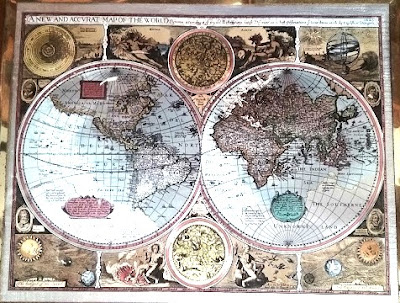
This is a picture of a magnet that was being sold at Strand's Book Store in New York City a few years ago. No, I did not buy it, but I liked it and took a picture, which I am sharing here now. 


Early last week, the news cycle was briefly dominated by Trump appointee Joe Clark resigning his post as Director of the United States National Counterterrorism Center. He did so, famously now, in protest over Trump's war in Iran. He claimed that contrary to what President Trump claims, Iran does not in fact pose an imminent threat to American national security. 

Of course, King Con Don responded in typical fashion, doing what he always does when someone pisses him off. He threw a tantrum and acted like a betrayed, hurt child, instead of responding with the calm demeanor. Believe it or not, once upon a time, responding with calm and measured disagreement would have been the expected response by someone in the Oval Office.

However, all of that has changed in this era of Trump. Now, when the president - when this particular president - throws a temper tantrum that betrays his immaturity and lack of qualifications for the office he presently holds, or when he takes to streaming a whole bunch of mean-spirited posts on social media, we collectively hardly bat an eye. 

Just a reminder that, in fact, none of this is normal.

Unfortunately, we have grown so used to all of this bullshit that it now seems like the "new normal," as people often say these days.

So while it does not reveal all that much in the way of Trump's reactions or motivations, it does nevertheless reveal a bit more just how flimsy Trump's case for immediate and urgent war with Iran really was. Of course, most of us could figure that much out based on the inconsistencies the Trump White House used to justify the war. Remember, Trump and Hegseth absolutely insisted that American airstrikes last summer had "completely obliterated" Iran's nuclear capabilities. 

Yet now, we were to believe that an attack by Iran on the United States was inevitable, and we were saved in the 11th hour by Trump. Otherwise, we would have been struck in some way or another. 

Kent stepped down because he was opposed to the war. Apparently, he could not in good conscience go on in his Trump=appointed post and remain quiet and uncritical. Which, let's say it, is to his credit. Rare among Trump officials.

In fact, as I understand it, Kent is 100% MAGA and has even flirted with white nationalism. So let's hold off for a bit on hailing him as a hero.

I, for one, will not celebrate. What's to celebrate about this whole pathetic, tragic situation, anyway?

Still, it was obviously bad news for Trump and Hegseth, and their case for the war with Iran which, lest we forget, they started. And their justifications for engaging in this war have changed almost by the day. An attack on the United States by Iran was supposedly imminent. They cannot be allowed to be a nuclear power, even though, again, that was supposedly taken care of just months earlier with that first strike. They are a bunch of bad guys and thus Iran is in need of "regime change," much like Iraq a couple of decades or so ago. 

Nevertheless, we need to exploit this rare rift within MAGA nation to continue to cast doubts about his rationale for war to begin with. 

Apparently, not everything that this man does is acceptable, even to MAGA nation. Another war in the Middle East was evidently something which many members of MAGA actually really wanted to avoid (which still feels like a mild surprise). They sure seem to give King Con Don a pass on just about everything.

Not, however, another war in the Middle East. Not another conflict in that region where we are promised an easy and quick victory, and then see the war just drag on and on. 

It's good to know that there are some limits for at least some members of MAGA.


Joe Kent’s Secret If Trump can never be wrong, then he can only be wronged. by Jonathan Chait, March 17, 2026:

https://www.theatlantic.com/ideas/2026/03/joe-kent-resignation-trump/686428/

The Logic of Joe Kent’s Resignation Letter - The Atlantic

March 22nd: This Day in History


Once again, it should be reiterated, that this does not pretend to be a very extensive history of what happened on this day (nor is it the most original - the links can be found down below). If you know something that I am missing, by all means, shoot me an email or leave a comment, and let me know!


On this day in 238, Gordian I and his son Gordian II were proclaimed Roman Emperor. In 752 on this day (or possibly March 23rd), Stephen II was elected Catholic Pope. Townspeople of Fulda Germany massacred Jews, who were blamed for the Black Death, on this day in 1349. The Gutenberg Bible became the first printed book on this day in 1457. French King Henri IV officially entered Paris on this day in 1594. On this day in 1765, the Stamp Act was passed, which was a direct British tax on the American colonies. In 1775 on this day, Edmund Burke presented his 13 articles to the Westminster Parliament. The Emerald Buddha was moved with great ceremony to its current place in Wat Phra Kaew, Thailand, on this day in 1784. Thomas Jefferson became the first US Secretary of State under President George Washington on this day in 1790. On this day in 1894, the first game of the first ever Stanley Cup championship series for Lord Stanley’s Cup was played in Montreal, Canada. In that game, the Montreal AAA defeated the Ottawa Generals, 3-1. In 1933 on this day, US President Franklin D. Roosevelt signed the Beer and Wine Revenue Act, thus legalizing the sale of beer and wine with up to 3.2% alcohol legal. On this day in 1942, Sir Stanford Cripps, British statesman, arrived in India for talks with Mohandas Gandhi regarding Indian independence, in what came to be as the Cripps Mission. On this day in 1945, the Arab League formed. In 1947 on this day, American President Harry Truman issued an executive order calling for loyalty for federal employees. In 1963 on this day, the Beatles released their debut album, “Please Please Me,” in the United Kingdom on the Parlophone record label. On this day in 1994, the South African government and African National Congress took over power in the Ciskei homeland. In 1995 on this day, Russian cosmonaut Valeri Polyakov returned to Earth after setting a record for 438 days in space. Comet Hale-Bopp made its closest approach to Earth (1.315 AU) in the skies over the northern hemisphere on this day in 1997. The comet’s next pass is predicted for the year 4397. On this day in 2012, Amadou Toumani Touré, the President of Mali, was ousted in a coup d'état. In 2012 on this day, the largest protest in Quebec's history occurred in Montreal with over 200,000 people marching against government tuition hikes and for free access to post-secondary education.

Here's a more detailed look at events that transpired on this date throughout history:

 On this day in 238, Gordian I and his son Gordian II were proclaimed Roman Emperor.

 In 752 on this day (or possibly March 23rd), Stephen II was elected Catholic Pope.

 Townspeople of Fulda Germany massacred Jews, who were blamed for the Black Death, on this day in 1349.

  The Gutenberg Bible became the first printed book on this day in 1457.

1556 - Cardinal Reginald Pole becomes archbishop of Canterbury


Bust of French King Henri IV 

 French King Henri IV officially entered Paris on this day in 1594.


1621 - Hugo de Grote escapes in bookcase from Loevenstein castle, Neth
1622 - 1st American Indian (Powhattan) massacre of whites Jamestown Virginia, 347 slain
1630 - 1st colonial legislation prohibiting gambling enacted (Boston)
1638 - Religious dissident Anne Hutchinson expelled from Massachusetts Bay Colony
1680 - Parliament of Breisach accepts French sovereignty over Elzas
1692 - Emperor Leopold I names duke Earnest August of Braunschweig, king


 On this day in 1765, the Stamp Act was passed, which was a direct British tax on the American colonies.  In an effort to raise funds to pay off debts and defend the vast new American territories won from the French in the Seven Years' War (1756-1763), the British government passes the Stamp Act on this day in 1765. The legislation levied a direct tax on all materials printed for commercial and legal use in the colonies, from newspapers and pamphlets to playing cards and dice.    Though the Stamp Act employed a strategy that was a common fundraising vehicle in England, it stirred a storm of protest in the colonies. The colonists had recently been hit with three major taxes: the Sugar Act (1764), which levied new duties on imports of textiles, wines, coffee and sugar; the Currency Act (1764), which caused a major decline in the value of the paper money used by colonists; and the Quartering Act (1765), which required colonists to provide food and lodging to British troops.    With the passing of the Stamp Act, the colonists' grumbling finally became an articulated response to what they saw as the mother country's attempt to undermine their economic strength and independence. They raised the issue of taxation without representation, and formed societies throughout the colonies to rally against the British government and nobles who sought to exploit the colonies as a source of revenue and raw materials. By October of that year, nine of the 13 colonies sent representatives to the Stamp Act Congress, at which the colonists drafted the "Declaration of Rights and Grievances," a document that railed against the autocratic policies of the mercantilist British empire.    Realizing that it actually cost more to enforce the Stamp Act in the protesting colonies than it did to abolish it, the British government repealed the tax the following year. The fracas over the Stamp Act, though, helped plant seeds for a far larger movement against the British government and the eventual battle for independence. Most important of these was the formation of the Sons of Liberty--a group of tradesmen who led anti-British protests in Boston and other seaboard cities--and other groups of wealthy landowners who came together from the across the colonies. Well after the Stamp Act was repealed, these societies continued to meet in opposition to what they saw as the abusive policies of the British empire. Out of their meetings, a growing nationalism emerged that would culminate in the fighting of the American Revolution only a decade later.


Statue of Edmund Burke

 In 1775 on this day, Edmund Burke presented his 13 articles to the Westminster Parliament.


1778 - Capt Cook sights Cape Flattery, in Washington state

 The Emerald Buddha was moved with great ceremony to its current place in Wat Phra Kaew, Thailand, on this day in 1784.


A picture I took of the Jefferson Memorial in Washington during a visit with my son  back in 2013. 

 Thomas Jefferson became the first US Secretary of State under President George Washington on this day in 1790.

1794 - Congress bans US vessels from supplying slaves to other countries
1809 - Charles XIII succeeds Gustav IV Adolf to the Swedish throne.
US President Thomas JeffersonUS President Thomas Jefferson 1822 - NY Horticultural Society founded
1829 - The three protecting powers (Britain, France and Russia) establish the borders of Greece.
1841 - Cornstarch patented (Orlando Jones)
1861 - 1st US nursing school chartered
1862 - San Marino & Italy conclude treaty of friendship & cooperation
1865 - Raid at Wilson's: Chickaswas AL to Macon GA
1871 - William Holden of NC becomes 1st governor removed by impeachment
1872 - Illinois becomes 1st state to require sexual equality in employment


1873 - Slavery is abolished in Puerto Rico
1874 - Young Men's Hebrew Association organizes in NYC
1882 - Edmunds Act adopted by the US to suppress polygamy, 1300 men later imprisoned under the act
1888 - English Football League established


The fabled Stanley Cup

 On this day in 1894, the first game of the first ever Stanley Cup championship series for Lord Stanley’s Cup was played in Montreal, Canada. In that game, the Montreal AAA defeated the Ottawa Generals, 3-1. The Stanley Cup has since become one of the most cherished and recognized trophies in sport.    The Stanley Cup was the creation of Sir Frederick Arthur Stanley, lord of Preston and the 16th earl of Derby. Stanley was of noble birth, the son of a three-time prime minister of England. He served in Canada’s House of Commons from 1865 until he was named governor general of Canada in 1888. Stanley became an ice hockey fan after watching an 1889 game at the Montreal Winter Carnival. Stanley’s family, sons and daughters alike, also became enraptured with the game that had taken Montreal’s sporting public by storm since its introduction in 1875. In honor of the new sport, Lord Stanley then donated a lavish trophy to the Canadian Amateur Hockey Association. The trophy, originally called the Dominion Hockey Challenge Cup, was first presented in 1893 to the Montreal Amateur Athletic Association (AAA) team, champions of the Amateur Hockey Association. Stanley had intended for the cup to be presented to the winner of a challenge series, or tournament, so in 1894 it was given to the Montreal AAA team upon their defeat of the Ottawa Generals in the championship round of a tournament specifically created to award the Cup as Lord Stanley had intended.    Since 1926, the Stanley Cup has been awarded solely by the National Hockey League every year except 2005, when the NHL was on strike. The original trophy that Lord Stanley donated was retired in 1962. Since then, only one trophy has served in its place, making the Stanley Cup the only trophy in major sports that is not reproduced each year. When a team wins the Cup, they are allowed to hold on to the trophy for one year, and the name of every player, coach and front-office employee is inscribed onto it. (In 1954, Detroit Red Wings owner Marguerite Norris, a former goaltender, became the first woman to have her name engraved on the cup.) Each player and front-office employee of the champion team is given 24 hours with the Cup, which they can take anywhere, along with the its full-time escorts, provided by the Hockey Hall of Fame. Since 1895, when the Winnipeg Victorias began the tradition of drinking from the Cup, people have filled it with everything from beer to bath water as they celebrate with friends, family and the public. In its travels, the Stanley Cup has been thrown into swimming pools, taken fishing, played host to a baby’s christening and been drunk from across Canada, the United States and Europe.


1895 - Auguste & Louis Lumiere show their 1st movie to an invited audience
1896 - Charilaos Vasilakos wins 1st marathon (3:18)
1903 - NY Highlanders (Yankees) tickets 1st go on sale
1903 - Niagera Falls runs out of water because of a drought
1912 - Agnes Martin, Macklin Canada, Canadian-American abstract painter
1914 - World's 1st airline, St Petersburg Tampa Airboat Line, begins
1923 - The first radio broadcast of ice hockey is made by Foster Hewitt.
1927 - Federico Garcia Lorca's "El Maleficio" premieres in Madrid
1928 - Noel Coward's musical "This Year of Grace" premieres in London
1929 - 66 horses run in Irish Grand National Sweepstakes
1929 - KIT-AM in Yakima WA begins radio transmissions
1929 - USCG vessel sank Canadian schooner suspected of carrying liquor


Statue at Franklin D. Roosevelt Memorial in Washington, D.C

 In 1933 on this day, US President Franklin D. Roosevelt signed the Beer and Wine Revenue Act, thus legalizing the sale of beer and wine with up to 3.2% alcohol legal. This law levies a federal tax on all alcoholic beverages to raise revenue for the federal government and gives individual states the option to further regulate the sale and distribution of beer and wine.    With the passage of the 18th Amendment and the Volstead Act in 1919, temperance advocates in the U.S. finally achieved their long sought-after goal of prohibiting the sale of alcohol or "spirits." Together, the new laws prohibited the manufacture, sale or transportation of liquor and ushered in the era known as "Prohibition," defining an alcoholic beverage as anything containing over 0.5 percent alcohol by volume. President Woodrow Wilson had unsuccessfully tried to veto the Volstead Act, which set harsh punishments for violating the 18th Amendment and endowed the Internal Revenue Service with unprecedented regulatory and enforcement powers. In the end, Prohibition proved difficult and expensive to enforce and actually increased illegal trafficking without cutting down on consumption. In one of his first addresses to Congress as president, FDR announced his intention to modify the Volstead Act with the Beer and Wine Revenue Act.    No fan of temperance himself, FDR had developed a taste for alcohol when he attended New York cocktail parties as a budding politician. (While president, FDR refused to fire his favorite personal valet for repeated drunkenness on the job.) FDR considered the new law "of the highest importance" for its potential to generate much-needed federal funds and included it in a sweeping set of New Deal policies designed to vault the U.S. economy out of the Great Depression.  The Beer and Wine Revenue act was followed, in December 1933, by the passage of the 21st Amendment, which officially ended Prohibition.


1934 - 1st Masters golf championship began in Augusta, Ga
1934 - Fire destroys Hakodate Japan (kills 1,500, injures 1,000)
1935 - Blood tests authorized as evidence in court cases (NY)
1939 - Lithuania state, forced to give Memel territory to Germany
1941 - Grand Coulee Dam in Washington goes into operation
1942 - Heavy German assault on Malta


Statue of Gandhi in State Parliament Square, London, UK

 On this day in 1942, Sir Stanford Cripps, British statesman, arrived in India for talks with Mohandas Gandhi regarding Indian independence, in what came to be as the Cripps Mission.    Cripps was a gifted student with a background in such diverse disciplines as chemistry and law. Always of weak health, he was deemed unfit for military service during World War I; instead, he worked in a government factory. After the war, Cripps was made a King's Counsel (1927). Shortly thereafter, he was knighted, and in 1931 was elected to Parliament as a Labour Party member for Bristol East. Cripps' politics were left of even the Labour Party, and when he advocated a united front with the Communists in 1938 against a growing European fascism, he was expelled from the party.    Once World War II erupted, Cripps was made ambassador to the Soviet Union. In 1942, he joined the War Cabinet and ventured to India to begin discussing two pressing issues: Japan's threat to India, and India's independence from Britain. The first meetings of the Cripps Mission took place on March 22, 1942. The first item on the agenda was India's defense against a growing Japanese empire. Cripps wanted to rally the Indian National Congress behind the cause. The leader of the Congress was Mohandas K. Gandhi.    Nicknamed Mahatma, the "Great-Souled," Gandhi was at the center of India's quest for independence from British colonial rule. His use of nonviolent protest both in South Africa, where he practiced law, and in India made him a model and icon for later social-protest movements. Gandhi deemed the negotiations made with the British government through the Cripps Mission unsatisfactory. It did not guarantee Indian independence--never mind the immediate autonomy that the Congress demanded--and threatened to "divide and keep conquered" by playing Hindu Indians against Muslim Indians. Consequently, though Gandhi hated fascism, he could not promise unqualified Indian support of the British during the war.    The Cripps Mission failed; Cripps returned to Britain and was eventually transferred to the Ministry of Aircraft Production. Gandhi was arrested as a "threat" to Indian security. He was interned for two years before health issues forced his release.


1943 - Dutch work week extended to 54 hour
1943 - Obligatory work for woman ends in Belgium
1943 - SS police chief Rauter threatens to kill half Jewish children
1944 - 600+ 8th Air Force bombers attack Berlin


On this day in 1945, the Arab League formed.  Representatives from Egypt, Syria, Lebanon, Transjordan, Saudi Arabia, Iraq, and Yemen meet in Cairo to establish the Arab League, a regional organization of Arab states. Formed to foster economic growth in the region, resolve disputes between its members, and coordinate political aims, members of the Arab League formed a council, with each state receiving one vote. When the State of Israel was created in 1948, the league countries jointly attacked but were repulsed by the Israelis. Two years later, Arab League nations signed a mutual defense treaty. Fifteen more Arab nations eventually joined the organization, which established a common market in 1965.


1945 - US 3rd Army crosses Rhine at Nierstein
1946 - 1st US rocket to leave the Earth's atmosphere (50 miles up)
1946 - Britain signs treaty granting independence to Jordan


Bust of American President Harry Truman

 In 1947 on this day, American President Harry Truman issued an executive order calling for loyalty for federal employees.  In response to public fears and Congressional investigations into communism in the United States, President Harry S. Truman issues an executive decree establishing a sweeping loyalty investigation of federal employees.    As the Cold War began to develop after World War II, fears concerning communist activity in the United States, particularly in the federal government, increased. Congress had already launched investigations of communist influence in Hollywood, and laws banning communists from teaching positions were being instituted in several states. Of most concern to the Truman administration, however, were persistent charges that communists were operating in federal offices. In response to these fears and concerns, Truman issued an executive order on March 21, 1947, which set up a program to check the loyalty of federal employees. In announcing his order, Truman indicated that he expected all federal workers to demonstrate "complete and unswerving loyalty" the United States. Anything less, he declared, "constitutes a threat to our democratic processes."    The basic elements of Truman's order established the framework for a wide-ranging and powerful government apparatus to perform loyalty checks. Loyalty boards were to be set up in every department and agency of the federal government. Using lists of "totalitarian, fascist, communist, or subversive" organizations provided by the attorney general, and relying on investigations by the Federal Bureau of Investigation, these boards were to review every employee. If there existed "reasonable grounds" to doubt an employee's loyalty, he or she would be dismissed. A Loyalty Review Board was set up under the Civil Service Commission to deal with employees' appeals.    Truman's loyalty program resulted in the discovery of only a few employees whose loyalty could be "reasonably" doubted. Nevertheless, for a time his order did quiet some of the criticism that his administration was "soft" on communism. Matters changed dramatically in 1949-1950. The Soviets developed an atomic bomb, China fell to the communists, and Senator Joseph McCarthy made the famous speech in which he declared that there were over 200 "known communists" in the Department of State. Once again, charges were leveled that the Truman administration was "coddling" communists, and in response, the Red Scare went into full swing.


1952 - Dutch DC-6 crashes near Frankfurt, killing 44
1953 - AntonínZápotockýchosen as president of Czechoslovakia
1953 - Louise Suggs wins LPGA Betsy Rawls Golf Open
1954 - 1st shopping mall opened in Southfield, Mich
1954 - Closed since 1939, the London bullion market reopens.
1956 - "Mr Wonderful" opens at Broadway Theater NYC for 383 performances
1956 - Death penalty against KPM-director Leon Jungschlaeger
1956 - Musical "Mr Wonderful" with Sammy Davis Jr premieres in NYC
1957 - Earthquake gives SF shakes
1957 - Republic of India adopts Saka calendar along with Gregorian
1958 - 20th NCAA Men's Basketball Championship: Kentucky beats Seattle 84-72
1958 - Faisal succeeds Saudi as king of Saudi-Arabia
1958 - USSR performs nuclear test at Novaya Zemlya USSR
1959 - Betsy Rawls wins LPGA Nehi Golf Tournament
1960 - 1st patent for lasers, granted to Arthur Schawlow & Charles Townes
1960 - AL Schawlow & C H Townes obtain patent for the laser
1962 - "I Can Get It For You Wholesale" opens at Shubert NYC for 300 perfs


 In 1963 on this day, the Beatles released their debut album, “Please Please Me,” in the United Kingdom on the Parlophone record label.


1963 - Brit Min of War John Profumo denies having sex with Christine Keeler
1963 - Oregon State's Terry Baker becomes 1st & only Heisman Trophy winner
Singer-songwriter & Actress Barbra StreisandSinger-songwriter & Actress Barbra Streisand 1964 - Barbra Streisand appears on the cover of NY Times Magazine section
1964 - Carol Mann wins LPGA Women's Western Golf Open Invitational
1965 - D Senanayake wins general elections in Ceylon (Sri Lanka)
1965 - US confirms its troops used chemical warfare against the Vietcong
1967 - Muhammad Ali KOs Zora Folley in 7 for heavyweight boxing title
1968 - Jarmila Novotna resigns presidency of Czechoslovakia
1968 - Lynda Johnson ordered off SF cable car for eating an ice cream cone
1968 - Student riot in Nanterre near Paris
1969 - "Billy" opens & closes at Billy Rose Theater NYC after 1 performance
1969 - "Come Summer" closes at Lunt Fontanne Theater NYC after 7 performances
1969 - 31st NCAA Men's Basketball Championship: UCLA beats Purdue 92-72 UCLA wins its 5th national championship in 6 years
1970 - "Blood Red Roses" opens & closes at John Golden Theater NYC
1970 - Kathy Whitworth wins LPGA Orange Blossom Golf Classic
1971 - USSR performs nuclear test at Eastern Kazakh/Semipalitinsk USSR
1972 - "Selling of the President" opens at Shubert Theater NYC for 5 perfs
1972 - Congress approves Equal Rights Amendment (never ratified)
1972 - Kareem Abdul-Jabbar named NBA MVP
1972 - Nick Mileti purchases Cleve Indians for $9 million
1972 - Yankees trade Danny Cater to the Red Sox for Sparky Lyle
1975 - "Dinge-competed" wins Eurovisie Song festival
1975 - "Dr Jazz" closes at Winter Garden Theater NYC after 5 performances
1975 - "Letter for Queen Victoria" opens at ANTA Theater NYC for 18 perfs
1975 - Delta State beats Immaculata for the women's AIAW championship
1975 - Teach-In wins Eurovision Song Festival with "Dinge-Dong"
1975 - Walt Disney World Shopping Village opens
1975 - A fire at the Browns Ferry Nuclear Power Plant in Decatur, Alabama causes dangerous lowering of cooling water levels.
1977 - Dutch Den Uyl government falls
1977 - Indira Gandhi resigns as PM of India
1977 - Uyl government falls
1978 - France performs nuclear test
Poet Robert FrostPoet Robert Frost 1978 - Robert Frost Plaza, at California, Drumm & Market, SF, dedicated
1978 - Rutle's "All You Need is Cash" is show on NBC-TV
1978 - Karl Wallenda of the The Flying Wallendas dies after falling off a tight-rope between two hotels in San Juan, Puerto Rico.
1979 - Israeli parliament approves peace treaty with Egypt
1979 - NHL votes to accept 4 WHA teams (Oilers, Jets, Nordiques & Whalers)
1981 - 1st class postage raised to 18 cents from 15 cents
1981 - Donna Caponi Young wins LPGA Desert Inn Pro-Am Golf Tournament
1981 - Soyuz 39 carries 2 cosmonauts (1 Mongolian) to Salyut 6
1981 - Toshihiko Seko runs world record 25k (1:13:55.8)/30k (1:29:18.8)
1982 - 3rd Space Shuttle Mission-Columbia 3 launched
1982 - Iran offensive against Iraq
1983 - Chaim Herzog elected Israeli president
1984 - Islander Bryan Trottier ties NHL rec scores 5 seconds into game
1984 - Teachers at the McMartin preschool in Manhattan Beach, California are charged with Satanic ritual abuse of the children in the school. The charges are later dropped as completely unfounded.
1985 - NASA launches Intelsat VA
1986 - Ehrig skates ladies world record 5 km (7:20.99)
1986 - HBO launches boxing's heavyweight-title-unification-tournament
1986 - Heart's "These Dreams," single goes #1
1986 - Ice Pairs Championship at Geneva won by Gordeeva & Grinkov (URS)
1986 - Kania skates ladies world record 1500m (1:59.30)
1986 - Ladies Figure Skating Championship in Geneva won by Debi Thomas (USA)
1986 - Trevor Berbick beats Pinklon Thomas in 15 for heavyweight boxing title
1987 - Betsy King wins LPGA Circle K Tucson Golf Open
US President & Actor Ronald ReaganUS President & Actor Ronald Reagan 1988 - Congress overrides Reagan's veto of sweeping civil rights bill
1988 - WA beat Queensland by 5 wkts to win the Sheffield Shield Final
1989 - Pete Rozelle announces retirement as NFL commissioner after 29 years
1989 - US Supreme Court upholds 1 person 1 vote rule of NYC Board of Estimate
1989 - Clint Malarchuk of the Buffalo Sabres suffers a near-fatal injury when another player accidentally slits his throat.
1990 - "Grapes of Wrath" opens at Cort Theater NYC for 188 performances
1990 - "Les Miserables" opens at Shubert Theatre, Boston
1990 - Anchorage jury finds Capt Hazelwood innocent of Valdez oil spill
1990 - The ML umpires announce that they will boycott exhibition games
1991 - Law enforcement officers raid fraternities at U of Va seizing drugs
1991 - NY Daily News begins using motto "Forward with NY"
1991 - Pamela Smart (HS teacher) found guilty in NH of manipulating her student-lover to kill her husband
1992 - "Private Lives" closes at Broadhurst Theater NYC after 37 performances
1992 - Danielle Ammaccapane wins Standard Register Ping Golf Championship
1992 - England beat South Africa in rain-ruined cricket World Cup semi final
1992 - Joseph A Molloy elected NY Yankee general partner
1992 - US Air NY to Cleveland crashes on take off at LaGuardia, 27 die
1993 - Intel introduces Pentium-processor (80586) 64 bits-60 MHz-100+ MIPS
1994 - Dutch Ambassador to US christens a new tulip (the Hillary Clinton)
1994 - Mark Foster swims world record 50m butterfly (23.68 sec)


This was a picture (which I have since cropped) of the new South Africa flag of the post-apartheid era. I actually took this one at the apartheid museum, as this was the final display, if you will, of the museum, the symbol of the emergence of a "new South Africa."

• On this day in 1994, the South African government and African National Congress took over power in the Ciskei homeland.


1994 - Soyuz TM-21 lands

 In 1995 on this day, Russian cosmonaut Valeri Polyakov returned to Earth after setting a record for 438 days in space.  

1995 - Deputy Gov of Bank of England, Rupert Pennant-Rea, resigns following revelations of his affair with a freelance journalist

1996 - Cheryl Depew, of Florida, crowned 13th Miss Hawaiian Tropic Intl
1996 - STS 76 (Atlantis 16), launches into orbit
1997 - "Sunset Boulevard" closes at Minskoff NYC after 977 performances


 Comet Hale-Bopp made its closest approach to Earth (1.315 AU) in the skies over the northern hemisphere on this day in 1997. The comet’s next pass is predicted for the year 4397. 

1997 - Ladies Fig Skating Championship in Lausanne won by Tara Lipinski (USA)
1998 - 18th Golden Raspberry Awards: The Postman wins
2003 - 23rd Golden Raspberry Awards: Swept Away wins
2004 - Ahmed Yassin, co-founder and leader of the Palestinian Sunni Islamist militant group Hamas, and bodyguards are killed in the Gaza Strip when hit by Israeli Air Force AH-64 Apache fired Hellfire missiles.
2006 - ETA, armed Basque separatist group, declares permanent ceasefire.
2006 - BC Ferries' M/V Queen of the North runs aground on Gil Island British Columbia and sinks; 101 on board, 2 presumed deaths.
2006 - Three Christian Peacemaker Teams Hostages are freed by British forces in Baghdad after 118 days captivity and the death of their colleague, American Tom Fox.
2008 - The French Swimmer Alain Bernard sets the world record of 47.50 for the 100 m freestyle long course after winning the European LC Championships 2008.
2009 - Mount Redoubt, a volcano in Alaska began erupting after a prolonged period of unrest.


• On this day in 2012, Amadou Toumani Touré, the President of Mali, was ousted in a coup d'état.


 In 2012 on this day, the largest protest in Quebec's history occurred in Montreal with over 200,000 people marching against government tuition hikes and for free access to post-secondary education.


2012 - Australia's most wanted man, Malcolm Naden, is captured after seven years on the run in Gloucester, New South Wales
2012 - Massive fire devours thousands of hectares of ancient forests and threatens wildlife on Mount Kenya
2013 - 37 people are killed and 200 are injured in a refugee camp fire in Ban Mae, Thailand


1457 - Gutenberg Bible became the first printed book.   1622 - Indians attacked a group of colonist in the James River area of Virginia. 347 residents were killed.   1630 - The first legislation to prohibit gambling was enacted. It was in Boston, MA.   1638 - Anne Hutchinsoon, a religious dissident, was expelled from the Massachusetts Bay Colony.   1719 - Frederick William abolished serfdom on crown property in Prussia.   1733 - Joseph Priestly invented carbonated water (seltzer).   1765 - The Stamp Act was passed. It was the first direct British tax on the American colonists. It was repealed on March 17, 1766.   1775 - Edmund Burke presented his 13 articles to the English parliament.   1790 - Thomas Jefferson became the first U.S. Secretary of State.   1794 - The U.S. Congress banned U.S. vessels from supplying slaves to other countries.   1822 - New York Horticultural Society was founded.   1841 - Englishman Orlando Jones patented cornstarch.   1871 - William Holden of North Carolina became the first governor to be removed by impeachment.   1872 - Illinois became the first state to require sexual equality in employment.   1873 - Slavery was abolished in Puerto Rico.   1874 - The Young Men's Hebrew Association was organized in New York City.   1882 - The U.S. Congress outlawed polygamy.   1888 - The English Football League was established.   1894 - The first playoff competition for the Stanley Cup began. Montreal played Ottawa.   1895 - Auguste and Louis Lumiere showed their first movie to an invited audience in Paris.   1901 - Japan proclaimed that it was determined to keep Russia from encroaching on Korea.   1902 - Great Britain and Persia agreed to link Europe and India by telegraph.   1903 - Niagara Falls ran out of water due to a drought.   1903 - In Columbia, the region near Galera De Zamba was devastated by a volcanic eruption.   1904 - The first color photograph was published in the London Daily Illustrated Mirror.   1905 - Child miners in Britain received a maximum 8-hour workday.   1906 - France lost the first ever rugby game ever played against Britain.   1907 - Russians troops completed the evacuation of Manchuria in the face of advancing Japanese forces.   1907 - In Paris, it was reported that male cab drivers dressed as women to attract riders.   1910 - In Liberia, a telegraph cable linked Tenerife and Monrovia.   1911 - Herman Jadlowker became the first opera singer to perform two major roles in the same day at the Metropolitan Opera House in New York City.   1915 - A German zeppelin made a night raid on Paris railway stations.   1919 - The first international airline service was inaugurated on a weekly schedule between Paris and Brussels.   1933 - U.S. President Franklin D. Roosevelt signed a bill legalizing the sale and possession of beer and wine containing up to 3.2% alcohol.   1934 - The first Masters golf championship began in Augusta, GA.   1935 - In New York, blood tests were authorized as evidence in court cases.   1935 - Persia was renamed Iran.   1941 - The Grand Coulee Dam in Washington began operations.   1943 - The Dutch workweek was extended to 54 hours.   1943 - Obligatory work for woman ends in Belgium.   1945 - The Arab League was formed with the adoption of a charter in Cairo, Egypt.   1946 - The British granted Transjordan independence.   1946 - The first U.S. built rocket to leave the earth's atmosphere reached a height of 50-miles.   1947 - The Greek government imposed martial law in Laconia and southern Greece.   1948 - The United States announced a land reform plan for Korea.   1948 - "The Voice of Firestone" became the first commercial radio program to be carried simultaneously on both AM and FM radio stations.   1954 - The first shopping mall opened in Southfield, Michigan.   1954 - The London gold market reopened for the first time since 1939.   1956 - Perry Como became the first major TV variety-show host to book a rock and roll act on his program. The act was Carl Perkins.   1960 - A.L. Schawlow & C.H. Townes obtained a patent for the laser. It was the first patent for any laser.   1965 - U.S. confirmed that its troops used chemical warfare against the Vietcong.   1972 - The U.S. Senate passed the Equal Rights Amendment. It was not ratified by the states.   1974 - The Viet Cong proposed a new truce with the U.S. and South Vietnam. The truce included general elections.   1975 - Walt Disney World Shopping Village opened.  Disney movies, music and books   1977 - The Dutch Den Uyl government fell.   1977 - Comedienne Lily Tomlin made her debut on Broadway in "Lily Tomlin on Stage" in New York.   1977 - Indira Ghandi resigned as the prime minister of India.   1978 - Karl Wallenda, of the Flying Wallendas, fell to his death while walking a cable strung between to hotels in San Juan, Puerto Rico.   1979 - The National Hockey League (NHL) voted to accept 4 WHA teams, the Oilers, Jets, Nordiques & Whalers.   1980 - People for Ethical Treatment of Animals (PETA) was founded by Ingrid Newkirk and Alex Pacheco.   1981 - U.S. Postage rates went from 15-cents to 18-cents an ounce.   1981 - RCA put its Selectra Vision laser disc players on the market.   1981 - A group of twelve Green Berets arrived in El Salvador. This brought the total number of advisors to fifty-four.   1981 - The first Mongolian entered space aboard the Russian Soyuz 39.   1982 - The Space Shuttle Columbia was launched into orbit on mission STS-3. It was the third orbital flight for the Columbia.   1987 - A barge loaded with 32,000 tons of refuse left Islip, NY, to find a place to unload. After being refused by several states and three countries space was found back in Islip.   1988 - The Congress overrode U.S. President Reagan's veto of a sweeping civil rights bill.   1989 - Oliver North began two days of testimony at his Iran-Contra trial in Washington, DC.   1989 - The U.S. House Ways and Means Committee reported the class gap was widening.   1990 - A jury in Anchorage, Alaska, found Captain Hazelwood not guilty in the Valdez oil spill.   1991 - Pamela Smart, a high school teacher, was found guilty in New Hampshire of manipulating her student-lover to kill her husband.   1992 - A Fokker F-28 veered off a runway at New York's LaGuardia airport and into Flushing Bay, killing 27 people.   1993 - Cleveland Indians pitchers Steve Olin and Tim Crews were killed in a boating accident in Florida. Bob Ojeda was seriously injured in the accident.   1993 - Intel introduced the Pentium-processor (80586) 64 bits-60 MHz-100+ MIPS.   1995 - Russian cosmonaut Valeri Polyakov returned to Earth after setting a record for 438 days in space.   1997 - Tara Lipinski, at 14 years and 10 months, became the youngest women's world figure skating champion.   2002 - The U.S. Postal Rate Commission approved a request for a postal rate increase of first-class stamps from 34 cents to 37 cents by June 30. It was the first time a postal rate case was resolved through a settlement between various groups. The groups included the U.S. Postal Service, postal employees, mailer groups and competitors.   2002 - A collection of letters and cards sent by Princess Diana of Wales sold for $33,000. The letters and cards were written to a former housekeeper at Diana's teenage home.


1765 The Stamp Act was enacted on the American colonies by Britain. 1820 U.S. naval hero Stephen Decatur was killed in a duel with dishonored former Chesapeake captain James Barron. 1894 The first Stanley Cup championship game was played. The Montreal Amateur Athletic Association (which won the cup unchallenged the previous year) triumphed over the Ottawa Capitals. 1895 Auguste and Louis Lumiere first demonstrated motion pictures using celluloid film in Paris. 1945 The Arab League was formed in Cairo, by Egypt, Iraq, Jordan, Lebanon, and Syria. 1972 Congress approved the Equal Rights Amendment and sent it to be ratified by the states. The amendment would fail to get the required 38 states to ratify it. 1997 Comet Hale-Bopp made its closest approach to Earth in the skies over the northern hemisphere. The comet’s next pass is predicted for the year 4397. 2012 Amadou Toumani Touré, The President of Mali, was ousted in a coup d'état.

The following links are to web sites that were used to complete this blog entry:

http://www.historyorb.com/today/events.php

http://on-this-day.com/onthisday/thedays/alldays/mar22.htm


http://www.history.com/this-day-in-history

http://www.infoplease.com/dayinhistory

Saturday, March 21, 2026

Weekend Funny: Trump Threatens Airstrikes On U.S. Gas Stations

Saw this headline from The Onion earlier today, and it gave me a chuckle. Also seemed like something which would be worth sharing here.

Indeed, I would not put it past the self-proclaimed "very stable genius" to take this approach. Over and over again, he has become so incoherent that it seems like he is the embodiment of the stated fears of many in the Mindless MAGA Moron country had regarding Joe Biden and his apparent signs of dementia or mental lapses.

Anyway, below is the link to this humor headline.

Enjoy. 


Trump Threatens Airstrikes On U.S. Gas Stations Published in The Onion, March 20, 2026:

‘Lower Your Prices Now Or Face The Might Of The American Military,’ Says Commander-In-Chief

https://theonion.com/trump-threatens-airstrikes-on-u-s-gas-stations/?fbclid=IwY2xjawQrvd1leHRuA2FlbQIxMQBzcnRjBmFwcF9pZBAyMjIwMzkxNzg4MjAwODkyAAEe0hMrXXrPqZS6AVc-vs4wtDt8n2Vd8b9xpmAhsqBnLWMfs0-aH_n2sUUoPIM_aem_lmMRoVvocXqm1uOlOMKnqA

Trump Threatens Airstrikes On U.S. Gas Stations - The Onion

Weekend Humor: Stephen King Posted a Funny Tribute to Chuck Norris

Thought that Stephen King posted one of the funniest Chuck Norris jokes that I have seen.

Below was the joke, about Chuck Norris not needing to flush the toilet, since he scares the shit out of it.

Good stuff.

Enjoy. 


Lilja's Library - The World of Stephen King Poster based in Sweden  · 11h  · R.I.P. Chuck Norris!

https://www.facebook.com/photo/?fbid=1453910516111421&set=a.249137556588729

Facebook

March 21st: This Day in History


Once again, it should be reiterated, that this does not pretend to be a very extensive history of what happened on this day (nor is it the most original - the links can be found down below). If you know something that I am missing, by all means, shoot me an email or leave a comment, and let me know!


On this day in 630, Byzantine Emperor Heraclius restored the True Cross to Jerusalem. The Battle of Vincy between Charles Martel and Ragenfrid was fought on this day in 717. In 1188 on this day, the accession to the throne of Japan by Emperor Antoku took place. On this day in 1556, the Archbishop of Canterbury, Thomas Cranmer, was burned at the stake as a heretic. The massacre at Hancock's Bridge took place on this day in 1778. Just three days after British Loyalists and Hessian mercenary forces assaulted the local New Jersey militia at Quinton's Bridge, three miles from Salem, New Jersey, the same contingent surprises the colonial militia at Hancock's Bridge, five miles from Salem. On this day in 1788, a fire destroyed 856 buildings in the city of New Orleans, Louisiana. On this day in 1804, the French Civil Code, which has come ot be popularly known as the Napoleonic Code, was adopted in France. Otto von Bismarck was elevated to the rank of Fürst (Prince) on this day in 1871. On this day in 1871, journalist Henry Morton Stanley began his famous search through Africa for the missing British explorer Dr. David Livingstone. There was a British & French accord over West Africa agreed to on this day in 1899. On this day in 1918 during World War I, Germany launched a major offensive (the Somme Offensive) on the Western Front. In 1939 on this day, Nazi Germany demanded Gdansk (Danzig in German) from Poland. On this day in 1943, another plot to kill Hitler was ultimately foiled. The Sharpeville Massacre took place on this day in 1960 during the days of apartheid in South Africa, as police killed 72 people. The government then outlawed the African National Congress. This was an enormous event at the time in South Africa, with everybody understanding how much of an impact this might have, but nobody in the country certain what would ultimately come of it. In 1972 on this day, the Khmer Rouge shelled Phnom Penh, the capital city of Cambodia, with more than 100 civilians killed and 280 wounded. On this day in 1975, Ethiopia ended its monarchy after 3000 years of rule. In 1980 on this day, American President Jimmy Carter announced that the United States would boycott the Moscow Olympics later that year in protest of the Soviet invasion of Afghanistan.


Here's a more detailed look at events that transpired on this date throughout history:

 On this day in 630, Byzantine Emperor Heraclius restored the True Cross to Jerusalem.

 The Battle of Vincy between Charles Martel and Ragenfrid was fought on this day in 717.

 In 1188 on this day, the accession to the throne of Japan by Emperor Antoku took place.

 1349 - 3,000 Jews killed in Black Death riots in Efurt Germany

 1413 - Henry V becomes King of England.

 1421 - Battle of Beauge-French beat British

 1492 - Alonzo Pietro, pilot, sailed with Columbus


 On this day in 1556, the Archbishop of Canterbury, Thomas Cranmer, was burned at the stake as a heretic. 


 1610 - King James I addresses English House of Commons

 1681 - 3rd Exclusion Parliament meets in London

 1697 - Czar Peter the Great begins tour through West-Europe

 1702 - Queen Anne Stuart addresses English parliament


Statue of a Continental Soldier of the American Revolutionary War of Independence in Trenton, New Jersey

 The massacre at Hancock's Bridge took place on this day in 1778. Just three days after British Loyalists and Hessian mercenary forces assaulted the local New Jersey militia at Quinton's Bridge, three miles from Salem, New Jersey, the same contingent surprises the colonial militia at Hancock's Bridge, five miles from Salem. During the battle, the Loyalists not only kill several members of the Salem militia, but also two known Loyalists.    In what amounted to a civil war for New Jersey, Colonel Charles Mawhood led the attack on Quinton's Bridge, and then threatened to burn the town of Salem and subject its women and children to the horrors of the Loyalist militia if the Patriot militia failed to lay down its arms. Colonel Asher Holmes of the Patriot militia promised retribution on Loyalist civilians if Mawhood made good his threats and Mawhood appeared to concede. Three days later, however, Colonel John Simcoe, leader of the Queen's Rangers, unleashed the Loyalists' fury on the sleeping men at Hancock's Bridge.    In what became known as the Massacre at Hancock's Bridge, at least 20 members of the Salem militia lost their lives, some after attempting to surrender. The Loyalists reputedly exclaimed, Spare no one! Give no quarter! as they stormed the house of Judge William Hancock, a Loyalist whose house the Patriots had commandeered, while the Patriot militia slept. Judge Hancock and his brother were bayoneted in the melee, although both were known to be staunch supporters of the crown and were themselves non-violent Quakers.

 On this day in 1788, a fire destroyed 856 buildings in the city of New Orleans, Louisiana.

 1788 - Gustavus Vassa petitions Queen Charlotte, to free enslaved Africans


A picture I took of the Jefferson Memorial in Washington during a visit with my son  back in 2013. 

 1790 - Thomas Jefferson reported to U.S. President George Washington as the new secretary of state.  


1791 - Capt Hopley Yeaton of NH becomes 1st commissioned officer in USN


French Emperor Napoleon Bonaparte


 On this day in 1804, the French Civil Code, which has come ot be popularly known as the Napoleonic Code, was adopted in France.  After four years of debate and planning, French Emperor Napoleon Bonaparte enacts a new legal framework for France, known as the "Napoleonic Code." The civil code gave post-revolutionary France its first coherent set of laws concerning property, colonial affairs, the family, and individual rights.    In 1800, General Napoleon Bonaparte, as the new dictator of France, began the arduous task of revising France's outdated and muddled legal system. He established a special commission, led by J.J. Cambaceres, which met more than 80 times to discuss the revolutionary legal revisions, and Napoleon presided over nearly half of these sessions. In March 1804, the Napoleonic Code was finally approved.    It codified several branches of law, including commercial and criminal law, and divided civil law into categories of property and family. The Napoleonic Code made the authority of men over their families stronger, deprived women of any individual rights, and reduced the rights of illegitimate children. All male citizens were also granted equal rights under the law and the right to religious dissent, but colonial slavery was reintroduced. The laws were applied to all territories under Napoleon's control and were influential in several other European countries and in South America.


1821 - First revolutionary act in Monastery of Agia Lavra, Kalavryta, Greek War of Independence.
1824 - Fire at Cairo ammunitions dump kills 4,000 horses


Bust of iconic German composer and musician Ludwig van Beethoven

1826 - Beethoven's Quartet #13 in B flat major (Op 130) premiered in Vienna


British Botanist Charles Darwin

1835 - Charles Darwin & Mariano Gonzales meet at Portillo Pass


Naturalist Charles DarwinNaturalist Charles Darwin 

1844 - Origin of Baha'i Era-Baha'i calendar starts here (Baha 1, 1)
1844 - The original date predicted by William Miller of Massachusetts for the return of Christ and the end of the world.
1857 - Earthquake hits Tokyo; about 107,000 die
1859 - Scottish National Gallery opens in Edinburgh
1859 - Zoological Society of Philadelphia, 1st in US, incorporated
1860 - US extradition treaty with Sweden
1863 - Naval Engagement at Havana Cuba-USS Henrick Hudson vs BR Wild Pigeon


1864 - Battle at Henderson's Hill (Bayou Rapids) Louisiana


A statue in Flemington, New Jersey, honoring veterans of the American Civil War.

1865 - Battle of Bentonville ends, last Confederate effort to stop Sherman


1866 - Congress authorizes national soldiers' homes
1868 - 1st US professional women's club, Sorosis, forms in NYC


 On this day in 1871, journalist Henry Morton Stanley began his famous search through Africa for the missing British explorer Dr. David Livingstone.    In the late 19th century, Europeans and Americans were deeply fascinated by the "Dark Continent" of Africa and its many mysteries. Few did more to increase Africa's fame than Livingstone, one of England's most intrepid explorers. In August 1865, he set out on a planned two-year expedition to find the source of the Nile River. Livingstone also wanted to help bring about the abolition of the slave trade, which was devastating Africa's population.    Almost six years after his expedition began, little had been heard from Livingstone. James Gordon Bennett, Jr., editor of the New York Herald, decided to capitalize on the public's craze for news of their hero. He sent Stanley to lead an expedition into the African wilderness to find Livingstone or bring back proof of his death. At age 28, Stanley had his own fascinating past. As a young orphan in Wales, he crossed the Atlantic on the crew of a merchant ship. He jumped ship in New Orleans and later served in the Civil War as both a Confederate and a Union soldier before beginning a career in journalism.    After setting out from Zanzibar in March 1871, Stanley led his caravan of nearly 2,000 men into the interior of Africa. Nearly eight months passed--during which Stanley contracted dysentery, cerebral malaria and smallpox--before the expedition approached the village of Ujiji, on the shore of Lake Tanganyika. Sick and poverty-stricken, Livingstone had come to Ujiji that July after living for some time at the mercy of Arab slave traders. When Stanley's caravan entered the village on October 27, flying the American flag, villagers crowded toward the new arrivals. Spotting a white man with a gray beard in the crowd, Stanley stepped toward him and stretched out his hand: "Dr. Livingstone, I presume?"    These words--and Livingstone's grateful response--soon became famous across Europe and the United States. Though Stanley urged Livingstone to return with him to London, the explorer vowed to continue his original mission. Livingstone died 18 months later in today's Zambia; his body was embalmed and returned to Britain, where he was buried in Westminster Abbey. As for Stanley, he returned to Africa to fulfill a promise he had made to Livingstone to find the source of the Nile. He later damaged his reputation by accepting money from King Leopold II of Belgium to help create the Belgian-ruled Congo Free State and promote the slave trade. When he left Africa, Stanley resumed his British citizenship and even served in Parliament, but when he died he was refused burial in Westminster Abbey because of his actions in the Congo Free State.


Bust of German statesman & Chancellor Otto Von Bismarck

  Otto von Bismarck was elevated to the rank of Fürst (Prince) on this day in 1871.


1885 - 2nd French government of Ferry resigns
1888 - Arthur Pinero's "Sweet Lavender" premieres in London


  1890 - Austrian Jewish communities are defined by law

  There was a British & French accord over West Africa agreed to on this day in 1899. 

  1907 - US invades Honduras

1909 - Moran & MacFarland (US) wins Europe's 1st 6 day bicycle race (Berlin)
1913 - -26] Flood in Ohio, kills 400
1914 - US Ladies' Figure Skating championship won by Theresa Weld
1914 - US Men's Figure Skating championship won by Norman M Scott
1916 - JP Van Limburg Stirum succeeds AWF Idenburg as gov-gen of Neth Indies
1917 - Loretta Walsh becomes US Navy's 1st female Petty Officer
1918 - -28] During WW I Germany launches Somme offensive


 On this day in 1918 during World War I, Germany launched a major offensive (the Somme Offensive) on the Western Front.  On March 21, 1918, near the Somme River in France, the German army launches its first major offensive on the Western Front in two years.    At the beginning of 1918, Germany's position on the battlefields of Europe looked extremely strong. German armies occupied virtually all of Belgium and much of northern France. With Romania, Russia and Serbia out of the war by the end of 1917, conflict in the east was drawing to a close, leaving the Central Powers free to focus on combating the British and French in the west. Indeed, by March 21, 1918, Russia's exit had allowed Germany to shift no fewer than 44 divisions of men to the Western Front.    German commander Erich Ludendorff saw this as a crucial opportunity to launch a new offensive--he hoped to strike a decisive blow to the Allies and convince them to negotiate for peace before fresh troops from the United States could arrive. In November, he submitted his plan for the offensive that what would become known as Kaiserschlacht, or the kaiser's battle; Ludendorff code-named the opening operation Michael. Morale in the German army rose in reaction to the planned offensive. Many of the soldiers believed, along with their commanders, that the only way to go home was to push ahead.    Michael began in the early morning hours of March 21, 1918. The attack came as a relative surprise to the Allies, as the Germans had moved quietly into position just days before the bombardment began. From the beginning, it was more intense than anything yet seen on the Western Front. Ludendorff had worked with experts in artillery to create an innovative, lethal ground attack, featuring a quick, intense artillery bombardment followed by the use of various gases, first tear gas, then lethal phosgene and chlorine gases. He also coordinated with the German Air Service or Luftstreitkrafte, to maximize the force of the offensive.    Winston Churchill, at the front at the time as the British minister of munitions, wrote of his experience on March 21: There was a rumble of artillery fire, mostly distant, and the thudding explosions of aeroplane raids. And then, exactly as a pianist runs his hands across a keyboard from treble to bass, there rose in less than one minute the most tremendous cannonade I shall ever hear. It swept around us in a wide curve of red flame   By the end of the first day, German troops had advanced more than four miles and inflicted almost 30,000 British casualties. As panic swept up and down the British lines of command over the next few days, the Germans gained even more territory. By the time the Allies hardened their defense at the end of the month, Ludendorff's army had crossed the Somme River and broken through enemy lines near the juncture between the British and French trenches. By the time Ludendorff called off the first stage of the offensive in early April, German guns were trained on Paris, and their final, desperate attempt to win World War I was in full swing.


1921 - Walter Kerr Theater (Ritz, CBS, NBC, ABC) opens at 223 W 48th St NYC
1922 - KGW-AM in Portland OR begins radio transmissions
1923 - US foreign minister Charles Hughes refuses USSR recognition
1924 - 1st foreign language course broadcast on US radio (WJZ, NYC)
1924 - Mass Investors Trust becomes 1st mutual fund set up in US
1925 - Edinburgh's Murreyfield Stadium officially opens

  1925 - Iran adopts Khorshidi solar Hijrah calendar
1927 - Guomindang Army conquerors Shanghai as British marines flee
1931 - KRO-broadcast studio initiated in Hilversum Holland
1931 - US Ladies' Figure Skating championship won by Maribel Vinson
1931 - US Mens Figure Skating championship won by Roger Turner
Dictator of Nazi Germany Adolf HitlerDictator of Nazi Germany Adolf Hitler 


  1933 - Hitler, Guring, Prince Ruprecht, Bruning & top army meet in Berlin

  1934 - Fire destroys Hakodate Japan, killing about 1,500
1934 - Babe Didrikson pitches an inning in an A's-Dodgers exhibition game Walks 1, hits the next guy, 3rd guy hits into triple-play

  1935 - Jean Anouilh's "Y avait un presonnier" premieres in Paris

  1935 - Persia officially renamed Iran

  1937 - Ponce massacre, police kill 19 at Puerto Rican Nationalist parade


"Danzig ist Deutsch" German stamp issued shortly before World War II

• In 1939 on this day, Nazi Germany demanded Gdansk (Danzig in German) from Poland.


1941 - Joe Louis KOs Abe Simon in 13 for heavyweight boxing title
1942 - Convoy QP9 departs Great Britain to Murmansk
1942 - Heavy German assault on Malta


 On this day in 1943, another plot to kill Hitler was ultimately foiled.  On this day, the second military conspiracy plan to assassinate Hitler in a week fails to come off.    Back in the summer of 1941, Maj. Gen. Henning von Tresckow, a member of Gen. Fedor von Bock's Army Group Center, was the leader of one of many conspiracies against Adolf Hitler. Along with his staff officer, Lt. Fabian von Schlabrendorff, and two other conspirators, both of old German families who also believed Hitler was leading Germany to humiliation, Tresckow had planned to arrest the Fuhrer when he visited the Army Group's headquarters at Borisov, in the Soviet Union. But their naivete in such matters became evident when Hitler showed up—surrounded by SS bodyguards and driven in one of a fleet of cars. They never got near him.    Tresckow would try again on March 13, 1943, in a plot called Operation Flash. This time, Tresckow, Schlabrendorff, et al., were stationed in Smolensk, still in the USSR. Hitler was planning to fly back to Rastenburg, Germany, from Vinnitsa, in the USSR. A stopover was planned at Smolensk, during which the Fuhrer was to be handed a parcel bomb by an unwitting officer thinking it was a gift of liquor for two senior officers at Rastenburg. All went according to plan and Hitler's plane took off-—the bomb was set to go off somewhere over Minsk. At that point, co-conspirators in Berlin were ready to take control of the central government at the mention of the code word "Flash." Unfortunately, the bomb never went off at all—the detonator was defective.    A week later on March 21, on Heroes' Memorial Day, (a holiday honoring German World War I dead), Tresckow selected Col. Freiherr von Gersdorff to act as a suicide bomber at the Zeughaus Museum in Berlin, where Hitler was to attend the annual memorial dedication. With a bomb planted in each of his two coat pockets, Gersdorff was to sidle up to Hitler as he reviewed the memorials and ignite the bombs, taking the dictator out—along with himself and everyone in the immediate vicinity. Schlabrendorff supplied Gersdorff with bombs—each with a 10-minute fuse.    Once at the exhibition hall, Gersdorff was informed that the Fuhrer was to inspect the exhibits for only eight minutes—not enough time for the fuses to melt down.


  1943 - Massacre of the town of Kalavryta, Greece by German Nazi troops.


General Dwight Eisenhower, 34th President of the United States

  1944 - Gen Eisenhower postpones S France invasion until after Normandy


  1945 - 1st Japanese flying bombs (ochas) attack Okinawa
1945 - During WW II Allied bombers begin 4-day raid over Germany
1945 - Dutch Resistance fighter Hannie Schaft arrested by Nazi police
1946 - Kenny Washington signs with Rams, 1st black NFLer since 1933


Flag of the United Nations

  On this day in 1946, the United Nations set up a temporary headquarters at Hunter College (now Lehman) in the Bronx in New York City.  


1946 - UN set up temporary HQ at Hunter (now Lehman) College (Bronx)
1947 - Pope Pius XII publishes encyclical Fulgens radiatur
33rd US President Harry Truman33rd US President Harry Truman 1947 - Pres Harry Truman signs Executive Order 9835 requiring all federal employees to have allegiance to the United States
1947 - Test Cricket debut of Bert Sutcliffe, NZ v England at Christchurch
1948 - "Stop the Music" with Bert Parks premieres on ABC radio
1949 - WTVJ TV channel 4 in Miami, FL (NBC/CBS) begins broadcasting
1951 - 2,900,000 US soldiers in Korea
1951 - Julius & Ethel Rosenberg convicted of espionage
1952 - "3 Wishes for Jamie" opens at Mark Hellinger Theater NYC for 94 perfs
1952 - -22] Tornadoes in Ark, Tenn, Mo, Miss, Ala & Ky cause 343 deaths
1952 - 31 storms crosses 6 states killing 340 in South-Central US
1952 - Alan Freed presents Moondog Coronation Ball at old Cleveland Arena, 25,000 attend 1st rock & roll concert ever
1953 - NBA record 106 fouls & 12 players foul out (Boston-Syracuse)
1954 - KFBB TV channel 5 in Great Falls, MT (ABC/CBS/NBC) begins broadcasting
1955 - Archbishop Makarios of Cyprus desires Cyprus joining Greece
1955 - Brooklyn Bulletin ask Dodger fans not to call their team "Bums"
1956 - 28th Academy Awards - "Marty", Anna Magnani & Ernest Borgnine win
Playwright Tennessee WilliamsPlaywright Tennessee Williams 1957 - Tennessee Williams' "Orpheus Descending" premieres in NYC
1958 - 1st presentation of West Point's Sylvanus Thayer Award
1958 - USSR performs atmospheric nuclear test
1959 - "Juno" closes at Winter Garden Theater NYC after 16 performances
1959 - 21st NCAA Men's Basketball Championship: California beats W Va 71-70


1960 - Sharpeville Massacre: Police kill 72 in South Africa & outlaws ANC


 The Sharpeville Massacre took place on this day in 1960 during the days of apartheid in South Africa, as police killed 72 people. The government then outlawed the African National Congress. This was an enormous event at the time in South Africa, with everybody understanding how much of an impact this might have, but nobody in the country certain what would ultimately come of it. In the black township of Sharpeville, near Johannesburg, South Africa, Afrikaner police open fire on a group of unarmed black South African demonstrators, killing 69 people and wounding 180 in a hail of submachine-gun fire. The demonstrators were protesting against the South African government's restriction of nonwhite travel. In the aftermath of the Sharpeville massacre, protests broke out in Cape Town, and more than 10,000 people were arrested before government troops restored order.  The incident convinced anti-apartheid leader Nelson Mandela to abandon his nonviolent stance and organize paramilitary groups to fight South Africa's system of institutionalized racial discrimination. In 1964, after some minor military action, Mandela was convicted of treason and sentenced to life in prison. He was released after 27 years and in 1994 was elected the first black president of South Africa.


1961 - Art Modell purchases Cleveland Browns for then record ($3,925,000)


 1961 - Beatles' 1st appearance at the Cavern Club


1962 - A bear becomes the 1st creature to be ejected at supersonic speeds
1962 - Bekkers of Bosch makes TV speech in Neth for birth control
1962 - Dutch RC bishop Beckers declares himself in favor of birth control
1962 - Philadelphia retires pitcher Robin Roberts' # 36
1963 - Alcatraz federal penitentiary in SF Bay closed
1963 - David Hendon & Douglas Cross' musical premieres in London
1964 - 26th NCAA Men's Basketball Championship: UCLA beats Duke 98-83


1964 - Beatles' "She Loves You" single goes #1 & stays #1 for 2 weeks
1964 - UCLA completes undefeated NCAA basketball season (30-0)
1965 - Kathy Whitworth wins LPGA St Petersburg Golf Open


Martin Luther King, Jr. Memorial in Washington, DC (picture taken during visit in 2013)


Statue of Martin Luther King Jr in Denver, Colorado


1965 - More than 3,000 civil rights demonstrators led by the Rev. Martin Luther King Jr. began a march from Selma to Montgomery, AL.  
Clergyman and Civil Rights Activist Martin Luther King Jr.Clergyman and Civil Rights Activist Martin Luther King Jr. 1965 - Martin Luther King Jr begins march from Selma to Montgomery, Alabama


1965 - US Ranger 9 launched; takes 5,814 pictures before lunar impact
1966 - US preme Court reverses Mass ruling that "Fanny Hill" is obscene
1968 - "Royals" chosen as the name of new KC AL franchise
1968 - Hill, Hawkins & Coghill's musical premieres in London
1968 - Israeli forces cross Jordan River to attack PLO bases
1968 - Portuguese socialist Mario Soares banished to Sao Tomé
1969 - US performs nuclear test at Nevada Test Site
1970 - 32nd NCAA Men's Basketball Championship: UCLA beats Jacksonville 80-69
1970 - Vinko Bogataj crashes during a ski-jumping championship in Germany; his image becomes that of the "agony of defeat guy" in the opening credits of ABC's Wide World of Sports.


1971 - Gavaskar scores 1st of his 34 Test Cricket tons, 116 at Georgetown
1971 - Jan Ferraris wins LPGA Orange Blossom Golf Classic
1971 - Vermont seasonal snowfall totals 132.2"
1971 - WCPB TV channel 28 in Salisbury, MD (PBS) begins broadcasting
1972 - US Supreme Court rules states can't require 1-yr residency to vote

 In 1972 on this day, the Khmer Rouge shelled Phnom Penh, the capital city of Cambodia, with more than 100 civilians killed and 280 wounded. Artillery and rockets strike Phnom Penh and outlying areas in the heaviest attack since the beginning of the war in 1970. Following the shelling, a communist force of 500 troops attacked and entered Takh Mau, six miles southeast of Pnom Penh, killing at least 25 civilians.

1973 - Frank Mahovlich becomes 5th NHLer to score 500 goals
1974 - Attempt made to kidnap Princess Anne in London's Pall Mall

 On this day in 1975, Ethiopia ended its monarchy after 3000 years of rule.


1978 - Padres fire Al Dark (2nd manager ever fired during spring training)
1979 - Egyptian Parliament unanimously approve peace treaty with Israel


American President Jimmy Carter

• In 1980 on this day, American President Jimmy Carter announced that the United States would boycott the Moscow Olympics later that year in protest of the Soviet invasion of Afghanistan.. Mar 21, 1980: Carter tells U.S. athletes of Olympic boycott  President Jimmy Carter informs a group of U.S. athletes that, in response to the December 1979 Soviet incursion into Afghanistan, the United States will boycott the 1980 Olympics in Moscow. It marked the first and only time that the United States has boycotted the Olympics.    After the Soviet Union intervened in Afghanistan in December 1979 to prop up an unstable pro-Soviet government, the United States reacted quickly and sharply. It suspended arms negotiations with the Soviets, condemned the Russian action in the United Nations, and threatened to boycott the Olympics to be held in Moscow in 1980. When the Soviets refused to withdraw their troops from Afghanistan, President Carter finalized his decision to boycott the games. On March 21, 1980, he met with approximately 150 U.S. athletes and coaches to explain his decision. He told the crowd, "I understand how you feel," and recognized their intense disappointment. However, Carter defended his action, stating, "What we are doing is preserving the principles and the quality of the Olympics, not destroying it." Many of the athletes were devastated by the news. As one stated, "As citizens, it is an easy decision to make—support the president. As athletes, it is a difficult decision." Others declared that the president was politicizing the Olympics. Most of the athletes only reluctantly supported Carter's decision.    The U.S. decision to boycott the 1980 Olympic games had no impact on Soviet policy in Afghanistan (Russian troops did not withdraw until nearly a decade later), but it did tarnish the prestige of the games in Moscow. It was not the first time that Cold War diplomacy insinuated itself into international sports. The Soviet Union had refused to play Chile in World Cup soccer in 1973 because of the overthrow and death of Chile's leftist president earlier that year. Even the playing field was not immune from Cold War tensions


1980 - On TV show Dallas, J.R. is shot
1982 - "Little Johnny Jones" opens & closes at Alvin Theater NYC
1982 - Jerry Pate celebrates golf win by jumping into the water hazard
1982 - Movie "Annie" premieres
1982 - Nancy Lopez wins LPGA J&B Scotch Pro-Am Golf Tournament
1983 - Only known typo on Time Magazine cover (control=contol), all recalled
1984 - Border scores 100* v WI Trinidad after 98* in 1st cricket innings
1984 - NFL owners passed the infamous anti-celebrating rule
1984 - Part of Central Park is named Strawberry Fields honoring John Lennon
1984 - Soviet sub crashes into USS aircraft carrier Kitty Hawk off Japan
1985 - Arthur Ashe is named to Intl Tennis Hall of Fame


Flag of South Africa during the apartheid era
• 1985 - Bloodbath at Langa (Uitenhage) South-Africa, 19 killed


1986 - 199.22 million shares traded in NY Stock Exchange
1986 - Kania skates ladies world record 500 m (39.52 sec) & 3 km (4:18.02)
1986 - Pittsburgh Associates buy Pittsburgh Pirates for $218 million
1987 - PSV sells soccer player Ruud Gullit to AC Milan (Ÿ17 million)
1988 - 23rd Academy of Country Music Awards: Randy Travis & Hank Williams Jr
1989 - 1st sea test of Trident 2 missile self-destructs, Cape Canaveral
1990 - "Cat on a Hot Tin Roof" opens at Eugene O'Neill NYC for 149 perfs
1990 - "Normal Life" starring Moon Unit & Dweezil Zappa premieres on CBS-TV
1990 - "Sydney" starring Valerie Bertinelli premieres on CBS-TV
1990 - Namibia becomes independent of South Africa, Sam Nujoma becomes president
1991 - 27 lost at sea when 2 US Navy anti-submarine planes collide
1991 - Largest wrestling crowd in Japan (64,500) at Tokyo Dome
1991 - Tatsumi Fujinami beats Ric Flair for NWA wrestling championship
1991 - UN Security Council panel decided to lift the food embargo on Iraq
1992 - 2nd WLAF season begins
1992 - Pakistan scores 6-264 to overhaul NZ in exciting World Cup semi
1993 - Patty Sheehan wins LPGA Standard Register Ping Golf Tournament
264th Pope John Paul II264th Pope John Paul II 


Sculpture of Pope John Paul II at the Salt Mines (Kopalnia soli Wieliczka) near Krakow, Poland


Picture of a bust of Pope John Paul II taken at the Basilique Saint-Sernin in Toulouse.

• 1993 - Pope John Paul II declares Duns Scotus, a saint


• 1993 - South Africa White Wolves kill 5 year old black girl

1994 - 66th Academy Awards - "Schindler's List", Tom Hanks & Holly Hunter win
1994 - Anne P Sidamon-Eristoff named chairwoman of Museum of Natl History
1994 - Dudley Moore arrested for hitting girlfriend
1994 - Wayne Gretzky ties Gordie Howe's NHL record of 801 goals
1995 - NJ officially dedicates the Howard Stern Rest Area along Route 295
1995 - NYC agrees to sell it's 2 owned radio stations (WNYC AM & FM)
1996 - "Night of the Iguana" opens at Criterion Theater NYC for 68 perfs
1997 - Ice Dance won by Oksana Grishuk & Evgeny Platov (Rus)
1997 - Wrestlemania XIII
1998 - Good Friday Agreement signed in Northern Ireland.
1999 - Bertrand Piccard and Brian Jones become the first to circumnavigate the Earth in a hot air balloon.
1999 - 71st Academy Awards - "Shakespeare in Love", Roberto Benigni & Gwyneth Paltrow win
2002 - In Pakistan, Ahmed Omar Saeed Sheikh along with three other suspects are charged with murder for their part in the kidnapping and killing of Wall Street Journal reporter Daniel Pearl.
Actress Gwyneth PaltrowActress Gwyneth Paltrow 2002 - British schoolgirl Amanda Dowler is abducted in broad daylight on her way home from Heathside School in Walton-on-Thames, Surrey.
2004 - In Malaysia, the 11th Federal and State elections are held, returning the ruling coalition Barisan Nasional to power with an increased majority.
2006 - Immigrant workers constructing the Burj Dubayy in Dubai, The United Arab Emirates and a new terminal of Dubai International Airport join together and riot, causing $1M in damage.
2012 - Greek Parliament votes in favour of an international bailout deal
2012 - Five former Guatemalan paramilitaries are sentenced to 7,710 years in jail for their role in the Plan de Sanchez massacre in 1982
2013 - 12 people are killed and 30 are injured by a car bombing in Peshawar, Pakistan
2013 - 42 people are killed and 84 are injured by a bombing in a mosque in Damascus, Syria
2013 - At least 45 people drown and 60 are missing after a Nigerian boat sinks off the shore of Gabon
2013 - 24 people are killed and 100 are injured by a tornado and hail storm in southern China
2013 - A barter dispute loses control and results in 10 people being killed, 20 injured, and 4 mosques being burnt to the ground in Myanmar


• 2013 - The European Space Agency reveals new data that indicates that the universe is 13.82 billion years old

• 2013 - Martin Gould defeats Ali Carter to win the snooker 2013 Championship League


1349 - 3,000 Jews were killed in Black Death riots in Efurt Germany.   1556 - Thomas Cranmer, the Archbishop of Canterbury, was burned at the stake at Oxford after retracting the last of seven recantations that same day.   1788 - Almost the entire city of New Orleans, LA, was destroyed by fire. 856 buildings were destroyed.   1804 - The French civil code, the Code Napoleon, was adopted.   1824 - A fire at a Cairo ammunitions dump killed 4,000 horses.   1826 - The Rensselaer School in Troy, NY, was incorporated. The school became known as Rensselaer Polytechnic Institute and was the first engineering college in the U.S.   1835 - Charles Darwin & Mariano Gonzales met at Portillo Pass.   1851 - Emperor Tu Duc ordered that Christian priests be put to death.   1851 - Yosemite Valley was discovered in California.   1857 - An earthquake hit Tokyo killing about 107,000.   1858 - British forces in India lift the siege of Lucknow, ending the Indian Mutiny.   1859 - In Philadelphia, the first Zoological Society was incorporated.   1868 - The Sorosos club for professional women was formed in New York City by Jennie June. It was the first of its kind.   1871 - Journalist Henry M Stanley began his famous expedition to Africa.   1902 - Romain Roland's play "The 4th of July" premiered in Paris.   1902 - In New York, three Park Avenue mansions were destroyed when a subway tunnel roof caved in.   1904 - The British Parliament vetoed a proposal to send Chinese workers to Transvaal.   1905 - Sterilization legislation was passed in the State of Pennsylvania. The governor vetoed the measure.   1906 - Ohio passed a law that prohibited hazing by fraternities after two fatalities.   1907 - The U.S. Marines landed in Honduras to protect American interests in the war with Nicaragua.   1907 - The first Parliament of Transvaal met in Pretoria.   1908 - A passenger was carried in a bi-plane for the first time by Henri Farman of France.   1909 - Russia withdrew its support for Serbia and recognized the Austrian annexation of Bosnia-Herzegovina. Serbia accepted Austrian control over Bosnia-Herzegovina on March 31, 1909.   1910 - The U.S. Senate granted ex-President Teddy Roosevelt a yearly pension of $10,000.   1918 - During World War I, the Germans launched the Somme Offensive.   1928 - U.S. President Calvin Coolidge gave the Congressional Medal of Honor to Charles Lindbergh for his first trans-Atlantic flight.   1934 - A fire destroyed Hakodate, Japan, killing about 1,500.   1935 - Incubator ambulance service began in Chicago, IL.   1941 - The last Italian post in East Libya, North Africa, fell to the British.   1945 - During World War II, Allied bombers began four days of raids over Germany.   1946 - The Los Angeles Rams signed Kenny Washington. Washington was the first black player to join a National Football League team since 1933.    1953 - The Boston Celtics beat Syracuse Nationals (111-105) in four overtimes to eliminate them from the Eastern Division Semifinals. A total of seven players (both teams combined) fouled out of the game.   1955 - NBC-TV presented the first "Colgate Comedy Hour".   1957 - Shirley Booth made her TV acting debut in "The Hostess with the Mostest" on CBS.   1960 - About 70 people were killed in Sharpeville, South Africa, when police fired upon demonstrators.   1963 - Alcatraz Island, the federal penitentiary in San Francisco Bay, CA, closed.   1965 - The U.S. launched Ranger 9. It was the last in a series of unmanned lunar explorations.   1965 - More than 3,000 civil rights demonstrators led by the Rev. Martin Luther King Jr. began a march from Selma to Montgomery, AL.   1971 - Two U.S. platoons in Vietnam refused their orders to advance.   1972 - The U.S. Supreme Court ruled that states could not require one year of residency for voting eligibility.   1974 - An attempt was made to kidnap Princess Anne in London's Pall Mall.   1980 - U.S. President Jimmy Carter announced to the U.S. Olympic Team that they would not participate in the 1980 Summer Games in Moscow as a boycott against Soviet intervention in Afghanistan.   1980 - On the TV show "Dallas", J.R. Ewing was shot.   1982 - The movie "Annie" premiered.   1982 - The United States, U.K. and other Western countries condemned the Soviet intervention in Afghanistan.   1984 - A Soviet submarine crashed into the USS Kitty Hawk off the coast of Japan.   1985 - Larry Flynt offered to sell his pornography empire for $26 million or "Hustler" magazine alone for $18 million.   1985 - Police in Langa, South Africa, opened fire on blacks marching to mark the 25th anniversary of the Sharpeville shootings. At least 21 demonstrators were killed.   1989 - Randall Dale Adams was released from a Texas prison after his conviction was overturned. The documentary "The Thin Blue Line" had challenged evidence of Adams' conviction for killing a police officer.   1990 - "Normal Life" with Moon Unit & Dweezil Zappa premiered on CBS-TV.   1990 - Australian businessman Alan Bond sold Van Gogh's "Irises" to the Gerry Museum. Bond had purchased the painting for $53.9 million in 1987.   1990 - "Sydney" starring Valerie Bertinelli premiered on CBS-TV.   1990 - Namibia became independent of South Africa.   1991 - 27 people were lost at sea when two U.S. Navy anti-submarine planes collided.   1991 - The U.N. Security Council lifted the food embargo against Iraq.   1994 - Dudley Moore was arrested for hitting his girlfriend.   1994 - Steven Spielberg won his first Oscars. They were for best picture and best director for "Schindler's List."   1994 - Wayne Gretzky tied Gordie Howe's NHL record of 801 goals.   1994 - Bill Gates of Microsoft and Craig McCaw of McCaw Cellular Communications announced a $9 billion plan that would send 840 satellites into orbit to relay information around the globe.   1995 - New Jersey officially dedicated the Howard Stern Rest Area along Route 295.   1995 - Tokyo police raided the headquarters of Aum Shinrikyo in search of evidence to link the cult to the Sarin gas released on five Tokyo subway trains.   1999 - Israel's Supreme Court rejected the final effort to have American Samuel Sheinbein returned to the U.S. to face murder charges for killing Alfred Tello, Jr. Under a plea bargain Sheinbein was sentenced to 24 years in prison.   2000 - The U.S. Supreme Court ruled 5-4 that the U.S. Food and Drug Administration had overstepped its regulatory authority when it attempted to restrict the marketing of cigarettes to youngsters.   2001 - Nintendo released Game Boy Advance.   2002 - In Pakistan, Ahmed Omar Saeed Sheikh was charged with murder for his role in the kidnapping of Wall Street Journal reporter Daniel Pear. Three other Islamic militants that were in custody were also charged along with seven more accomplices that were still at large.   2002 - In Paris, an 1825 print by French inventor Joseph Nicephore Niepce was sold for $443,220. The print, of a man leading a horse, was the earliest recorded image taken by photographic means.   2003 - It was reported that the Dow Jones Industrial Average closed up 235.27 (2.8%) at 8,521.97. It was the strongest weekly gain in more than 20 years.    


1556 The Archbishop of Canterbury, Thomas Cranmer, was burned at the stake as a heretic. 1804 The French civil code, the Code Napoleon, was officially put forth. 1871 Journalist Henry M. Stanley began his trek to find the missionary and explorer David Livingstone. 1960 Police fired on demonstrators in Sharpeville, South Africa, after which the African National Congress was banned. 25 years later, a march marking the anniversary was also disrupted by police fire. 1963 Alcatraz Prison in San Francisco Bay, a harsh maximum security jail which once housed gangster Al Capone, closed. 1965 Martin Luther King, Jr., led the start of a civil rights march from Selma to Montgomery, Alabama. 2010 The House of Representatives passes a bill that will overhaul the American health-care system. The bill, called the Patient Protection and Affordable Care Act, will be sent to President Obama to sign into law.   Read more: This Day in History: March 21 | Infoplease.com http://www.infoplease.com/dayinhistory/March-21#ixzz2wUzc6jBv

The following links are to web sites that were used to complete this blog entry:

http://www.historyorb.com/today/events.php

http://on-this-day.com/onthisday/thedays/alldays/mar21.htm


http://www.history.com/this-day-in-history

http://www.infoplease.com/dayinhistory