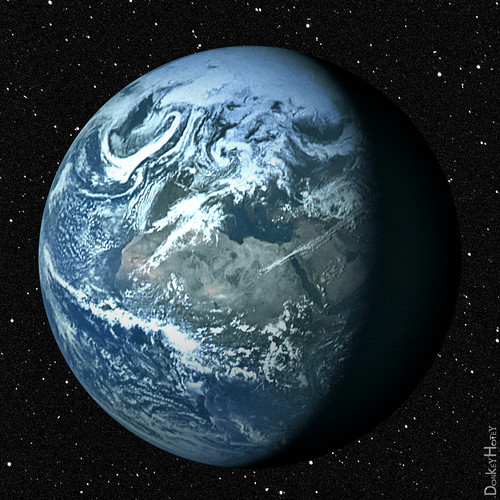
The old button from the Environmental Club days which I just happened to find on Earth Day! It is a little beat up (particularly the ends of the ribbon), but no worse for the wear, I think. And it is one of the few items that I have left from those days, so it carries a lot of great memories for me! Nothing Changes Until You Do!
Here is a picture of a very similar logo, with the same message, that was on the t-shirt that I purchased from the BCC Environmental Club and, if memory serves me correctly, may even have helped to make. There were a few projects like that which club members, myself included, were regularly involved with. It has been so long, however, that I no longer recall specifically if I actually helped to make these or not, although I do believe so, since I remember seeing the process of the t-shirts being dyed. In any case, I loved this t-shirt, and have kept it ever since, even if I do not regularly wear it. Since it was part of my experience with the BCC Environmental Club days, as well as more generally having an environmental theme, it seemed appropriate to share it here.
"Earth provides enough to satisfy every man's needs, but not every man's greed."
~Mahatma Gandhi
"Change is the law of life. And those who look only to the past or present are certain to miss the future."
~John F. Kennedy
"The earth does not belong to man. Man belongs to the earth. All things are connected like the blood that unites one family. Man did not weave the web of life. He is merely a strand in it. Whatever he does to the web he does to himself."
- Native American Philosophy (most often attributed to Chief Seattle)
“Humankind has not woven the web of life. We are but one thread within it. Whatever we do to the web, we do to ourselves. All things are bound together. All things connect.”
~ Chief Si’ahl (Seattle)

“Now polluters are looked upon as ordinary Joes just doing their jobs. In the future, they will be looked upon as swine”
This is just embarrassing!
The polls keep showing that a solid majority of Americans accept that climate change is a reality, and that most even feel that action needs to be taken on this issue. Indeed, polls reveal that roughly 70 percent of Americans believe in climate change. And polls also show that about half of millennials believe that climate change is an absolutely crucial issue that needs to be addressed right now, and with urgency. In fact, almost half of Americans polled believe that we need to take action on climate change.
You might be excused, then, if you thought that this would translate to some actual, meaningful action. But in a country where a presidential candidate is declared the winner after officially receiving 2.7 million votes fewer than the official losing candidate, that is not quite the case. Read this clip from an article from The Atlantic earlier this year (The Unprecedented Surge in Fear About Climate Change More Americans than ever are worried about climate change, but they’re not willing to pay much to stop it. by Robinson Meyer - see link below):
Despite this increasing acceptance, there is no clear political path forward. Last year, the Intergovernmental Panel on Climate Change warned that “rapid, far-reaching and unprecedented changes” were needed to keep the Earth’s temperature from rising 1.5 degrees Celsius. Such a transformation would be, in other words, expensive. But almost 70 percent of Americans say they wouldn’t pay $10 every month to help cool the warming planet.
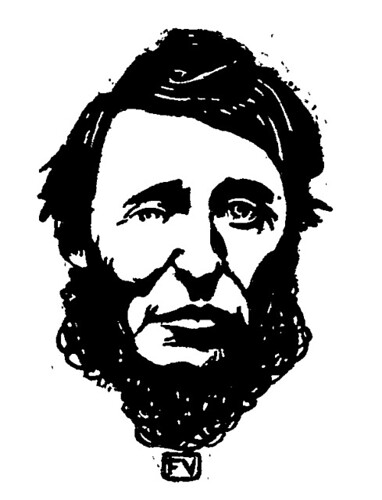
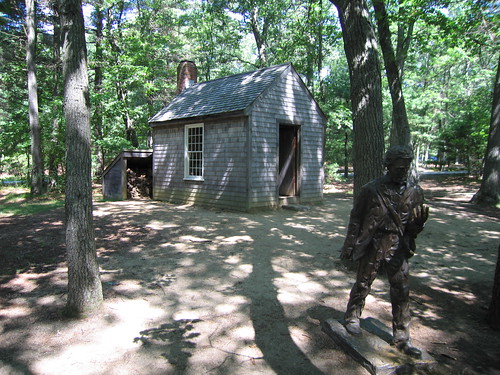
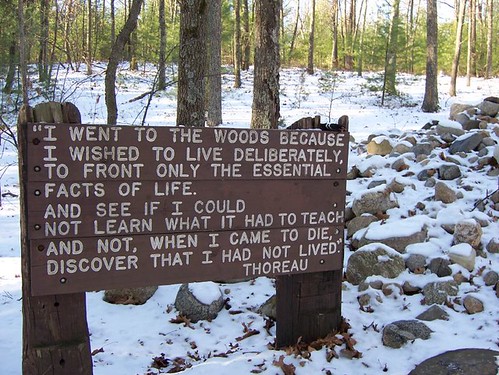
Some people who have complex or unconventional relationship history often sum up their status by saying "It's complicated." Apparently, the same can be said about the relationship that Americans have towards climate change generally, and towards environmentalism more generally. It was here in the United States (on the east coast) that Henry David Thoreau, influenced by Native American thinkers and their way of life, gave birth to modern day environmentalism. It was here that John Muir (on the west coast) advanced many of those theories and the appreciation for the wilderness, and for keeping more land wild, for our own betterment. It was here that the first efforts at conservation bore fruition, as the national parks were established under Theodore Roosevelt. So, after seeming to be so forward thinking on this issue from the better part of two centuries ago until more than a century ago, how did we become the one country in the world who is not part of the Paris Climate Accord on the grounds that we are skeptical of the science behind it? How is it that we still have politicians championing the cause of greater pollution and easier ways for major polluters to get away with their wrongdoing?
The paradox is that, on some level, some leaders and forward thinkers in the fight against climate change are still American. It was an American senator who first invented the idea of an Earth Day. It was American scientists who first noticed the trend that the world was apparently warming. It was an American scientist, Rachel Carson, who first woke the world up to the reality that all of the stuff that we were doing to the Earth was actually dangerous and amounted to poisoning our own world, with her "Silent Spring."
With all of that, we should be the undisputed leaders in the fight against climate change. The science really is settled, there is no real substantive debate, even if big-mouthed politicians insist on advertising their ignorance - sorry, there is no other word for it - on this subject. Yet, many Americans - too many to ignore, certainly - muddy the waters with their disbelief. They are skeptical of scientists, and seem to believe that there is some kind of worldwide conspiracy among scientists (including Americans scientists) who invented this supposed conspiracy in order to undermine America's economic potential. Yet, these same people hold no skepticism at all towards the pseudo-science that major polluting corporations that try and cast a shadow of doubt on the science of climate change.
So, yeah, it's complicated.
Of course, it should not be. Democracy should be far more straightforward, to be quite frank. And my own belief is that until it is, this country will remain viewed - rightly viewed, in my own opinion - as a basket case with an against the grain and opposed to conventional wisdom approach that makes sense to Americans, and only Americans.
Seriously, where else do they believe the kinds of things that we Americans believe? It is not just climate change, either. We have tens of millions of people who cannot afford our "for profit" healthcare, and we have tens of millions of people more who have healthcare insurance, yet are seen as too high risk or, everyone's favorite corporate term, have "pre-existing conditions," and are thus under-insured. And still, there are tens of millions of Americans - some of whom surely number among the people who I just mentioned - who would insist that the United States has the greatest healthcare system in the world. Hell, Republicans even had the audacity to name their healthcare proposals a few years ago - proposals that would have added to those numbers of millions of Americans struggling to afford healthcare, that is - as the greatest healthcare system in the world. We are also the only people in the world who truly seem to believe - or at least we keep electing politicians who officially believe, which almost makes it the same thing - that the solution to gun violence is to add even more guns into the equation. We also are the country which proclaims itself to be the "land of the free," yet we have far more people behind bars than any other country in the world.
I mentioned how the healthcare system is a "for profit" system, but in fact, this is true for all of the problem areas in the United States. Hate to dumb it down, but frankly, it really is not all that complex. Why is our healthcare system a problem? Because it is openly "for profit." Why are guns a problem? because for the NRA and for too many elected leaders, supporting gun rights is, for all intents and purposes, "for profit." Why is the prison system so racist and backward and unforgiving, essentially producing more criminals than opportunities for people to overcome troubled pasts and try and get normal lives? Because our prison system is a "for profit" system. Why has the national government have well over $20 trillion of debt? Because the military industrial complex, and the corporate welfare system, are also "for profit," and they suck so much damn taxpayer money in order to reap still more profits. And, let's be truthful: this is what is behind the skepticism and disbelief of climate change. Really, does anyone really believe that there would be anywhere near as many skeptics if it was clear that jobs and profits could easily be obtained in trying to combat climate change?
Yet, these ignorant lawmakers - most of whom take considerable donations from major polluters and big energy corporations, who have invested considerable sums of money to cover up inconvenient findings from research spanning decades (particularly Exxon), and who use every possible sliver of doubt to try and muddy the waters of the science behind climate change for Americans.
Still, the fact that an overwhelming mountain of evidence exists, and that scientists the world over are pretty much in agreement that there is indeed climate change, and that it is either being causes, or at the very least accelerated, by human activity, is virtually beyond dispute.
I say virtually, because the Republican party has taken it upon themselves to become the world's only major political party, in any nation in the world, to challenge the science behind climate change. Usually, their biggest qualifier for their arguments is to quickly proclaim that they themselves are not scientists.
To put that into perspective, that would be like someone taking their computer to a place that specializes in computers and then challenging the diagnosis of what is wrong with the computer, and then adding that their qualification for challenging the diagnosis is that he or she is not a computer expert. Or perhaps doing that at a doctor's office, or with a car mechanic. It would be simply ridiculous, and these people would surely feel that they cannot waste their time arguing with someone who, frankly, has no idea what they are talking about.
Yet, somehow, this argument wins the day, time and time again in American politics! And these guys keep getting elected into office, and winning re-election (surely with some funding from those major polluting corporations that sponsor them, of course).
Absolutely humiliating!
Recently, I saw a picture of a protest sign that really spoke to me. This is what was written on it:
Your inability to grasp science is not a valid argument against it
Sounds not only reasonable, but obvious, to me. beyond debate, really. After all, what kind of argument against science is "I'm not a scientist?" Because that is how Republican lawmakers still seem to preface their arguments expressing skepticism of climate change. They are basically saying that they themselves are not experts, and not qualified to argue about it intelligently, one way or the other, but still want their voices not only to be heard, but to dictate the very argument altogether.
Really, it proves that anti-intellectualism is alive and well in the United States. It also reminds me of another quote that perfectly encapsulates this duality and paradox of these United States, this leading superpower (for now) of the world. Here is the quote by W.E.B. DuBois:
"Either the United States will destroy ignorance, or ignorance will destroy the United States."
DuBois wrote some powerful stuff, but that particular quote just seems to sum up what the United States could be in the best case scenario, versus what the United States also could be threatened with. Anti-intellectualism has always had a prevalent, some might say overly powerful, voice here in the United States. But these days, with the stakes as high as it is, it feels like it is positively killing all that is good with this country, including the potential to produce a truly better future for all. What is happening now does feel like an unraveling. And the anti-intellectualists are loudly and proudly stomping and cheering and hooting and hollering their support throughout.
This anti-intellectualist tradition is allowing these politicians who are completely unqualified - intellectually or, frankly, morally - to speak out on this issue, and to make sure that their voices are heard, even when what they are expressing is sheer ignorance. I mean, I remember that arguments that environmentalists were making in the 1980's and 1990's that global warming was real were literally being laughed at and regularly ridiculed. Nobody believed it, and a majority of Americans were skeptical and/or indifferent. Then, once the temperatures continued to rise and once storms and incredible weather events began to gain in severity, the laughter abruptly stopped and, mostly, so did the denial that climate change, or global warming, was real. Yet now, the argument is mostly on whether or not human activity is responsible.
Mostly.
Still, there are some people who continue to try and deny that climate change even exists. Prominent people, such as President Trump, who suggested in a tweet (before he reached the White House) that climate change was a hoax invented by the Chinese to hurt the American economy. Or Oklahoma Senator Jim Inhoffe, who chaired the Senate Environment and Public Works Committee, and brought a snowball into the halls of Congress on a wintry day in Washington as proof that global warming was not real. Or former House Majority Speaker John Boehner, who once made a video on Earth Day where he ate jelly beans, and claimed that he particularly liked the green ones. Or, more recently (just to prove that this kind of mocking idiocy is far from dead) Thomas Massie, a member of the House of Representative from Kentucky, who recently made a jackass of himself, and a mockery of official government proceedings, while attempting to scrutinize former Senator and Secretary of State John Kerry.
Massie was trying hard - too hard, frankly - to checkmate John Kerry quickly and decisively. And while I am not the biggest fan of Kerry myself, it is beyond dispute that he is a well-spoken man with a high degree of intelligence, which is far more than I can say for Massie. And so, Massie made a complete ass of himself for all to see. He questioned Kerry's science credentials, pointing out that Kerry's degree in political science (from Yale) is not an actual science degree, and going as far as to suggest that this was a pseudo-science degree.
"You are the Scientist, you have a degree in Political Science" Massie said.
I wish that I was kidding. But apparently, this man actually is this stupid, and yes, apparently, he really does want to advertise this. This reminds me of another quote, although there is uncertainty as to whether it was from Abraham Lincoln, or Mark Twain. One way or the other, this particular quote seems apropos:
"Better to remain silent and be thought a fool than to speak and to remove all doubt."
Massie apparently never heard that one before. Either that or, like with climate change, he does not believe in it. Massie kept pressing the issue, foolishly pursuing his checkmate. Here is a bit of the exchange (taken from‘Are you serious?’: John Kerry responds in disbelief to questions about his college major, climate change by Nik DeCosta-Klipa, updated on April 10, 2019 -see link below):
“How do you get a bachelor of arts in a science?” Massie asked.
“Well, it’s liberal arts education,” Kerry replied, before Massie interjected to say, “OK, so it’s not really science.”
“I think it’s somewhat appropriate that someone with a pseudoscience degree is here pushing pseudoscience in front of our committee today,” he said.
Kerry was incredulous. “Are you serious?” he asked. “I mean, this is really a serious happening here?”
“You know what? It is serious — you calling the president’s cabinet a kangaroo court,” Massie replied.
Kerry noted that he wasn’t calling Trump’s cabinet a kangaroo court. He was calling the president’s climate change committee a “kangaroo committee.” “It’s not science,” Kerry told Massie. “You’re not quoting science.”
“Well, you’re the science expert.” Massie responded, sarcastically. “You’ve got the political science degree.”
The two then proceeded to argue about atmospheric carbon dioxide. Kerry noted that current CO2 levels have exceeded more than 400 parts per million, with 350 parts per million “being the level that scientists have said is dangerous.”
“Are you aware that since mammals have walked the planet, the average has been over 1,000 parts per million,” Massie asked. “Yeah, but we weren’t walking the planet,” Kerry replied, citing research that said the current levels of atmospheric CO2 are the highest they’ve been in at least 800,000 years. The reason for the average CO2 levels that Massie cited, according to Kerry, were the thousands of years of massive volcanic eruptions that occurred in what is now the Atlantic Ocean roughly 200 million years ago, which increased CO2 levels to more than 4,000 parts per million at the time.
“There weren’t human beings,” Kerry reiterated Tuesday. “It was a different world, folks. We didn’t have 7 billion people. … There were all kinds of geologic events happening on Earth, which spewed up…”
“Did geology stop when we got on the planet?” Massie asked.
“Mr. Chairman…” Kerry said, with an exasperated chuckle. “This is just not a serious conversation.”
“Your testimony is not serious,” Massie shot back. Earlier in the hearing, Kerry praised House Democrats’ leadership for their proposed climate change plans — including Sen. Ed Markey (who holds Kerry’s old seat) and Rep. Alexandria Ocasio-Cortez’s Green New Deal resolution — and questioned why Republicans hadn’t put forth any ideas to address the issue.
Unbelievable!
Kerry did answer how he felt this issue should be dealt with:
Massie questioned how Kerry would propose paying for the proposals to reduce greenhouse gas emissions. Kerry suggested carbon pricing or repealing the recent Republican tax cuts.
“There are all kinds of other things we could do,” he said. “One would be to not give a trillion dollars-worth of tax benefits to the top 1 percent of Americans. I’m one of them. I didn’t deserve to get that tax cut — nobody did in this country — at the expense of average folks who can’t made ends meet.”
“So that would be a fair way to start,” Kerry added. “You don’t want to politicize this, but you just played the ‘1 percent card,”’ Massie replied. “No, I actually played a moral judgment about what is appropriate in building a civil society,” Kerry said.
The Unprecedented Surge in Fear About Climate Change More Americans than ever are worried about climate change, but they’re not willing to pay much to stop it. by Robinson Meyer, Jan 23, 2019:
Nearly half of young Americans say climate change is a "crisis" requiring "urgent action" by Camilo Montoya-Galvez, APRIL 22, 2019:
Earth Day arrives as many still doubt climate change is a threat Recent polling finds most people believe global warming is happening and humans are responsible, but less than half are greatly worried about it. April 22, 2019 at 8:36 AM EDT - Updated April 22 at 8:36 AM Author: Travis Pittman April 22, 2019 at 8:36 AM EDT - Updated April 22 at 8:36 AM Author: Travis Pittman
‘Are you serious?’: John Kerry responds in disbelief to questions about his college major, climate change by Nik DeCosta-Klipa, updated on April 10, 2019: